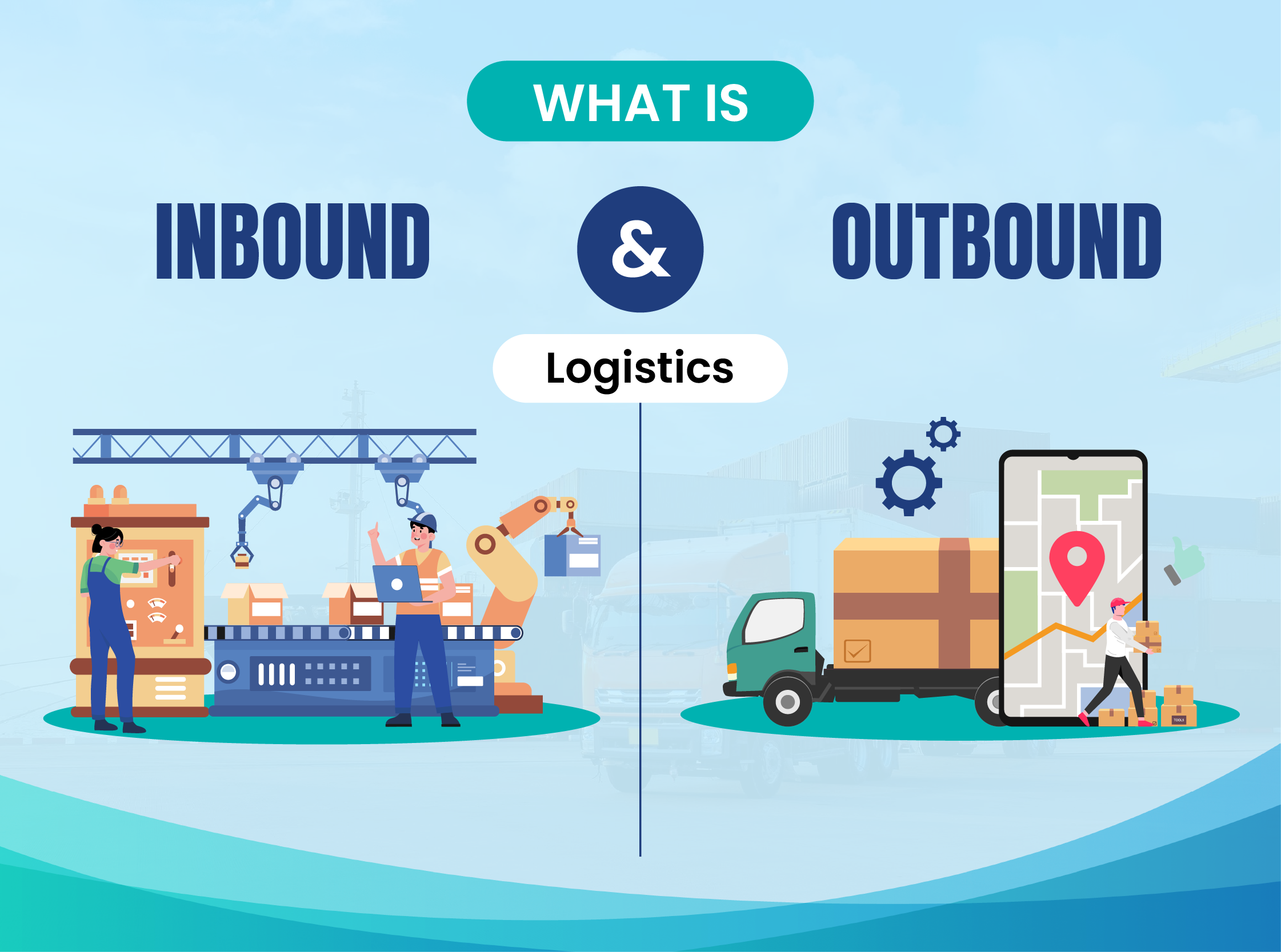
What is Inbound And Outbound Logistics?

Have you ever thought about the term ‘Logistics’? The term is intricate and consists of so many aspects. It’s a complex process of the entire journey of goods, from raw materials to end products and to get it delivered to customers or consumers. While inbound logistics forms every bit of production, sourcing materials through global and local suppliers, it involves factories and warehouses. It includes procurement, transportation, storage, and supplier coordination, keeping the production line smooth and uninterrupted. On the other hand, outbound logistics means processing, packaging, shipping, and delivering the end product through distribution channels. Complex enough, isn’t it? But how do logistics businesses ensure complete visibility of their operations and how accurately can they manage it? Let SpincLabs show you the aspects of inbound and outbound logistics!

The term logistics can feel simple; however, it is intricate and involves so many aspects. A supply chain is never simple; it is as complex and intricate as any other business. Let’s define inbound logistics and inbound logistics meaning in detail. Any product you have at your end must have travelled from the other end, scattered across continents, mobilized by suppliers, and produced out of meticulous manufacturing. From acquiring raw material to manufacturing, the process of logistics becomes inbound. On the other hand, dispatching these finished goods through a process of warehouses, highways, and final-mile delivery routes until they land in your hands, the process becomes outbound. 

Every inbound shipment means the supplier’s coordination, complete control over operations with precision. That’s why modern businesses are integrating advanced tech in their manufacturing operations. Meanwhile, Outbound logistics need speed and accuracy. They need smart automation for order fulfillment to route optimizations for timely deliveries. Both processes, inbound and outbound logistics make up the term Logistics. 

Let SpincLabs tell you about each aspect of ‘What is inbound and outbound logistics’ and define inbound logistics meaning in simpler terms!

Let’s Define Inbound Logistics!

As we discussed before, inbound logistics consists of the management of goods, materials, or supplies as they travel from suppliers to a business. This means attaining all these from manufacturing plants, warehouses, or retail facilities. This process includes everything; the procurement, transportation and storage. The inbound processes ensure raw materials or components of goods, etc., arrive on time, remain in optimal condition, and are produced at the right cost. Effective inbound logistics requires smooth processes and optimal relationships with suppliers, freight management, and careful operation scheduling and inspection. This way, the businesses can prevent inefficiencies related to product shortages.

If we define inbound logistics in simpler terms, inbound logistics meaning will be the following.

  • Sourcing and procurement of materials from suppliers and vendors.
  • Transportation and freight management to business locations.
  • Warehousing for goods received.
  • Detailed inspection, stock control, and material handling.
  • Coordination with suppliers and carriers for the timely arrival of the goods.

So, to define inbound logistics meaning, you need to remember that it is an intricate process of sourcing, transporting, receiving, and managing all materials or components needed for production. Here, every step, balancing forecasting, supplier negotiation, and transport schedules, will determine the smooth outcome. To keep the flow of the modern supply chain, everything starts with precision-based inbound logistics!

Inbound Dock Management

To define inbound logistics meaning was simple, wasn’t it? Now, let’s learn about inbound dock management! An efficiently run dock means goods move from gate to storage with minimal delay, reduces congestion and ensure sure materials are ready for use when the floor demands them.

An efficient and accurate inbound dock management means assigning docks, coordinating and ensuring smooth unloading of the products, using scanners and checklists to verify shipments, and reporting anomalies as quickly as you can. Intelligent AI-enabled fleet management software and its smart automation have simplified the inbound dock management processes. Most of the processes are controlled and managed by these AI+IoT-enabled features that identify inefficiencies and alert you in real-time.

Let’s Define Outbound Logistics!

Outbound logistics centres on moving finished goods from a business to its customers, distribution channels, or retailers. It begins once orders are placed and covers order processing, picking, packing, shipping, and last-mile delivery. The objective is to fulfill customer demand quickly and accurately, thereby supporting sales, reputation, and return business. Outbound logistics leans heavily on distribution networks and delivery performance, making customer interaction and order tracking essential.

Now, let’s understand what is inbound process or outbound logistics meaning in a better way!

  • Order processing and fulfillment for customer orders.
  • Packing, labeling, and preparing products for distribution.
  • Shipping, transportation, and last-mile logistics.
  • Distribution channel management (retailers, wholesalers, direct customers).
  • Customer service and real-time delivery tracking.

Outbound Delivery

Outbound delivery is where customer promises are either fulfilled or broken. Once an order hits the system, products are picked, packed, and staged for dispatch. Here, outbound teams optimise route planning, track parcels, and work with carriers to push deadlines and delight end customers. It’s a race against time, balancing speed with precision, because every on-time delivery is another win for the entire brand.

Difference Between Inbound and Outbound Logistics

So, what is inbound process or inbound logistics? Remember, to bring the materials in, to ensure everything is in its place for manufacturing, is inbound logistics. On the other hand, or contrary, outbound logistics means smooth dispatch of finished goods to customers or retailers. Understanding this difference between inbound and outbound logistics is quite linear.

Attribute Inbound Logistics Outbound Logistics
Direction Goods and materials moving into businesses End product to market or customers
Focus Supply, procurement, material handling Demand fulfillment and order delivery
Process Between Suppliers, vendors, carriers Distributors, retailers, customers
Main Activities Operational control, receiving, warehousing Picking, packing, shipping, delivery
Priority Resource availability and cost optimization Efficient distribution and customer satisfaction
Interaction Suppliers to Businesses Business to Consumer or customer


Shipment Visibility Solutions

Nowadays, businesses need higher visibility for all kinds of operations, whether it means manufacturing or delivering. When it comes to logistics businesses, the aspects remain the same. Every modern business needs higher visibility. Traditional businesses lack complete visibility and, hence, are being replaced by these modern, advanced counterparts. If we talk about shipment visibility, here, advanced technologies are transforming the aspects. SpincLabs’ advanced shipment visibility solutions digitize every aspect of business operations. 

Here, most things are transforming through smart automation and intelligent AI analytics. From advanced GPS-enabled systems, IoT sensors for fleet to real-time notifications about shipment status and its condition, shipment visibility solutions provide both business and buyers with complete visibility. In case of delays, anomalies or exceptions, these smart shipment visibility solutions alert you instantly. This way, it improves both transparency and visibility because both aspects determine better operational control, customer satisfaction, and agile risk management.

Complete Shipment Visibility Solutions by SpincLabs!

Our advanced platform provides you with consistent real-time data, insights and generates detailed reports at every aspect of the shipment journey. With their integrated TMS, you can optimize routes, enhance efficiency, and keep an eye on everything. The digital Control Tower brings complete clarity to daily logistics workflows. Here, the unified dashboard keeps you updated on shipment status and performance metrics and does instant reporting and proactive management for each aspect. Let your business operations experience complete visibility, whether it is inbound or outbound logistics, through SpincLabs’ complete shipment visibility solutions!
FAQ’s

What is inbound logistics?
The inbound logistics include the process of procuring, transporting, and managing materials or components from suppliers to a business. Here, we ensure everything needed for manufacturing arrives on time and is in the right condition.

What is outbound logistics?
The outbound logistics include moving end products from a business to its distributors, customers, or retailers. Here, the process includes order fulfillment, packaging, shipping, and last-mile delivery.

What is the difference between inbound and outbound logistics?
The basic difference between inbound and outbound logistics is simple. Inbound logistics means the flow of goods into a business (supplies, materials), while outbound logistics means the movement of end products going out to customers.

What are shipment visibility solutions?
The advanced digital platforms, such as shipment visibility solution, keep track of shipments in real time using advanced GPS, IoT sensors, and AI analytics. They provide you with real-time insights and alert you if they identify inefficiencies for better operational control and better visibility of operations.

How does SpincLabs contribute to logistics visibility?
SpincLabs’ advanced shipment visibility and integrated TMS provide you with real-time dashboards, consistent performance reporting, and end-to-end traceability across both inbound and outbound logistics.

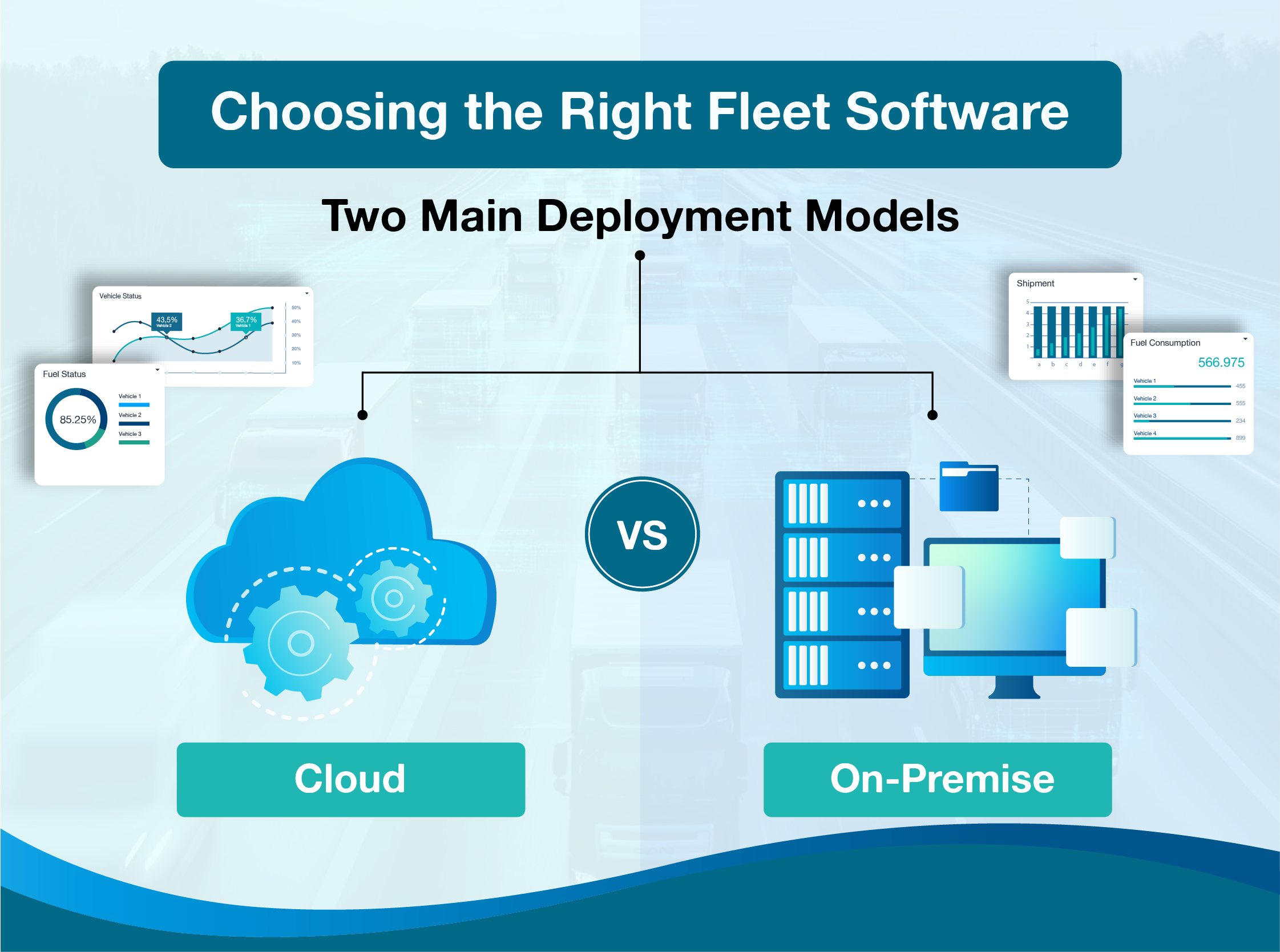
Cloud vs On-Premise Choosing the Right Fleet Software

How do you manage your fleet? Traditional way or still using simple vehicle tracking for your operational needs? These ways are inefficient and provide limited scalability for your business. Modern logistics businesses need advanced cloud-based fleet management software. Your business needs to modernise its operations. However, many people often get confused between cloud and on-premise. Choosing the right fleet management solutions becomes important as the right software can connect every process of your fleet management operations, provide your business with scalability and improve visibility for your fleet. SpincLabs provides you with both cloud-based agility and on-premise control. Let us find the best software for your business needs and compare these cloudbased and onpremise software!

Cloud vs On-Premise: Choosing the Right Fleet Software

Compared to traditional methods, an intelligent fleet management system makes your operations highly visible. Traditional methods always remain inefficient; they are never cost-effective, scalable and provide limited visibility. On the other hand, fleet management solutions not only are capable of identifying the inefficiencies of your business operations but also make them efficient, scalable and cost-effective. However, choosing the right fleet management software is an important aspect. This is where people often get confused. Whether to choose a cloud or onpremise software for their business needs.

Don’t let these phrases cloud your thoughts to choosing the right fleet management software. The digital transformation is here, and logistics businesses are upgrading themselves with advanced fleet management solutions. But often people get confused between the two solutions, whether they should upgrade their logistics business with cloud-based fleet management solutions or choose on-premise solutions. Cloud-based fleet management means advanced, consistent, real-time monitoring and insights. The system remains awake round-the-clock, sending insights to your phone even if you are in a remote location. Since the intelligent fleet management system is always connected, you get real-time vehicle locations, reports on driver behaviour, and maintenance alerts to any device with an internet connection.

When comparing cloudbased and onpremise software, you should understand your business needs first. Let’s compare and understand cloudbased and onpremise software and find out the prime difference between public and private cloud.

Let’s Compare Cloud-Based and On-Premise Solutions!

When choosing cloud-based fleet management software and on-premise fleet management system, businesses often face a trade-off between agility and control. How? Comparing cloudbased and onpremise software is simple.

  1. The cloud solutions provide real-time data, faster updates, and remote accessibility. It becomes a lifeline for fleets spread across India’s states and time zones.
  2. On-premise solutions mean customization, full data sovereignty, and potential long-term cost stability.

Hence, your choice depends on whether speed and scalability outweigh strict internal governance requirements.

Cloud-based System

Any logistics business that includes distributed teams, has faster growth plans, and a hunger for data-driven agility, a right fleet management system is a necessity for it. For such a business, the cloud makes a lucrative and endless opportunity. Cloud-based means scalability with no expensive servers, no complex IT interference, just the smooth scalability you want for your business. Cloud platforms are growing at a higher frequency. They are accessible anywhere and need no infrastructure investment. Here, updates are automated, hence keeping compliance and security features updated.

  1. Real-time Data
    Cloud-based system updates location, telematics data, and historical data of your fleet in real time and sends detailed reports on digital devices.
  2. API
    Cloud platforms can easily be integrated with your TMS platforms. ADAS system is often a matter of activating a pre-built connection or API.
  3. Scalability
    With a cloud system, you scale your operations at the speed of business, which means higher scalability than on-premise and traditional systems.
  4. Smart Data Analytics
    Smart data analytics means to collect all the data from and analyze it through AI to provide predictive maintenance alerts, fuel efficiency, detect anomalies and inefficiencies, and generate driver safety scores.

On-Premise Solutions

Now, if your logistics business or organization is handling sensitive government contracts, high-value locations, or fleets where privacy is your biggest concern, opt for on-premise. Why? These solutions are often preferred by legacy operators or businesses with the internal IT muscle to support upgrades and security internally. However, here, upfront investment will be a bit higher, but remember, it also means long-term savings for your business. Still comparing cloudbased and onpremise software for your business needs? You must go through the following comparison.

Factor Cloud On-Premise
Cost If you prefer ongoing operational expenses and want to avoid a large upfront cost If you prefer a large, one-time capital expenditure and have a budget for it
IT Resources Minimal IT overhead Need a skilled IT department to manage servers
Scalability Flexible and scalable For a stable fixed fleet size
Accessibility Data access through multiple locations or on the go. Entire work management through a single, centralized location with an internal network
Security & Control Advanced security through a specialized provider Highly specific security through a closed private system

The Difference between Public and Private Cloud

Understand both fleet management system or solutions in simple terms. Public vs private cloud means scalability versus control. Since public cloud solutions use shared infrastructure, businesses can scale resources and benefit from cost efficiencies and vendor-managed security. On the other hand, private cloud is a single-tenant solution with enhanced customization and stronger data isolation; hence, it is perfect for organizations with sensitive data, strict compliance mandates, or niche integration needs.

So if you want to prioritize speed, flexibility, and broad access, you should opt for public clouds. Or if you want ownership, custom policy enforcement, and sector-specific requirements, you must choose private clouds customized as per your business needs.

Traditional Methods vs Cloud-Based & On-Premise Software

Now, let’s come to traditional methods. If your business is still following the traditional methods for its logistics operations, you are bound to face inefficiencies and limited scalability. Also, traditional methods mean slower response, fragmented data, and high administrative costs. These aspects can be improved with automation and predictive features. Both cloud-based and on-premise software platforms provide your business with operational efficiency, accuracy, and make your business scalable.

Cloud-based tools negate the manual processes, such as paperwork, manual vehicle maintenance, and communication gaps and enable anywhere access through digitizing your processes.

Fleet Management Solutions From SpincLabs!

Remember, compared to traditional methods, an intelligent AI-enabled fleet management software is always an efficient way of doing logistics business. Rummaging everywhere to find a perfect cloud-based fleet management system? SpincLabs’ cloud-based fleet management solutions provide you with the scalability you want for your business. You can keep an eye on everything and generate a detailed report on every aspect of your fleet, such as vehicle health, driver behaviour, fuel consumption and management. Our advanced fleet management software includes real-time monitoring through video telematics, provides you with predictive analytics, and keeps an eye on driver behaviour. Also, since it identifies inefficiencies, you can work on improvements, negate fuel waste, and hold drivers to higher standards of safety.

FAQ’s

What is the main difference between cloud-based and on-premise fleet software?
The prime difference between cloud-based software and on-premise software is that cloud-based is hosted online and accessible from anywhere, while on-premise software is installed locally on your company’s own servers. This way, on-premise provides you with complete control over data and infrastructure.

Which fleet solution is better for a growing logistics business?
Any logistics business looking for scalability, the cloud-based solutions are a better choice. These solutions provide businesses with flexibility, consistent real-time updates, and minimal IT complications.

Why should a company choose on-premise fleet management software?
On-premise systems are preferred by companies handling sensitive contracts, such as government projects or high-value shipments. For such businesses, data security and strict compliance are priorities, hence they need a private cloud system or on-premise.

Is cloud-based fleet management secure enough for large enterprises?
Yes. Cloud providers continuously update compliance, encryption, and data security protocols. Therefore, it makes them even safer than local or private systems.

How does SpincLabs’ cloud software improve driver performance?
SpincLabs’ cloud software consistently monitors and keeps track of driver behaviour in real time. It tracks safety scores, keeps historical data regarding incidents and behaviour and issues alerts on speeding, harsh braking, or idle times. You can get a detailed report on each driver and work on improving their performance.

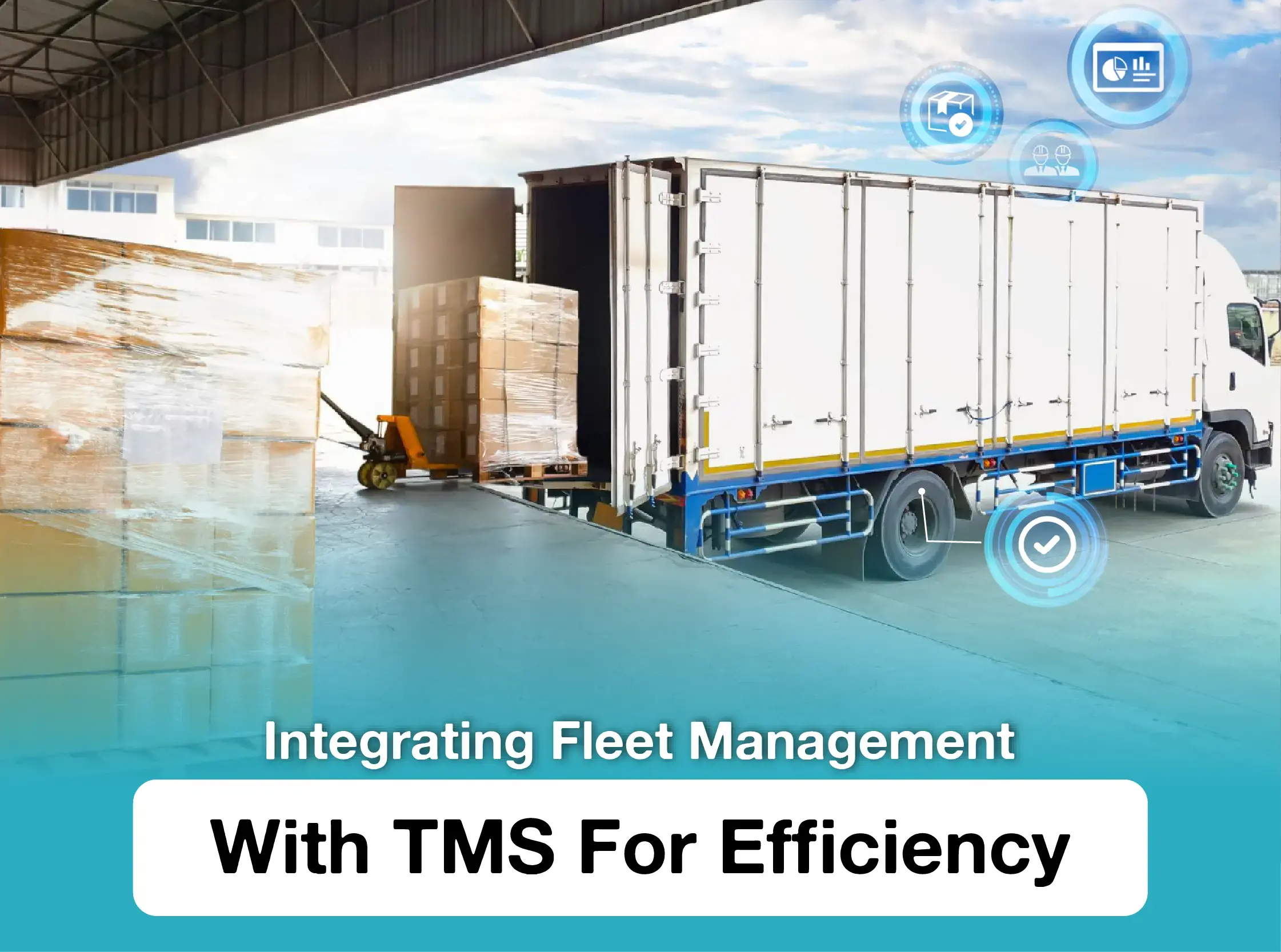
Integrating Fleet Management with TMS for Efficiency

Advanced fleet management solutions can transform your business. Integrating a Fleet Management System with a Transportation Management System can improve logistics efficiency and enhance delivery communication since it unifies vehicle operations with transport planning. While FMS focuses on tracking vehicles, monitoring driver behaviour, and maintaining fleet health, TMS manages route planning, load optimization, shipment tracking, and documentation automation. When you combine them, they provide real-time visibility, automated compliance, and make your logistics operation smarter. You can view all the detailed reports about your fleet in a single unified dashboard. This integration reduces costs, enhances transparency, boosts scalability, and enables businesses to respond swiftly to changing conditions, making fleet operations more efficient.

Traditional transport management system, whether it is small-scale or large-scale, have become inefficient since they lack smart AI-enabled functioning and monitoring. They have limited scalability and include many operational inefficiencies. Nowadays, modern logistics businesses consisting of large fleets go through many complex things during delivery, such as congested roads, evolving compliance mandates, high operational costs and control on driver behaviour. Hence, they are looking for scalable solutions to improve their operational efficiency. What are those solutions to enhance fleet management efficiency? A fleet management system is an advanced intelligent software that can boost efficiency for your transport management system.

Integrating Fleet Management Software with Transportation Management Systems or TMS brings higher efficiency and complete visibility for logistics and transport businesses. Traditionally, Fleet Management Systems or FMS include tracking vehicles, monitoring driver behaviour, and scheduling vehicle maintenance. On the other hand, the Transport Management System consists of optimizing load management, route planning, shipment tracking, and automating documentation. Let SpincLabs elaborate on how TMS integration improves fleet management efficiency!

What is TMS?

A Transportation Management System or TMS is an intelligent, advanced software that streamlines the movement of goods. This movement can be through any medium of transportation, whether via land, air, or sea. It centralizes all the logistics data, and optimizes load planning, delivery routes, and shipment tracking for businesses. Also, automates routine tasks, such as compliance documentation and billing, hence, boosts efficiency and reduces operational costs. Therefore, the Transport Management System is an important part of effective supply chain management. When you integrate it with fleet management software, it doubles the fleet management efficiency for your business operations.

Integrated TMS Platforms

These platforms represent advanced logistics control. Instead of working with disconnected software for fleet and transport operations, businesses can unite their systems with integrated TMS platform. This integration gives instant visibility into shipment status, vehicle health, outstanding bills, and performance KPIs. Hence, you get detailed data instead of assumptions. It also supports smooth integration with third-party systems, including ERP and CRM applications, and therefore, provides new efficiencies (fleet management efficiency) and data-driven analytics.

Unifying FMS With TMS

Traditional fleet management systems can never be efficient for your business, while with unified FMS and TMS, you gain centralized access to real-time GPS tracking, route assignments, detailed driver analytics, vehicle maintenance status, and shipment documentation, all in one place through unified platform.

The complete visibility lets your operation teams respond to changing conditions instantly. It means the vehicle can be rerouted when needed, you can allocate resources more effectively, and identify inefficiencies before they create hindrances for your business. Unifying FMS with TMS improves efficiency for your order management, billing, compliance, and proof of delivery will be automated. Therefore, your operations become smoother and efficient.

Benefit Description
Route Optimization Data-enabled analysis for better route optimization and load planning
Unified Dashboard Every analytics about your fleet through unified platform
Scalability Suitable for every scale of business whether large or small
Complete Visibility Real-time fleet and shipment tracking for every aspect
Automation Easier documentation and regulatory management
Cost Reduction Lowers fuel, maintenance and operational costs

Unified Dashboard For Complete Visibility

The integration of the fleet management system with TMS means every trip is being tracked on a single dashboard. Advanced fleet management software has smart features to track vehicle location, keep track of maintenance status by analyzing vehicle health, and keep an eye on driver behaviour. You can check driver availability, let it sync with route assignments, shipment loads, and delivery windows.
With advanced fleet management solutions, you can track your vehicles in real-time (through advanced GPS ) and see how efficiently they are running. The real-time data, from GPS tracking and video telematics, show you live updates on shipment status, fuel levels, and driver behaviour. This way, it enhances transparency and provides you with complete visibility for your fleet. Therefore, businesses can anticipate delays, reroute vehicles to reach the destination on time, and ensure optimal operations, reducing downtime and maximizing throughput.

Route Optimization

Integrated TMS platforms use both FMS telematics and Transport Management System route engines to enhance fleet management efficiency. As orders come in, the system automatically assigns the vehicle as per the need and driver based on the current location, available capacity, with real-time vehicle tracking. Here, automated load management ensures vehicles are using the load capacity at optimum efficiency. Also, it reduces fuel costs.

Smart Automation For Documentation and Compliance

Relying on manual paperwork can never be efficient for logistics or transport systems. Manual ways slow down logistics, and there will always be chances of costly errors. Integrated FMS with TMS generates digital bills of lading, invoices, proof of delivery, and regulatory documents on autopilot. All compliance information, including driver logs and route history, is stored securely. These detailed reports will be ready for audits or dispute management whenever needed. This improves fleet management efficiency. Also, features like automated settlement and payment matching save labour hours and reduce human errors.

Detailed Insights and Scalability For Businesses

Unified data flow enables deeper business analytics for your fleet. You can spot inefficiencies, forecast maintenance needs, and refine operational strategies with TMS integration and improve fleet management efficiency. Low-code integration and API-based systems provide your business with scalability without disruption. For growing logistics firms, this means readiness for expansion.
Enhance Delivery Communication

Integrated TMS platforms or this smart TMS integration with the fleet management system enhances delivery communication. Therefore, no more lost paperwork, manual calls, or delayed updates about delivery. Automated alerts and precise ETAs keep teams, drivers, and customers informed. Advanced platforms give you two-way messaging, proof-of-delivery uploads, and exception handling. Hence, ensures everything is synchronized.

SpincLabs’ Fleet Management Solutions

Unifying a platform that shows you every detail aspect of your fleets is a must for businesses. However, managing different systems can be difficult. That’s why integrating FMS and TMS is important for your business. Unifying FMS and Transport Management System gives you a unified platform that can provide your business with enhanced transparency and give you complete control of your operations! SpincLabs’s intelligent fleet management solutions and integrated TMS can help you achieve optimum fleet management efficiency!

FAQ’s

How does Fleet Management Software or FMS differ from TMS?
FMS focuses on vehicle operations, such as tracking, driver behaviour, and maintenance, while TMS focuses on transportation logistics, such as shipment planning, route optimization, compliance documents, and billing.

Why should I integrate FMS with TMS?
Integrated TMS gives a unified view of vehicles and logistics, hence, provides businesses with real-time visibility, smarter automation, and faster delivery. It improves efficiency and scalability for businesses.

How does integration enhance delivery communication?
Integrated platforms automate delivery updates, provide accurate ETAs, allow proof-of-delivery uploads, enable two-way messaging, and ensure real-time notifications to reduce delays and uncertainty.

Will this smart integration reduce costs?
Yes. This smart integration helps businesses save on fuel through better route optimization, minimize downtime with predictive vehicle maintenance, reduce compliance errors with automated documentation, and improve efficiency.

Is the solution scalable for small fleets?
Yes. Integrated TMS and FMS platforms are scalable for any size of business whether they are large scale or small scale.

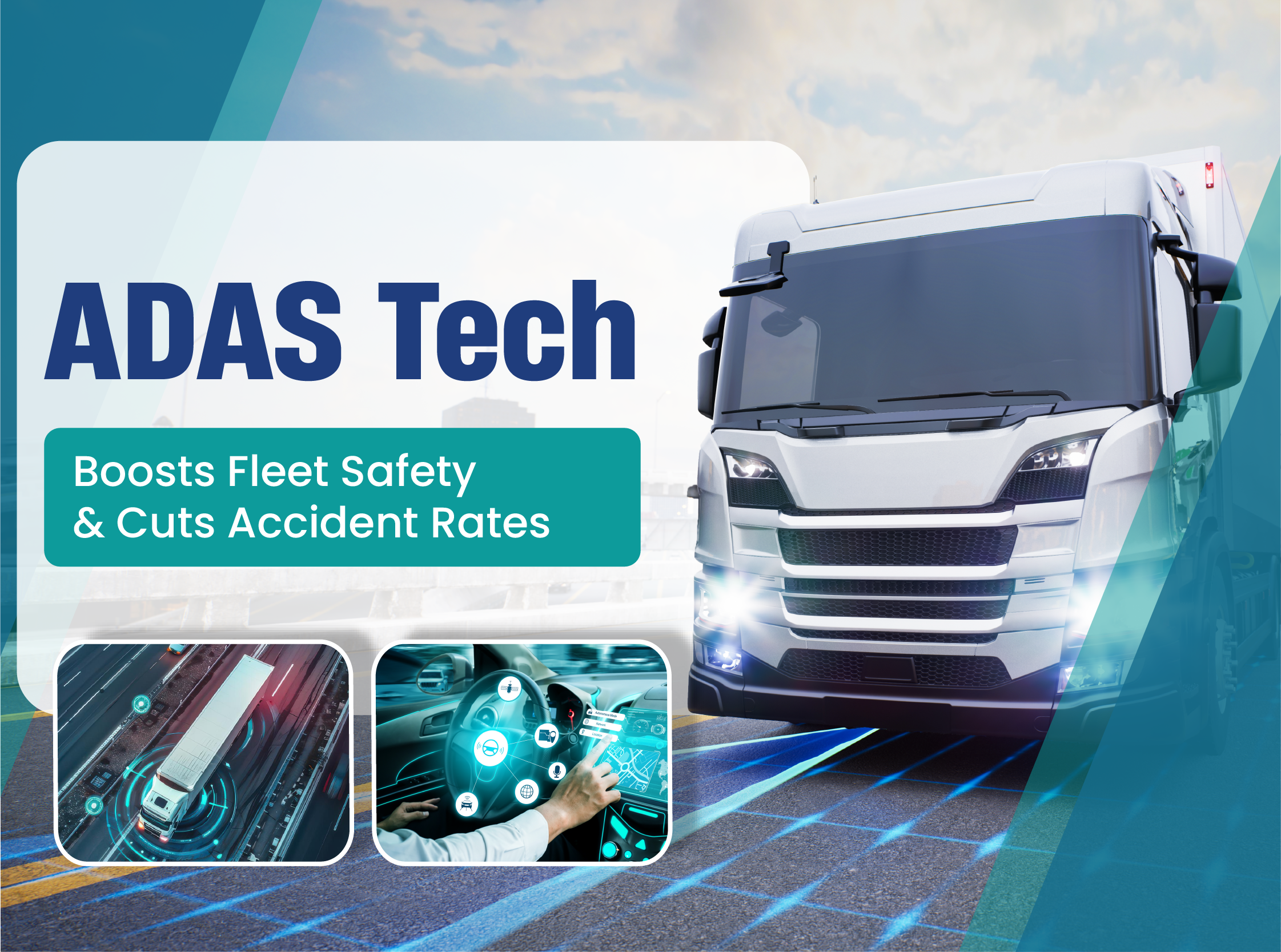
ADAS Tech Boosts Fleet Safety & Cuts Accident Rates

In day-to-day scenarios, logistics businesses in India have to face a lot of complications, especially related to traffic situations in urban infrastructure. Since traditional fleet operations rely on instinct and wait for incidents to occur, they make any fleet business inefficient, hence, have limited scalability. Advanced Driver-Assistance Systems, or ADAS technology, make fleet management easier and negate these complicacies. They include IoT sensors, 360-degree cameras, advanced GPS, and AI-enabled real-time analytics; therefore, they are capable of real-time monitoring, predictive maintenance, and preventing accidents. ADAS-enabled advanced fleet management system provide complete visibility into every aspect of the fleet from driver behaviour to vehicle health monitoring, hence reducing accident rates and optimizing operations. ADAS software has become a necessity for safe and scalable logistics operations.

The fleet management has never been easier for logistics businesses because of so many complexities involved in fleet operations. Fleets have to navigate through congested urban infrastructure and traffic situations on a daily basis. Traditional fleet operations and their safety protocols can never be efficient, and that’s why we said that fleet management can never be easy. They work on the aftermath of incidents rather than the pre-solution. However, nowadays, everything is changing for logistics businesses through the use of advanced technology in fleet management. ADAS technology, or the ‘Advanced Driver-Assistance Systems’, solve these old complexities through smart IoT sensors, cameras, GPS and AI. It helps logistics businesses to keep an eye on driver behaviour, predict the issues with their fleet and address the incidents in a better way.

ADAS software is making our logistics operations smarter and more efficient. Let SpincLabs show you ‘What is ADAS technology’ and how it works!

Know The Technology – ADAS 

A traditional fleet management system works on assumptions where you rely on instincts. In such aspect, you tend to miss a lot of things. These fleet management solutions remain inefficient and have limited scalability. Now, if we talk about advanced fleet management software, their efficiency goes beyond your usual fleet management. These solutions are digitized and use ADAS. So, ‘What is ADAS technology’? It is the tech that uses digital features capable of tracking and alerting things, such as collision avoidance, lane departure warnings, adaptive cruise control, pedestrian recognition, and driver fatigue detection. 

These digitized, advanced features, such as Video Telematics, consistently monitor driver behaviour and alert you when it notices unsafe driver behaviour, such as drowsiness, idling time, harsh braking and speeding. In Indian conditions, ADAS software can transform the way of fleet management systems because of its advanced capabilities, it can negate human errors, reduce accident rates, and make logistics businesses more efficient and scalable.

How Does it Help Logistics Businesses? 

ADAS technology is highly beneficial for logistics businesses, especially in a country like India. In our country, there are many challenges apart from logistics own. Fleet management operations have never been simpler here. They include long, busy hauls, early morning deliveries, and very demanding schedules that inevitably invite fatigue for the drivers. Advanced fleet management solutions include ADAS software, which can help these logistics businesses in such problems. These systems can detect drowsiness and can even monitor phone usage. However, it’s not the surveillance; it’s about providing real-time, life-saving nudges for fleet management operations, and analyzing the fleet data to identify systemic issues and provide solutions for them.

ADAS in India can even recognize jaywalking pedestrians and stray cattle, erratic motorcyclists and overloaded trucks on the road, and they can alert you to possible collisions. As we know that regulatory support for safety tech is increasing that is why businesses are switching to advanced fleet management solutions more and more. Remember, ADAS means more relevant interventions and fewer false alerts and hence, it has become a necessity for companies managing commercial fleets on Indian highways and city streets.

Fleet Management System And ADAS

Visibility for your business brings transparency. But your traditional fleet management system can’t provide you with this visibility. To keep an eye on fleet management operations a better solution is needed, a solution that is scalable and efficient. Advanced fleet management solutions use ADAS data with telematics to provide enhanced visibility. Gained enhanced visibility? Your fleet management system becomes scalable. You can know where the vehicles are and how safely they are being operated. Also, reviewing live reports of hard braking, speeding, or distracted driving will enhance fleet safety in a better way. Let’s see how advanced AI-enabled intelligent fleet management software with ADAS software helps your logistics business!

Enhanced Fleet Safety Through ADAS Technology

Can traditional fleet management solutions provide you with details analytics about every aspect of the fleet? No, they are inefficient and have their limitations. Modern fleet management software can provide more than just simple GPS tracking. You can view every aspect of your fleet in detail through a unified dashboard and use this information to identify the inefficiencies. The real-time data helps you to monitor everything, such as optimize routes, reduce fuel consumption, monitor regulatory compliance and better fleet safety. Since you can view every aspect of your fleet with enhanced visibility, it makes your fleet safer.

Cuts Accident Rates

Businesses that have been using ADAS software for fleet management are experiencing quantifiable results for their operations. Smart features of ADAS help you negate accidents, reduce downtime through predictive maintenance and improve the safety of your fleet. Predictive maintenance and driver behaviour are two main aspects that can transform the functioning of your logistics operations. 

Small and mid-sized fleet owners, especially, find that collision avoidance and driver behavior analytics can mean the difference between profit and loss in competitive, low-margin environments. Let’s see what features of this ADAS technology help you to achieve complete visibility and cut accident rates!

Feature Description
Maintenance Alerts Analyzes the fleet data, monitors vehicle health, identifies inefficiencies, and alerts you when maintenance is needed.
Video Telematics Capable of incident recording and generates detailed reports.
Driver Behaviour Monitoring Keeps an eye on driver behaviour, such as harsh braking, drowsiness, idling time, and speeding, and provides real-time alerts.
Collision Warning Alerts drivers on possible collisions and reduces the chances of accidents.
Lane Keep Assist Provides lane assistance, especially useful for long-haul trucking.

Smarter Fleet Management Solutions, Smarter Businesses 

Since you know now ‘What is ADAS technology?’ and how it is making logistics businesses smarter, the need for smarter fleet management solutions and ADAS in India becomes more apparent. Smarter fleet management software from Spinclabs transforms businesses with advanced technologies like ADAS to provide you with real-time data and predictive analytics. They let you anticipate and prevent inefficiencies and turn them into efficiency, provide businesses with cost savings, and improve fleet safety.


FAQ’s

What is ADAS technology, and how does it work in fleet management?
Advanced Driver-Assistance Systems or ADAS use IoT sensors, 360-degree cameras, and AI-enabled real-time data analytics that make fleet management smarter. It provides collision alerts, lane departure warnings, adaptive cruise control, pedestrian detection, and driver behaviour and fatigue monitoring. These features reduce accidents and improve driver safety.

How does ADAS differ from traditional fleet management systems?
Traditional systems rely on manual reports and instinct, while ADAS-enabled fleet management solutions automate incident detection, provide predictive maintenance, and consistently monitor driver behaviour via telematics and video analytics. Hence, fleet management operations become safer and more efficient.

What specific features does ADAS offer for logistics fleets?
ADAS includes advanced features, such as real-time maintenance alerts, video event recording, driver behaviour monitoring (drowsiness, speeding, harsh braking, idling times), collision warning, and lane-keeping assist, all integrated with fleet management unified dashboards.

How does ADAS software reduce accident rates and save on operational costs?
Nowadays, logistics businesses are using ADAS and experiencing a reduction in accident rates, downtime, and improved fleet safety. Predictive analytics can help in identifying inefficiencies so businesses can work on them to save on operational costs.

Is ADAS mandatory in India for fleet operators?
ADAS in India is going to be mandatory for specific commercial passenger vehicles and some goods carriers from April 2026. This is the time to invest in SpincLabs’ ADAS software that includes features such as emergency braking, drowsiness detection, and lane departure warning.