Real-Time GRN Posting Using ePOD: Impact on Finance, Supply Chain and Customer Service

Delivery may feel complete when the truck reaches the customer location—but operationally, that’s only half the journey.

In logistics operations, delivery is truly complete only when it is recorded, validated, and accepted inside the ERP system.

Every day, shipments reach warehouses, distributors, and customer locations—but until confirmation happens inside the system, multiple business functions remain on hold.

Finance teams wait to raise invoices. Warehouses wait to update inventory. Customer service teams wait to confirm delivery status.

This delay—commonly known as the GRN gap—creates operational friction that affects cash flow, visibility, and customer satisfaction.

Let’s explore how traditional GRN workflows slow down operations—and how real-time GRN posting using ePOD transforms delivery into an instant system event.


Understanding the Role of GRN in Logistics Operations

A Goods Receipt Note (GRN) is one of the most critical documents in logistics workflows.

It acts as the official confirmation that goods have been received at a warehouse or customer location.

Without GRN creation, downstream processes cannot begin.

1. The Operational Meaning of GRN

GRN serves as the system-level acknowledgment that delivery has been completed successfully.

It triggers multiple business processes such as:

  • Invoice generation
  • Inventory updates
  • Delivery closure
  • Financial reconciliation

Until GRN is created, delivery remains incomplete from a business perspective.

2. Why GRN Delays Create Business Bottlenecks

In traditional workflows, GRN creation depends on physical documentation.

Drivers collect paper Proof of Delivery (POD), return to base, and submit documents to office teams.

Only after manual entry into ERP systems does GRN get generated.

This delay—often spanning hours or even days—creates operational uncertainty across departments.


Where Traditional GRN Processes Slow Down Operations

Most logistics businesses still rely on paper-based workflows for delivery confirmation.

These outdated processes create unnecessary delays and operational risks.

1. Paper-Based Proof of Delivery Handling

In traditional delivery workflows:

  • Drivers collect handwritten signatures
  • Paper POD documents travel back to the office
  • Office staff manually enter data into ERP systems
  • GRN is created only after manual validation

This multi-step process introduces delays at every stage.

2. Delayed Visibility Across Teams

While delivery may already be completed on the ground, internal teams often remain unaware.

This creates operational gaps such as:

  • Delayed GRN posting
  • Uncertain inventory levels
  • Slower billing cycles
  • Customer communication delays
  • Higher dependency on manual coordination

Even short delays can significantly affect high-volume logistics operations.


How ePOD Enables Real-Time GRN Posting

Electronic Proof of Delivery (ePOD) transforms delivery confirmation into a digital-first process.

Instead of relying on physical paperwork, delivery confirmation is captured instantly using mobile devices.

1. Digital Delivery Confirmation at the Source

With ePOD systems, drivers capture delivery confirmation directly at the customer location.

This typically includes:

  • Digital signature capture
  • GPS-based location validation
  • Timestamp recording
  • Optional delivery photo documentation

All delivery data becomes instantly available within the central system.

2. Automatic GRN Creation in Real Time

When ePOD integrates directly with ERP systems, delivery confirmation triggers GRN creation automatically.

There is no need for manual data entry or document transfer.

GRN posting happens the moment delivery is confirmed—eliminating operational delays.


Impact of Real-Time GRN Posting on Finance Operations

Finance teams rely heavily on accurate and timely delivery data.

Delays in GRN creation directly impact invoicing cycles and cash flow management.

1. Faster Invoice Generation

With real-time GRN posting, invoice creation begins immediately after delivery confirmation.

This reduces waiting time and accelerates revenue realization.

2. Improved Cash Flow Management

When invoices are generated faster, payment cycles start earlier.

This improves working capital efficiency and reduces cash flow pressure.

3. Reduced Reconciliation Effort

Digitally captured data eliminates discrepancies caused by manual entry.

This simplifies reconciliation and improves audit readiness.

Key Benefits for Finance Teams

  • Faster invoice generation
  • Improved cash flow management
  • Reduced manual reconciliation
  • Better financial accuracy and compliance

Impact of Real-Time GRN Posting on Supply Chain Operations

Supply chain efficiency depends on accurate and timely inventory visibility.

Real-time GRN posting ensures that inventory reflects real-world movement.

1. Real-Time Inventory Updates

Inventory levels update immediately after delivery confirmation.

This ensures accurate stock availability data.

2. Improved Supply Chain Visibility

Teams gain real-time insights into:

  • Goods received
  • Goods in transit
  • Reorder requirements

This reduces operational uncertainty.

3. Better Demand Planning and Replenishment

Accurate inventory data supports faster decision-making and efficient restocking.

Key Benefits for Supply Chain Teams

  • Real-time inventory updates
  • Enhanced supply chain visibility
  • Efficient demand planning
  • Reduced operational delays

Impact of Real-Time GRN Posting on Customer Service

Customer satisfaction depends on timely and accurate delivery communication.

Without real-time updates, customer service teams struggle to provide reliable answers.

1. Instant Delivery Confirmation

With real-time GRN, delivery status becomes instantly available.

Support teams can confirm delivery without delays.

2. Faster Dispute Resolution

Digital delivery proof allows teams to quickly resolve disputes.

This reduces customer frustration and improves service reliability.

3. Proactive Customer Communication

Automated notifications can inform customers immediately after delivery confirmation.

Key Benefits for Customer Service Teams

  • Instant delivery confirmation
  • Faster dispute resolution
  • Proactive communication
  • Improved customer satisfaction

Key Features of an Effective ePOD-Based GRN System

To maximize the benefits of real-time GRN posting, organizations should implement solutions with strong digital capabilities.

Essential features include:

  • Mobile-based driver applications
  • GPS-enabled delivery tracking
  • Instant data synchronization
  • ERP and TMS integration
  • Automated workflow triggers (GRN, invoicing)
  • Secure digital document storage

These capabilities ensure reliable, scalable logistics operations.


How Spinclabs Enables Real-Time GRN Posting

Modern logistics requires more than digital tools—it requires integrated systems.

Spinclabs provides a connected logistics ecosystem that links delivery execution directly with business workflows.

This enables:

  • Real-time GRN automation linked to delivery confirmation
  • Mobile-first ePOD solutions for field teams
  • Integration with ERP, TMS, and billing systems
  • End-to-end shipment lifecycle visibility
  • Reduced manual workload and faster turnaround times

By connecting delivery data with enterprise systems, Spinclabs ensures seamless operational continuity.


Turning GRN Into a Real-Time Business Advantage

In today’s fast-moving logistics environment, delays in GRN posting can ripple across finance, supply chain, and customer service functions.

Real-time GRN posting powered by ePOD transforms delivery confirmation into a strategic advantage.

Organizations that adopt real-time GRN workflows gain:

  • Accelerated invoicing cycles
  • Improved supply chain efficiency
  • Enhanced customer satisfaction
  • Stronger operational visibility

Delivery is no longer just a physical event—it is a critical digital milestone that drives business performance.


👉 If your logistics operations still depend on manual POD-to-GRN workflows, it may be time to adopt ePOD-enabled real-time GRN solutions that eliminate delays, improve visibility, and streamline operations across your organization.
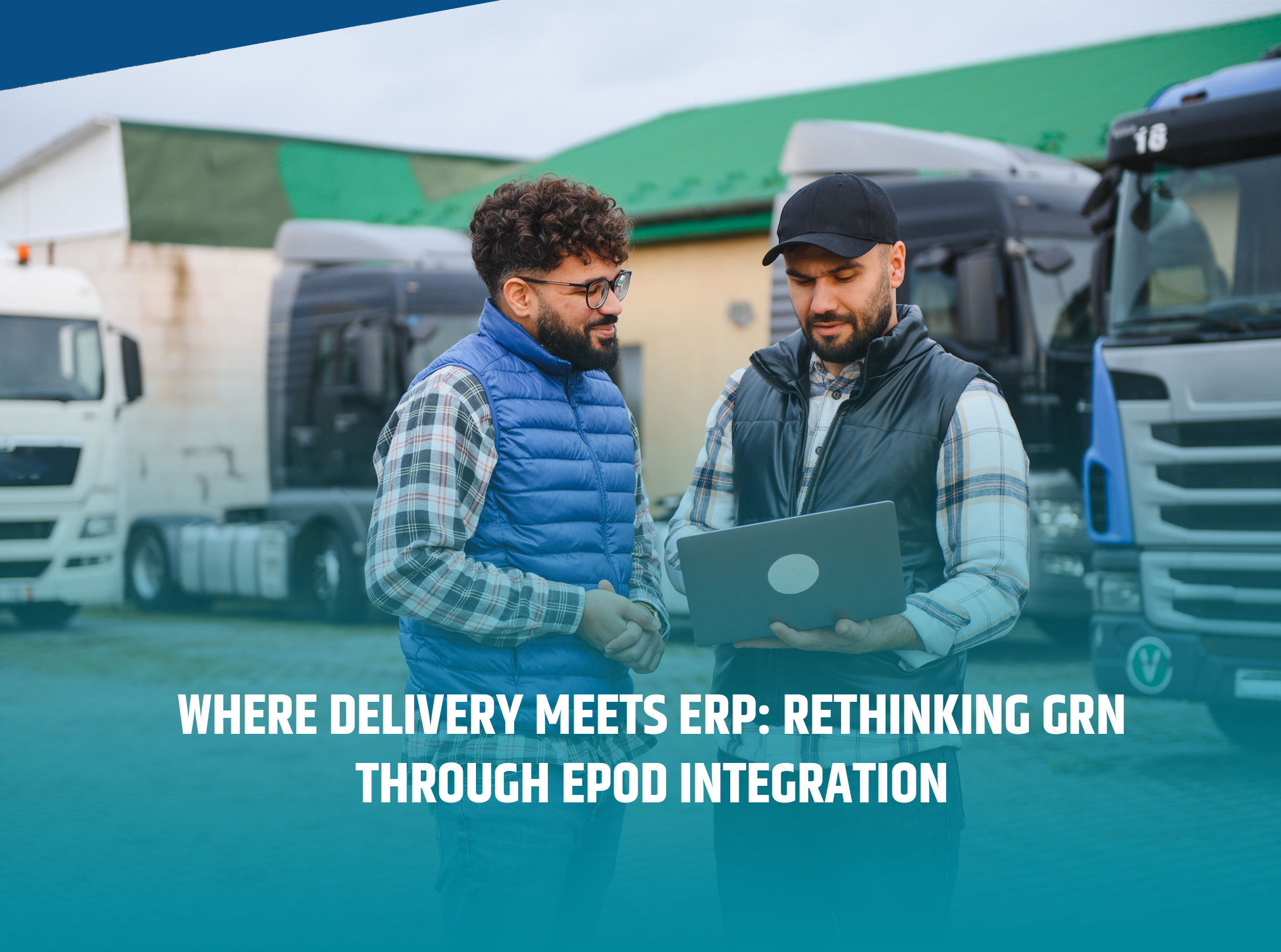
Where Delivery Meets ERP: Rethinking GRN Through ePOD Integration

Delivery may feel complete when the truck reaches the customer location—but operationally, that’s only half the journey.

In logistics operations, delivery is truly complete only when it is recorded, validated, and accepted inside the ERP system.

Every day, thousands of shipments are delivered across warehouses, distributors, and customer locations. But between physical delivery and ERP confirmation lies a silent operational gap.

This gap—often overlooked—directly impacts billing cycles, working capital, and operational efficiency.

Let’s explore how traditional delivery-to-GRN workflows create bottlenecks—and how ePOD integration is redefining delivery as a real-time system event.


The Silent Gap Between Delivery and ERP

In a typical logistics workflow, delivery and system updates do not happen simultaneously.

Instead, there is a delay between physical delivery and ERP acknowledgment.

1. Manual Proof of Delivery Handling

In traditional operations, once the shipment reaches the customer location, the driver collects a physical Proof of Delivery (POD).

This document is then shared through phone calls, emails, or messaging apps before reaching warehouse or accounts teams.

Only after verification does the team create the GRN (Goods Receipt Note) inside the ERP.

This multi-step manual process introduces delays and increases operational dependencies.

2. Disconnected Execution and System Visibility

Delivery may happen on the ground, but the ERP system remains unaware until someone manually updates the data.

This disconnect between execution and system recording creates visibility gaps across logistics, warehouse, and finance teams.

As a result, companies often experience:

  • Delayed GRN creation
  • Dependency on multiple teams
  • Lack of real-time delivery visibility
  • Missing or misplaced delivery documents
  • Slower invoice processing

Even a delay of a few hours can significantly affect cash flow in high-volume logistics operations.


Why Traditional GRN Processes Create Bottlenecks

Even organizations using advanced ERP systems like SAP often depend on manual validation before GRN creation.

This introduces operational inefficiencies that slow down financial workflows.

1. Dependency on Multiple Stakeholders

GRN creation typically involves coordination between drivers, warehouse teams, and finance departments.

Each dependency adds time to the process, increasing the chances of communication delays.

2. Delayed ERP Data Entry

Manual entry of delivery confirmation into ERP systems often leads to delayed updates.

Until GRN is created, downstream processes such as invoicing and reconciliation cannot begin.

3. Increased Reconciliation Efforts

Since delivery data is captured outside the ERP initially, teams must manually reconcile logistics records with ERP data.

This creates additional administrative workload and increases the risk of inconsistencies.

In short, delivery may be completed physically—but from a system perspective, it remains pending.


How ePOD Transforms Delivery Into a Real-Time System Event

Electronic Proof of Delivery (ePOD) fundamentally changes how delivery events are captured and processed.

Instead of treating POD as a document that moves after delivery, ePOD treats delivery as a real-time digital event.

1. Instant Digital Proof Capture

With ePOD systems, drivers capture delivery confirmation digitally using mobile devices.

This includes:

  • Timestamp recording
  • Location validation
  • Customer acknowledgment
  • Digital proof storage

All delivery data becomes instantly available within the system.

2. Direct Integration With ERP Systems

With real-time electronic proof of delivery integration with ERP, delivery confirmation flows directly into the system.

This allows GRN creation to be triggered automatically without manual follow-ups.

The result is faster, more reliable delivery-to-system synchronization.


How ePOD Enables Automated GRN and Faster Billing

The true strength of ePOD lies in its ability to connect field execution with ERP workflows.

This integration significantly improves financial efficiency and operational speed.

1. Instant GRN Triggering

Delivery confirmation automatically initiates GRN posting inside ERP systems.

This eliminates manual dependency and reduces process delays.

2. Accelerated Invoice Cycles

With GRN available in real time, billing teams can generate invoices immediately.

This reduces revenue delays and improves financial performance.

3. Reduced Operational Dependencies

Digital workflows minimize the need for repeated calls, emails, and manual validation between teams.

Operations become faster and more predictable.

4. Improved Data Accuracy

Digital capture reduces the risk of errors caused by manual entry or lost paperwork.

Reliable data improves audit readiness and reporting accuracy.

5. Enhanced Working Capital Efficiency

Faster GRN and billing cycles directly improve cash flow and reduce working capital blockage.

This enables businesses to operate more efficiently at scale.


From Disconnected Processes to Unified Operations

The transformation driven by ePOD is not just automation—it is integration across the entire logistics ecosystem.

With end-to-end delivery-to-ERP integration, organizations gain real-time synchronization between field operations and enterprise systems.

This enables:

  • Real-time synchronization between delivery and ERP workflows
  • Seamless coordination across logistics, warehouse, and finance teams
  • Complete visibility into delivery and system updates
  • Data-driven operational decision-making

This eliminates the traditional lag between “delivery completed” and “delivery recorded.”


Why This Shift Is Critical for Modern Supply Chains

Today’s logistics environment demands speed, transparency, and operational precision.

Manual delivery confirmation processes can no longer support the complexity of modern supply chains.

Businesses today face increasing pressure to:

  • Provide faster billing and customer transparency
  • Maintain tighter control over working capital
  • Ensure real-time operational visibility
  • Improve accuracy across logistics workflows

Digital transformation in logistics is no longer limited to tracking shipments.

It now involves ensuring that every operational event is instantly reflected inside core enterprise systems.


Turning Delivery Into a Real-Time Business Event

Delivery is no longer just a physical milestone—it is a critical data event that must seamlessly flow into ERP systems.

Organizations that adopt digital proof of delivery solutions gain faster processes, improved visibility, and stronger financial control.

This is where Spinclabs plays a vital role.

By enabling real-time ePOD integration with ERP platforms such as SAP, Spinclabs helps organizations bridge the gap between on-ground logistics execution and system-level updates.

From automated GRN creation to faster invoice processing, the platform ensures that delivery is not just completed—but instantly reflected across the business ecosystem.

As modern supply chains continue to evolve, success will depend not only on delivering on time—but ensuring that systems know it at the same moment.


👉 If your logistics operations still rely on manual POD-to-GRN workflows, it may be time to explore ePOD-enabled solutions that provide real-time integration, faster billing cycles, and stronger operational visibility.

Why FMCG Supply Chains Still Run on Excel (And Why That’s Dangerous)

The FMCG industry moves fast—sometimes faster than the systems that support it.

Every day, thousands of products move from factories to distributors, warehouses, retailers, and finally to customers. This constant movement requires coordination, visibility, and quick decision-making.

Yet surprisingly, many FMCG companies still rely heavily on Excel spreadsheets to manage critical supply chain operations.

While Excel may feel familiar and convenient, it creates serious risks when used to manage complex logistics operations. What once worked for small operations can quickly become a bottleneck as businesses grow.

Let’s explore why Excel is still widely used in FMCG supply chains—and why continuing to depend on it can be dangerous.


Why FMCG Companies Still Use Excel

Despite the availability of modern logistics platforms, Excel remains deeply embedded in supply chain processes.

1. Familiarity and Comfort

Excel has been around for decades. Most operations and logistics teams are comfortable using it, and many companies already have large data sets stored in spreadsheets.

Because of this familiarity, teams often prefer to continue using Excel rather than adopting new systems that require training and process changes.

However, familiarity does not always translate into efficiency—especially when operations become more complex.

2. Lack of Integrated Technology

Many FMCG companies operate with multiple disconnected systems such as ERP platforms, warehouse operations, transport vendors, and distributor networks.

Without an integrated platform connecting these systems, teams often rely on Excel as a manual bridge to compile and manage data from different sources.

The result is that logistics teams spend more time collecting and updating information than actually making supply chain decisions.

3. Perceived Cost of Digital Transformation

Some organizations hesitate to implement modern logistics technologies due to concerns about costs or implementation complexity.

Excel appears to be a low-cost solution because it already exists within the organization. However, the hidden costs of inefficiencies, delays, and operational errors can be significantly higher over time.


The Hidden Risks of Running Supply Chains on Excel

What works for basic tracking can quickly become risky when managing high-volume FMCG operations.

1. Lack of Real-Time Visibility

Excel spreadsheets provide only static snapshots of data.

Once a file is saved or shared, the information can quickly become outdated. In FMCG supply chains where deliveries, inventory levels, and vehicle movements change constantly, delayed information can lead to poor decision-making.

Without real-time visibility, companies often struggle to answer critical questions such as:

  • Where is my shipment right now?
  • Are deliveries running on schedule?
  • Which orders are delayed?

2. High Risk of Manual Errors

Excel relies heavily on manual data entry, which increases the likelihood of human errors.

A small mistake—such as an incorrect formula, duplicate entry, or misplaced column—can disrupt planning decisions, inventory allocation, or delivery schedules.

In large FMCG networks managing thousands of shipments daily, even minor errors can create significant operational challenges.

3. No End-to-End Supply Chain Visibility

Modern supply chains involve multiple stakeholders, including manufacturers, warehouses, transporters, distributors, and retailers.

Excel files rarely provide full visibility across the entire supply chain. Instead, data becomes fragmented across departments and multiple spreadsheets.

This lack of visibility often leads to:

  • Delayed deliveries
  • Poor demand planning
  • Inefficient route utilization
  • Increased logistics costs

4. Limited Scalability

As FMCG companies expand into new markets or increase distribution volumes, spreadsheet-based workflows become increasingly difficult to manage.

More orders mean more spreadsheets, more manual updates, and more coordination challenges.

At scale, Excel simply cannot handle the complexity of modern logistics operations efficiently.


Why Modern FMCG Supply Chains Need Smarter Platforms

Today’s supply chains require real-time data, automation, and intelligent decision-making capabilities.

Modern digital logistics platforms combine transportation planning, shipment tracking, route optimization, and performance analytics into a unified ecosystem.

Instead of manually updating spreadsheets, supply chain teams gain:

  • Real-time shipment tracking
  • Automated delivery planning
  • Integrated fleet and distributor visibility
  • Data-driven operational insights

These capabilities help organizations shift from reactive operations to proactive supply chain management.


Moving Beyond Excel for Future-Ready Supply Chains

Excel will always remain a useful tool for data analysis and reporting. However, relying on it to manage complex logistics operations is becoming increasingly risky.

For FMCG companies operating in competitive markets, efficiency and visibility are no longer optional—they are essential for sustainable growth.

By adopting modern transportation and logistics management platforms, businesses can streamline operations, reduce errors, and ensure that products reach customers faster and more reliably.

As supply chains continue to grow in scale and complexity, the real question is no longer whether FMCG companies should move beyond spreadsheets—but how soon they can make the transition.


👉 If your FMCG supply chain still depends heavily on spreadsheets, it may be time to explore modern logistics solutions that provide real-time visibility, automation, and scalability for future growth.