What Is a Driver Monitoring System in Modern Vehicles?

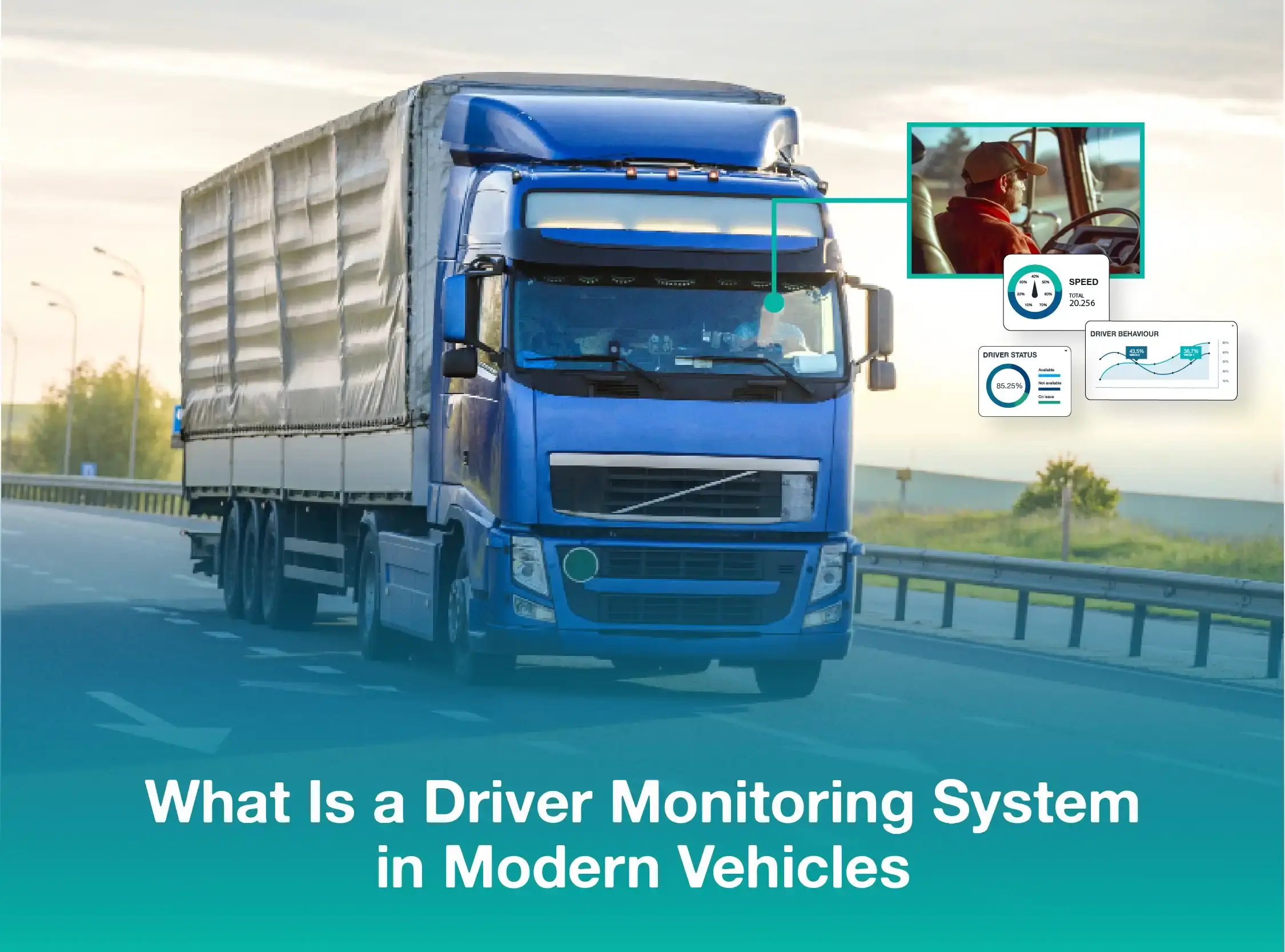
Vehicle safety is the most important aspect of any logistics business, and half of it is linked to driver behaviour. In traditional fleet management systems, vehicle safety remains more problematic because the traditional modes of fleet management are incapable of monitoring driver behaviour. On the other hand, modern fleet management solutions can do it efficiently. Since advanced fleet management software includes a Driver Monitoring System or DMS, it can consistently observe and assess driver behaviour and condition to enhance road safety and fleet efficiency. Traditional logistics methods can’t monitor the aspects like driver fatigue, distraction, or harsh driving, but modern fleet management systems equipped with DMS technology can track them all. These systems use IoT sensors, 360-degree and infrared cameras, GPS, and DMS tracks driver actions, such as eye movement, head position, blink rate, facial expressions, harsh braking, speeding, and idle times. This real-time monitoring notifies drivers and fleet managers immediately when signs of drowsiness, distraction, or other unsafe behaviors occur, preventing accidents caused by human error. Let SpincLabs tell you what is a Driver monitoring system and how integrating ADAS and DMS can enhance fleet safety!

Logistics businesses, relying on traditional methods can barely monitor things like driver behaviour. Driver behaviour is something that remains beyond control. However, with an advanced fleet management system, you can keep an eye on driver behaviour as well. These advanced systems include a driver monitoring system that lets you monitor each and every movement of the driver, such as fatigue detection, drowsiness, idle times, harsh braking and other aspects. Driver monitoring systems include IoT sensors, ADAS, real-time vehicle monitoring, video telematics and so on. 

These intelligent systems collect all the data from GPS devices, onboard IoT sensors, and 360-degree cameras, and monitor all vehicle and driver activities. Let SpincLabs show you how driver monitoring systems work in modern vehicles!

What Is a Driver Monitoring System?

Monitoring driver behaviour has become easy with the Driver Monitoring System or DMS. The DMS is an in-vehicle safety technology that consistently monitors and observes driver behaviour and condition. This kind of monitoring ensures alertness and focus while driving. The technology includes 360-degree cameras and IoT sensors, and is capable of tracking signs of fatigue, drowsiness, and distraction by analyzing eye movement, head position, blink rate, and facial expressions. When it detects that a driver is drowsy, inattentive, or otherwise impaired, it sends instant alerts or warnings to you. This prevents the possibility of accidents caused by human error. DMS acts as a real-time co-pilot, watching over the driver when fatigue might set in or when attention drifts. Also, the system helps you keep track of other important aspects of driver behaviour, such as harsh braking, speeding and idle times. 

Features of The Driver Monitoring System

Smart, intelligent AI-enabled fleet management systems make the fleet highly efficient. They have highly advanced features that make them capable of tracking driver movements during fleet operations. The operations can be monitored from daytime to nighttime through modern DMS using 360-degree infrared cameras. These infrared cameras monitor drivers even in low light, hence are perfect for nighttime conditions and operations. Also, these cameras can capture detailed facial data without interfering with driving. Once the system records detailed facial data, it processes this visual data using specialized software that interprets eye closure duration, gaze direction, yawning frequency, and head nodding. These are some of the symptoms of drowsiness or distraction.

Some advanced Driver monitoring systems are also capable of measuring physiological signals like heart rate or respiration using in-built sensors or wearable devices. This way, they can provide a detailed insight into driver health and behaviour. The smart combination of camera-based observation and sensor fusion provides data and consistent tracking of accurate driver states.

What Driver States Does the DMS Monitor?

Usually, the driver monitoring systems focus on five crucial states. These five states are drowsiness, mental workload, distraction, emotional state, and visual impairment (such as being under the influence of alcohol or drugs). Each state affects driving performance and behaviour differently. Therefore, by continuous and consistent way, it means the system can assess and analyze these states. The system can alert the driver, send you instant notifications to increase or engage safety features.

  • Drowsiness can be detected easily with Driver monitoring system. It detects when eyes close for longer durations or head drops, indicating fatigue.
  • The system also detects ‘Mental Workload’ as it can assess cognitive saturation that can occur during complex or stressful driving.
  • A driver monitoring system can identify distractions. It identifies gaze away from the road, such as phone use or looking sideways.
  • Emotional State can be analyzed as well. It can recognize emotions, such as stress or anger, that might impair judgment.
  • Impairment, though it is hard to detect fully, however, the systems can look for irregular behaviours, such as intoxication or medication effects.

How Does DMS Enhance Vehicle Safety?

We are all aware of how the errors of the driver and driving behaviour can become a major factor for road accidents. The majority of road accidents happen globally due to driver errors and behaviour. Driver Monitoring System in a fleet management software can reduce this risk. It provides an extra layer of vigilance and consistent monitoring that a driver alone cannot maintain during long or monotonous drives. 

  • In fleet management solutions, DMS can often be integrated with Advanced Driver Assistance Systems or ADAS, complementing features like lane departure warnings, automatic braking, and adaptive cruise control. These features ensure that the driver remains ready to intervene during driving in such a manner. Many government vehicles now require DMS in new vehicles due to their safety benefits. Hence, in commercial and passenger vehicles, DMS have become a necessity to enhance vehicle safety.
  • Similarly, for individual drivers, DMS can improve safety by preventing accidents caused by fatigue or distraction. For fleet businesses and operations, the system has become an important feature to monitor driver behaviour remotely, enforce rest schedules, and improve fleet safety metrics. Also, its real-time feedback and detailed reports encourage better driving habits. This further lowers accident rates.

Driver Monitoring Systems Are Essential!

These systems no doubt have become essential for every fleet management system. We can easily say that the future systems will become even more advanced, using artificial intelligence to predict driver states, integrating biometric data, and communicating smoothly with traffic management infrastructure. With ongoing innovation, Driver Monitoring Systems will evolve even more. If you are still relying on your traditional ways of fleet management, driver monitoring can be a challenge for you. You must switch to intelligent AI-enabled fleet management software, such as SpincLabs, that includes DMS for easy, efficient driver monitoring. 
FAQ’s

What does a Driver Monitoring System or DMS do?
A DMS can consistently track driver behaviour and physiological signals using 360-degree cameras and sensors to detect fatigue, distraction, harsh driving, and other factors. It provides real-time alerts to prevent accidents.

How does DMS detect driver drowsiness or distraction?
Using 360-degree infrared cameras and specialized software, DMS can analyze eye closure duration, gaze direction, head nodding, yawning frequency, and facial expressions. These signs indicate fatigue or distraction.

What driver states can be monitored by these systems?
A DMS can monitor five states: drowsiness, mental workload, distraction, emotional state (like stress or anger), and visual impairment (including intoxication).

How does integrating DMS improve fleet safety?
It provides consistent driver behaviour monitoring and instant alerts. DMS reduces accident risks caused by human error. When paired with ADAS features such as lane departure warnings or automatic braking, it creates a safer driving environment.

Are these systems effective during nighttime or low-light conditions?
Since advanced DMS uses infrared cameras, they provide clear monitoring regardless of lighting conditions without interfering with the driver.

Why Tyre Pressure Monitoring Matters for Safety?

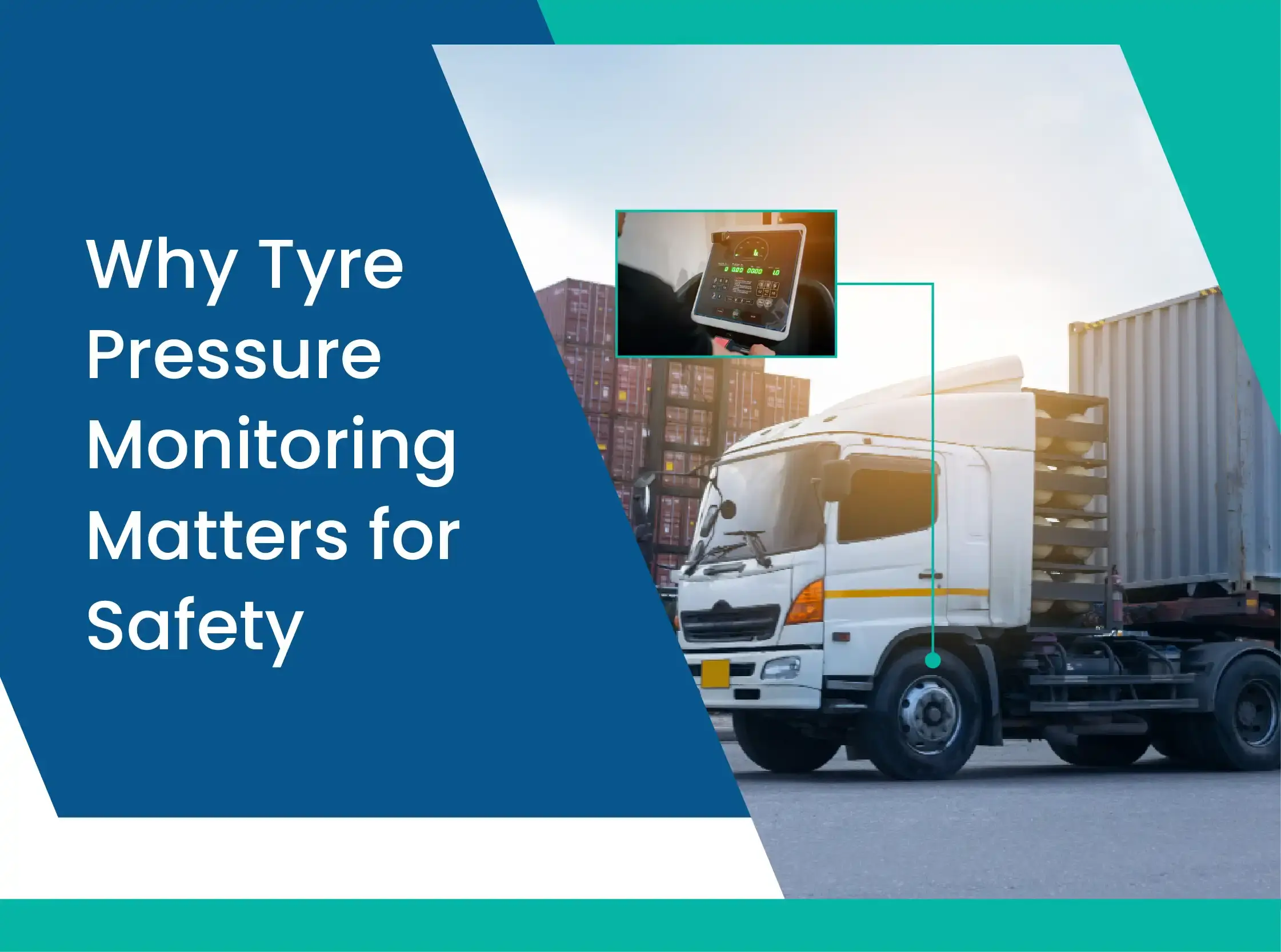
For every fleet management, monitoring tyre pressure is just as important as keeping an eye on engine health. Maintaining the right tyre pressure for your vehicle is essential for safety, optimum vehicle performance, and controlling fuel costs. However, many people tend to ignore it as an essential factor and tyre pressure often goes unchecked. That’s why integrating tyre pressure monitoring systems into fleet management is necessary. TPMS devices consistently measure tyre pressure and temperature and send instant alerts if they detect any drop in pressure. This real-time data helps fleet managers prevent blowouts, uneven tyre wear, and loss of stability, ensuring safer and more efficient fleet operations. Let Spinclabs show you how TPMS technology provides accurate monitoring and timely alerts to keep tyre pressure and your fleet’s performance on track!

People often ignore the fact that tyre pressure monitoring is as important as monitoring engine health. Maintaining optimum air in tyres means optimum vehicle efficiency because when we drive, tyres are the only parts of the vehicle touching the road. It is the combination of the narrow interface of rubber, air, and engineering that supports tonnes of load and controls direction, braking, and stability on the road. That’s why maintaining the correct tyre pressure is not just about comfort or keeping an eye on fuel consumption, but an important factor that affects vehicle safety, performance, and operating costs for your fleet. However, since logistics businesses have complex operations, we often forget to keep tyre pressure monitoring in check. That’s why we need a fleet management system that includes tyre pressure monitoring device to keep track of tyre pressure! 

So, what are these automatic tyre pressure monitoring systems and how can they help you keep tyre pressure intact? Let SpincLabs show you!

Why Maintaining Tyre Pressure and Safety is Important?

Maintaining tyre pressure is necessary because it is the ‘Tyre Pressure’ that affects how well a tyre grips the road. Underinflated tyres have a smaller effective contact patch and cause uneven wear, overheating, and increased rolling resistance. This means the possibilities of dangerous blowouts, especially on highways or heavy loads, increase. If you overinflate the tyres, it will lead to a harsh ride and reduced traction, which will make vehicles harder to control, especially in wet or slippery conditions. 

Even in terms of braking, improperly inflated tyres lengthen stopping distances. This is an alarming aspect of safety in emergency maneuvers. Stability on the road and performance also degrade with incorrect pressure levels, hence, rollover risk for larger vehicles like trucks and SUVs increases. That’s why the automatic tyre pressure monitoring device becomes important for all vehicles.

Tyre Pressure Monitoring Systems

Advanced fleet management systems keep track of every aspect of your vehicle. This includes driver behaviour monitoring, fuel consumption, vehicle health monitoring and so on. A Tyre Pressure Monitoring device in a fleet management solution is the device installed in your vehicles. They consistently measure the air pressure inside each tyre. This tyre pressure warning system gives you instant alerts when the pressure differs from the optimal range. It is quite different from the manual checks because these systems are capable of providing real-time, accurate information about tyre health. Obviously, manual checks can’t be consistent and lack accuracy. 

The tyre pressure warning system enables timely maintenance and ensures safety on the road. Hence, by monitoring tyre pressure and temperature, TPMS helps prevent dangerous situations like blowouts, uneven tyre wear, and decreased vehicle stability. 

How Do Car Tyre Pressure Sensors Work?

Many people often wonder about how car tyre pressure sensors work. The tyre pressure monitoring system uses sensors mounted in or on the tyres to transmit data to the driver’s dashboard or fleet management system. This detailed data helps in predictive management and keeping the air pressure optimum in the tyres. Maintaining correct tyre pressure with the support of TPMS improves braking performance, vehicle handling, fuel efficiency, and extends tyre life. In commercial fleets, TPMS means safer driving conditions, reduced downtime, and cost savings by preventing sudden breakdowns due to under-inflated tyres. The accurate data from an automatic tyre pressure monitoring device keeps the vehicle safe and therefore, it has become an essential technology for modern transport safety.

  • Direct TPMS

Sensors inside each tyre measure pressure and temperature. They accurately transmit data to the vehicle’s onboard computer.​ Businesses prefer these direct tyre pressure monitoring devices for their accuracy and the ability to monitor individual tyres independently. Direct TPMS sensors are sealed units. This means their batteries cannot be replaced easily, and the sensors need to be mounted or removed carefully during tyre changes. Still, they are highly reliable and provide exact pressure readings for each tyre individually.

  • Indirect TPMS

There is also an indirect type of TPMS that analyzes tyre pressure by monitoring the rotational speed of each wheel using existing ABS sensors. Underinflated tyres have smaller diameters and rotate faster. This way, the system measures pressure loss by detecting this difference. However, it is less precise than direct sensing because it uses wheel speed sensors to analyze or measure tyre pressure differences.​

Benefits of Tyre Pressure Monitoring Systems or TPMS

It has become essential for every logistics or fleet management business to have air pressure monitoring system cars or other vehicle-specific. The fleet management system and tyre pressure monitoring devices provide real-time, consistent monitoring of each tyre’s pressure (and often temperature). When pressures fall below or rise above safe thresholds, TPMS sends instant alerts to you to enable timely corrective action.​ Let SpincLabs show you what else it is capable of!

  • Fuel and Cost Savings

Correct tyre pressure reduces rolling resistance. This means the vehicle engine will use less fuel to move vehicles. Hence, you can save more on fuel. This makes your vehicle fuel-efficient and cost-efficient. Moreover, properly inflated tyres wear more evenly, hence, you can extend tyre life, reduce maintenance and negate replacement expenses. Also, this way, your fleet becomes safer and more cost-efficient with fewer sudden breakdowns and accidents. 

  • Consistent Real-Time Data

Beyond tyre pressure warning system alerts, advanced air pressure monitoring system cars or any other vehicle can integrate video telematics and fleet management systems to provide detailed analytics. This detailed analytics include tyre pressure, temperature monitoring, and maintenance needs. This means predictive care, planning repairs before failures, improving driver safety, and minimizing downtime.​

Choose The Best Fleet Management System!

Nowadays, installing a tyre pressure monitoring system or air pressure monitoring system cars has become important for every business. A fleet management system and TPMS can prevent accidents, boost fuel efficiency, and extend tyre life. Remember, properly inflated tyres are a safety essential for your fleet. Installing TPMS in new vehicles can reduce road fatalities related to tyre-related accidents. Hence, the best fleet management system with integrated TPMS is necessary for all fleet management or logistics businesses! 

FAQ’s

What is a Tyre Pressure Monitoring System or TPMS?
TPMS is a safety feature that uses sensors to continuously monitor the air pressure inside tyres. It alerts drivers and fleet managers whenever pressure falls outside safe levels, allowing for corrective action before problems escalate.

Why is monitoring tyre pressure so important for safety?
Incorrect tyre pressure reduces tyre grip, leads to overheating, increases stopping distances, and raises the risk of blowouts, especially under heavy loads or in emergency maneuvers. Proper pressure helps maintain vehicle stability and control.

How do tyre pressure sensors work?
Sensors mounted inside or on the tyre send pressure and temperature readings wirelessly to the vehicle’s dashboard or fleet software. Direct TPMS uses sensors in the tyre, while indirect TPMS estimates pressure from wheel speed differences.

How does TPMS benefit fleet operations beyond safety?
TPMS improves fuel efficiency by reducing rolling resistance, extends tyre life by ensuring even wear, decreases downtime with predictive alerts, and supports compliance by maintaining accurate inspection logs.

Can TPMS detect sudden tyre problems?
Yes, TPMS identifies rapid pressure loss, leaks, or temperature spikes early through continuous monitoring, enabling prompt intervention to prevent accidents or breakdowns.

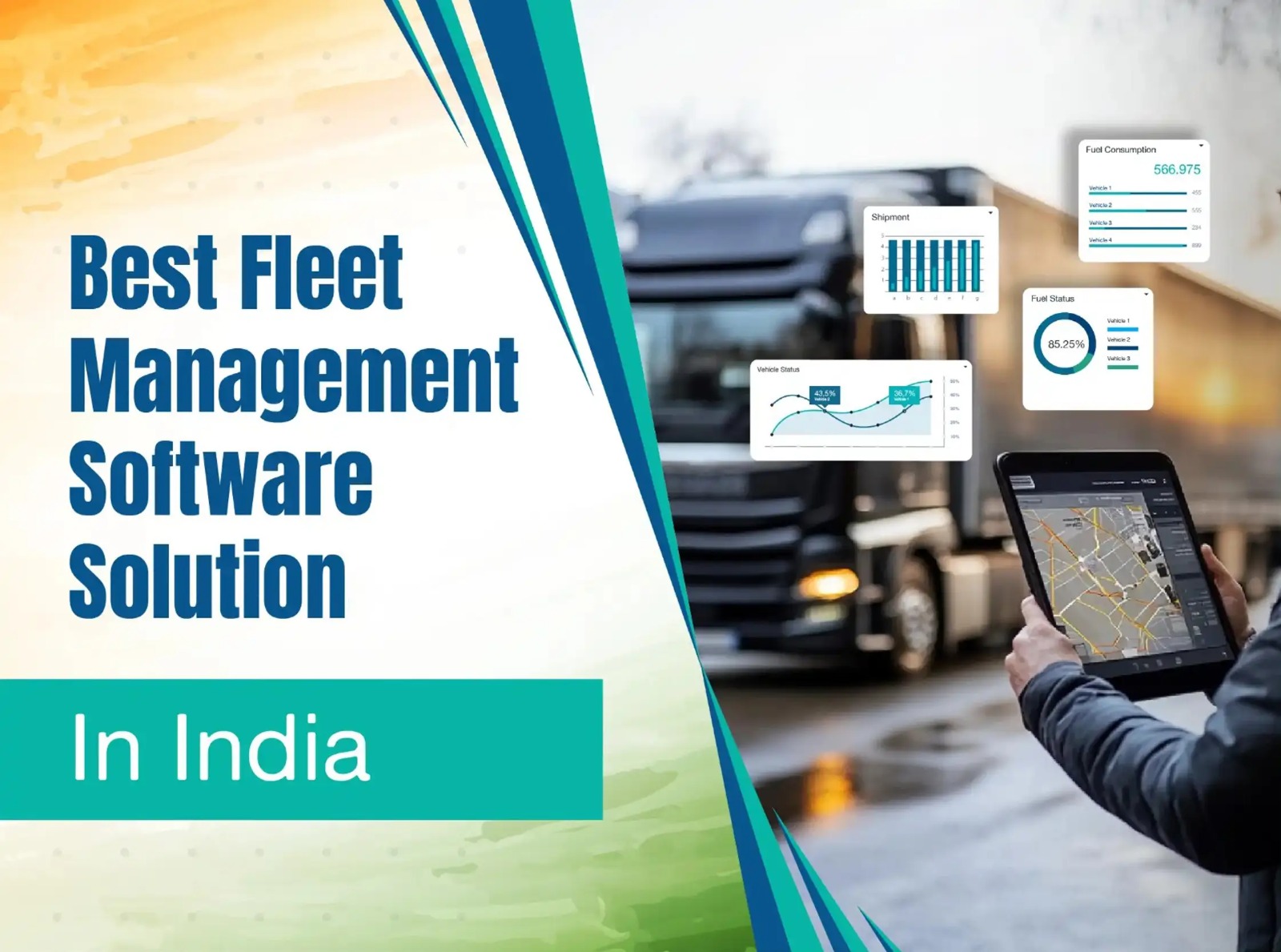
Best Fleet Management Software Solution in India

While traditional logistics businesses remain less scalable because of their traditional modes of fleet management, modern logistics businesses are becoming smarter, more efficient and scalable. The ways of traditional fleet management include many inefficiencies and a lack of visibility in their fleet operations. Modern logistics businesses use intelligent fleet management software platforms that provide higher operational efficiency and transparency, cost optimization, and complete real-time insight into their vehicle and driver activities. We know that manual systems lack control over fuel wastage, driver behaviour, and preventive maintenance. That’s why today’s cloud-based, AI-enabled solutions that use IoT, telematics, and advanced analytics have become a must-have for every logistics company. From the biggest fleet management companies to small logistics businesses, are using TrukrGPS, one of the most efficient fleet management software India by Spinclabs. Let SpincLabs show you how it can enhance visibility and transparency for businesses!

The Indian logistics businesses are expanding and making themselves efficient for the modern needs. That’s why modern businesses are choosing advanced and intelligent fleet management software India for their fleet operations. These advanced fleet management solutions help them to solve the challenges of operational transparency, cost, and visibility. Therefore, from the biggest fleet management companies to small logistics companies, are using these platforms to gain complete insights about their logistics operations. 

While traditional fleet management lacks complete visibility, such as no control over fuel wastage, driver behaviour and maintenance, modern fleet management software India negates these inefficiencies using smart technologies, such as IoT, data analytics, real-time visibility for vehicle health, maintenance, driver behaviour and other aspects. This way, an intelligent fleet management system ensures smooth operations and scalable growth for the biggest fleet management companies.​ Let SpincLabs show you how fleet management companies are using an intelligent AI-enabled fleet management solution​ for their fleet operations!

SpincLabs’ Fleet Management Solution 

Nowadays, there are many such fleet management solutions that are effective but somehow can’t gain you the scalability you want for your business. Not every fleet management software India is effective and efficient for your fleet management operations. That’s why choosing the perfect fleet management software is the biggest quest for logistics companies. In this crowded space of smart platforms, SpincLabs’ fleet management solution has become the best choice for the biggest fleet management companies. It can be integrated easily with all your vehicles and includes AI-enabled real-time tracking and monitoring for various aspects, such as vehicle health, driver behaviour monitoring, fuel consumption, and so on. 

Spinclabs’ TrukrGPS includes capabilities that go beyond standard vehicle tracking to provide an all-in-one fleet management suite crafted to solve various logistics challenges for your fleet operations.

  • Real-time GPS Tracking & Video Telematics

SpincLabs’ TrukrGPS includes advanced GPS tracking with video telematics that are capable of not only location data, but also visual verification of your vehicle. It helps you gain visual insights into driver behaviour. You can keep an eye on driver behaviour, such as harsh braking, speeding, idle times and drowsiness through video monitoring. This AI-enabled fleet video technology enhances safety, accountability, and overall fleet performance. Also, you get continuous real-time alerts and post-trip analytics. The complete detailed reports can be generated on driver behaviour, and you can work on improving inefficiencies.

  • Fuel Consumption Monitoring

Even the biggest fleet management companies have to face fuel inefficiencies, such as fuel consumption and wastage. Since advanced fleet management software India as TrukrGPS, uses advanced technologies, such as IoT sensors. These sensors can monitor fuel levels, detect leaks or fuel consumption. Also, it includes intelligent route analysis, which maximizes fuel efficiency. This is an advantage for fleet management businesses as fuel consumption remains one of the biggest challenges for any logistics business. Smart fuel consumption monitoring keeps track of fill-ups, drainage, and is capable of detecting inefficiencies or theft or leakage instantly. You can also generate detailed reports on fuel consumption monitoring, tracking and route analysis that can help you reduce operational costs.

  • Driver Behaviour Monitoring & Analytics

Real-time reports are important to identify inefficiencies, such as harsh braking or overspeeding. But traditional fleet management systems are incapable of doing so. Even for the biggest fleet management companies, driver behaviour and safety are something that feels beyond their control. With IoT-powered devices, it not only becomes possible but is also efficient. It can monitor all kinds of driver behaviour, including speed, acceleration and harsh braking, idle times and thus, keeps an eye on every driver behaviour. This makes it easy for drivers to adhere to safety protocols. Since consistent real-time alerts and post-trip analytics help you to identify the major issues, you can easily improve them and enhance safety standards for fleet operations through detailed driver scorecards and feedback.

  • Predictive Maintenance and Vehicle Health Monitoring

One of the major concerns for fleet management is vehicle maintenance. Since the biggest fleet management companies have larger fleets of vehicles, predictive maintenance becomes necessary for them. As we discussed earlier, fleet management software India includes IoT sensors that keep track of everything. This constant monitoring of important parts like the engine, tyre pressure, brake wear, and battery status. The sensors analyze each data point in detail to predict when maintenance is needed, schedule repairs timely manner, and minimize costly downtime. This is called predictive or preventive maintenance, which fixes things before the sudden breakdown. This process saves a lot of money on repairs and the frequent need for repairs. Also, it boosts vehicle availability, minimizes downtime and extends vehicle lifespans.​ Similarly, tyre pressure sensors and history logs prevent blowouts and improve safety.

  • ADAS Integration

Smart fleet management software includes ADAS or Advanced Driver-Assistance Systems. It uses IoT sensors, 360-degree cameras, and AI-enabled real-time data analytics that make fleet management smarter for the biggest fleet management companies to small logistics companies. It provides collision alerts, lane departure warnings, adaptive cruise control, pedestrian detection, and driver behaviour and fatigue monitoring. These features reduce accidents and improve driver safety.

What Does Best Fleet Management Software Include?

If you want scalability for your business, you must opt for the cloud-based, AI-enabled fleet management solutions. Hence, the biggest fleet management companies choose smart systems that integrate smoothly with IoT devices, provide AI-driven analytics, and data-driven, detailed reports on every aspect of the fleet. The best fleet management software must include features like these:

  • Real-time vehicle tracking with geo-fencing for enhanced operational control.
  • Route optimization algorithms to reduce idle time and fuel consumption.
  • Driver behaviour monitoring to encourage safe driving behaviour and reduce fuel consumption. 
  • Predictive maintenance alerts for vehicle health monitoring and minimize downtime.
  • Efficient fuel management platforms to monitor and prevent wastage.
  • Mobile access to oversee operations anytime, anywhere.
  • Unified dashboards to keep an eye on every aspect and for complete visibility.

Enhance Fleet Efficiency With Fleet Management Solutions!

Fleet management is transforming and evolving each day, and it no longer revolves around simple vehicle tracking. Nowadays, logistics businesses need a system that can anticipate, optimize, and scale. TrukrGPS system by SpincLabs understands the needs of the Indian logistics business, and hence, it has become an efficient fleet management solution for the biggest fleet management companies. It includes an all-in-one unified dashboard, live data feeds, and smart automation; therefore, it enhances real-time visibility, predictive maintenance, and optimizes operational costs with SpincLabs’ expertise.


FAQ’s

Why should you choose Spinclabs’ fleet management solution?
Spinclabs’ TrukrGPS system goes beyond simple tracking to provide you with predictive maintenance, video telematics, driver analytics, real-time fuel monitoring, and unified dashboards that enhance visibility and the efficiency of your fleet.

How does TrukrGPS enhance vehicle and driver safety?
The intelligent platform provides you with real-time GPS and video telematics, which can detect and monitor harsh driving behaviour, such as harsh braking, idle times, monitor driver fatigue, and generate detailed trip analytics. Features like ADAS (collision and lane warnings), visual verifications, and automated alerts decrease accident risk.

Can Spinclabs software help reduce fuel wastage and operating costs?
Yes. IoT sensors track fuel usage, detect leaks or theft, and optimize routes for minimum consumption. The system has advanced reporting features that help you improve fleet efficiency and generate detailed reports about fuel consumption.

What is predictive maintenance?
Spinclabs’ platform analyzes sensor data on engine, brakes, tyre health, and battery. It consistently monitors it to identify inefficiencies regarding vehicle health, such as maintenance needs. This helps us negate sudden breakdowns, reduce emergency repairs, and extend vehicle lifespans.

How does Spinclabs’ solution scale for large versus small fleets?
Spinclabs’ fleet management system is highly scalable and integrates smoothly with various vehicle types and fleet sizes. Its cloud platforms are customizable for specific industry requirements (EV, pharma, school bus, delivery logistics), making it suitable for large-scale businesses to smaller fleets.

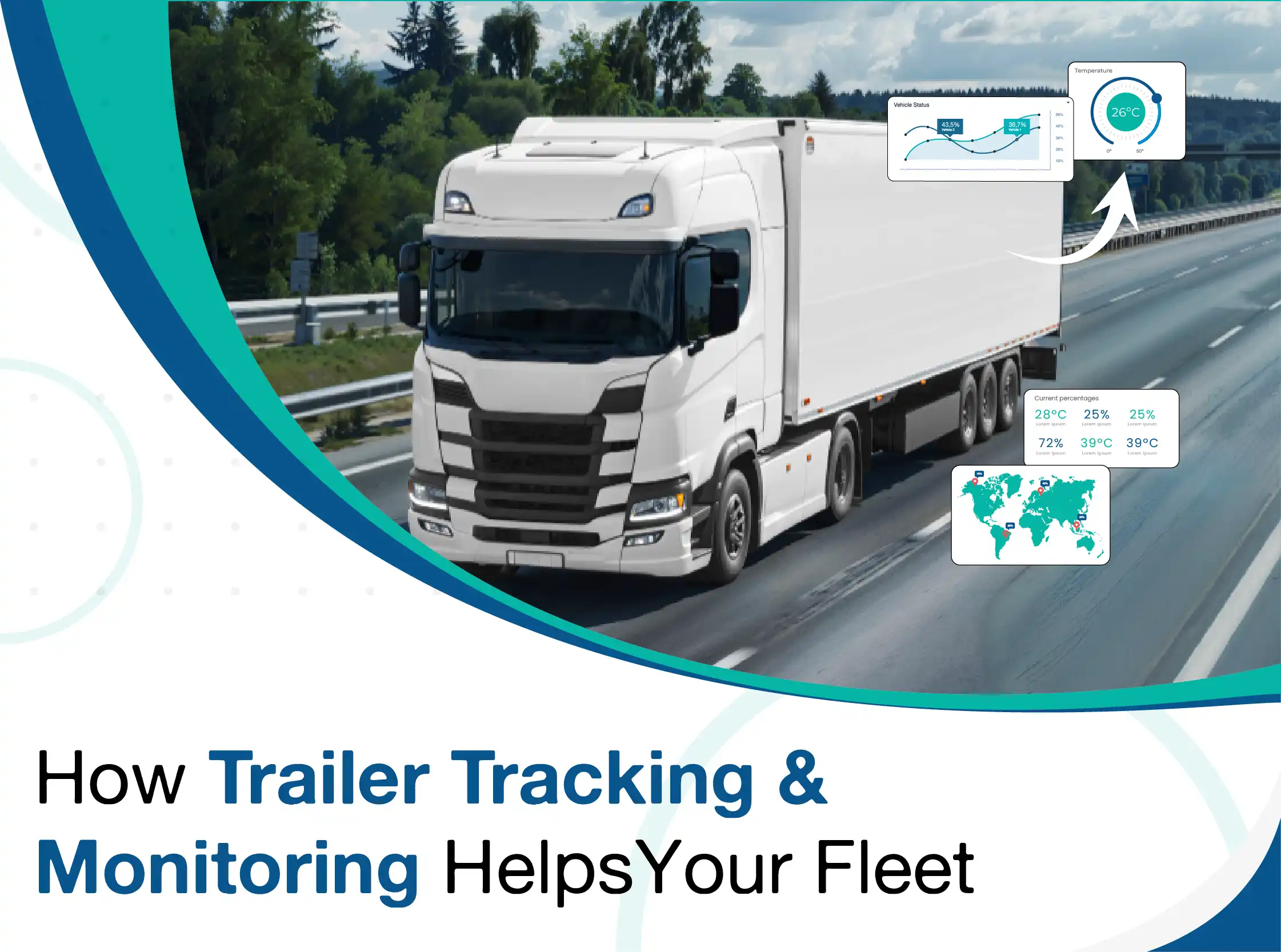
How Trailer Tracking and Monitoring Helps Your Fleet?

Real-time visibility for fleets or trailers is as important as the fuel for a vehicle. That’s why logistics businesses are choosing advanced trailer tracking and monitoring to enhance their fleet management operations. These advanced systems provide them with real-time visibility and complete control over trailers, which traditional fleet management solutions struggle with. This technology enhances transparency and real-time visibility by tracking trailer location, cargo status, idle times, vehicle health, fuel consumption and driver behaviour, therefore, improving operational efficiency. Since trailer tracking systems in fleet management can also be capable of route optimization and ensure fleet safety through geofencing, it reduces operational costs. These systems benefit logistics businesses in many ways. Let SpincLabs show how trailer tracking and monitoring helps your fleet operations!

Fleet management has become more efficient than ever. As we know that traditional fleet management lacks in so many ways because of certain limitations, whether it is in advanced technologies or scalability. With the traditional fleet management tracking vehicle in real-time becomes impossible. That’s why every traditional fleet management business needs to switch to a smart tracking system for trailers. Modern fleet management systems use advanced technologies, such as video telematics, real-time fleet monitoring, vehicle health tracking, driver behaviour monitoring and other things. 

These advancements are transforming fleet management and making everything efficient than ever. Let SpincLabs show you how smart fleet management benefits your logistics business and how trailer tracking and monitoring make a fleet management tracking vehicle super easy for you!

Why You Need a Trailer Management System?

This is quite simple to understand. An unmonitored trailer means no visibility and transparency for your business because an unmonitored trailer includes so many inefficiencies, such as untracked idle times, unmonitored fuel wastage, unknown driver availability, and untracked delivery times. Also, every unscheduled stop, every unexpected delay, and every moment spent in an unsecured lot means a higher level of risk. Now, if you opt for a smart fleet management system that includes a trailer management system, everything becomes super transparent and highly visible. Let’s see what are the advantages of fleet management system!

  • Trailer tracking means to view the trailer’s activity in real-time. Even when someone opens the cargo door, you will get instant alerts. 
  • It lets you know whether the cargo temperature is stable or not. 
  • If a trailer has been sitting idle for too long, it notifies you immediately.
  • A trailer management system improves the visibility of your fleet operations. 

Implementing advanced trailer tracking and monitoring or installing a tracking system for trailers is like turning on the lights in a dark warehouse; it provides a constant, real-time data that extends far beyond a simple GPS or fleet management tracking vehicle. 

Fleet Management Benefits

An Advanced fleet management benefits you in many ways, as it can provide real-time intelligence and immediate alerts to protect your operations. This means you gain complete control over every aspect of your fleet. Hence, a tracking system for trailers make your logistics operations smarter, not harder.​ Trailer tracking and monitoring is the a need for modern fleet businesses because the location of your trailers doesn’t mean everything. You need to know the real-time details of every aspect of your fleet. This is what makes fleet management tracking vehicle efficient for businesses. Let’s see what the advantages of fleet management system are and how its tracking system for trailers helps you!

  • It Gives You Complete Visibility

Every fleet business knows how visibility into fleet operations comes above everything as unseen trailers mean unproductive operations. A tracking system for trailers with GPS-based trailer tracking, you gain complete real-time visibility into every moving or stationary unit. Therefore, you know the accurate location of your trailers, their load conditions, idle durations, keep an eye on driver behaviour, fuel consumption and vehicle health. This complete visibility helps you negate unnecessary downtime and make your fleet operations efficient and cost-effective.​

  • It Enhances Fleet Safety

Since fleet operations often include high-value cargo, it makes fleet safety most important aspect of fleet management. That’s why opting for a fleet management system that enhances fleet safety. Advanced fleet management benefits include AI-enabled tracking systems that provide geofencing capabilities for each aspect of your fleet operations. These fleet management tracking vehicle devices alert you in real-time if they identify any inefficiency or if a trailer strays off route or moves outside designated zones. Hence, these real-time location updates can help you track everything easily and enhance safety for your fleet operations.​

  • Better Fleet Optimization & Trailer Tracking 

Frequent idle times mean higher operational costs for your logistics business. With trailer monitoring, fleet management benefits businesses as they can identify the inefficiencies and work towards improvement which improves fleet optimization. If some trailers are taking too much idle time while others are overburdened, you can repurpose or resize the fleet accordingly. Hence, better fleet optimization, fewer breakdowns, reduced fuel consumption, optimized delivery schedule and better work distribution.​

  • Maintenance Becomes Easy

Intelligent IoT sensors on fleet management tracking vehicle can track mileage, temperature, and usage patterns. Since they consistently monitor vehicle health and keep historic data, they can identify when a vehicle needs maintenance. They send you immediate alerts for timely maintenance and negate the possibility of sudden vehicle breakdown. This kind of predictive analytics helps you identify issues in advance, this prevents delays and costly repairs. Also, it tracking systems for trailers include smart automation, which means it can make compliance reporting easier and ensure all transport regulations and temperature standards are being monitored.​

  • Real-time Trailer Monitoring & Tracking 

A fleet management benefits your business by keeping an eye on every aspect of your fleet through smart video telematics, IoT sensors, driver behaviour monitoring, vehicle health monitoring, and fuel tracking. Since modern logistics need higher transparency, the real-time trailer tracking or fleet management tracking vehicle provides you with accurate delivery ETAs and exact real-time trailer monitoring. Also, the collected telematics data gives detailed reports and insights about trailer routing, load optimization, and driver behaviour. You can analyze the data through detailed reports, choose fuel-efficient paths, cut idle time, and improve efficiency further. 

Let’s Make Fleets Smarter!

So, now that you know the advantages of fleet management system and its trailer tracking and monitoring efficiencies, you can transform your logistics operations with SpincLabs. These systems can be integrated easily with cloud-based software and mobile platforms, hence providing you with remote monitoring, easy access to real-time data, and better visibility. If you need highly efficient trailer tracking systems, you must choose real-time tracking through SpincLabs cloud-based fleet management system as it does more than usual tracking movement.

FAQ’s

What is a trailer tracker?
A trailer tracker is an advanced GPS-enabled device. It can be attached to trailers to provide real-time location updates, track movements, monitor cargo conditions, and collect data on every vehicle aspect. Unlike vehicle trackers, trailer trackers can operate independently, using battery or solar power.

How do geofencing and real-time alerts help fleet management?
Geofencing means to mark geographical boundaries, such as job sites, delivery circles, or a warehouse. You receive instant real-time alerts if a trailer enters or leaves these zones, hence enhances fleet or trailer safety.

Can I access trailer tracking data remotely?
Yes, most fleet management systems include cloud-based software and mobile apps. This makes remote monitoring easy, provides detailed reporting, and data access anytime from anywhere.

How accurate is trailer tracking?
Trailer trackers provide GPS location accuracy within a few feet; however, it depends on GPS signal strength and update frequency. Some systems use additional technologies like cellular and WiFi triangulation, which can improve accuracy further.

Why should we invest in a trailer tracking system?
Trailer tracking systems improve fleet visibility, reduce fuel consumption, optimize operations, simplify maintenance planning and route planning, and provide accurate delivery tracking. Hence, make traditional fleet management smarter and more efficient.

How Cloud-Based TMS Is Transforming Supply Chains?

Every logistics business requires efficiency, complete visibility, and cost control. But traditional transportation management systems lack all these because of limited visibility and transparency into their operations. This is why cloud-based TMS is necessary for such businesses. These advanced solutions automate route planning, real-time tracking, documentation, and billing, and provide a unified dashboard for every aspect of logistics. Also, it includes smooth ERP integration, predictive analytics, and smart AI-enabled automation, hence, making your operations efficient than ever. You gain complete visibility and transparency with fewer errors and delays. With smart cloud-based logistics solutions, scalability becomes easier. Let SpincLabs show you how cloud TMS can transform your supply chain!​

People who work in supply chain management know that it’s a complex chain. Here, three factors remain the most important. The efficiency, visibility, and cost control. But no traditional transportation management system can provide you with complete visibility, efficiency and scalability. Also, they remain inefficient when it comes to cost control. Modern supply chain management needs advanced supply chain optimization, which means the use of intelligent systems such as cloud-based TMS. Cloud-based logistics solutions or cloud based supply chain management are highly efficient and make everything easier for you, whether it is route planning or real-time tracking. They include smooth ERP integration, automation, and provide you with complete visibility for each aspect. Therefore, supply chains become super-efficient and productive. Let SpincLabs show you how a cloud-based Transportation Management System helps you with smart supply chain optimization! 

What is Cloud-based TMS?

A cloud-based Transportation Management System (web-hosted logistics software) is an intelligent platform that enables your business to plan, execute, monitor, and optimize the operations throughout the supply chain. This smart supply chain optimization can be managed through an internet-connected interface. While traditional on-premise systems require physical servers and extensive IT infrastructure, the cloud-based Transportation Management System can be managed remotely. Hence, you can access real-time logistics data remotely on any device. TMS is a logistics software that includes things as carrier selection, route optimization, shipment tracking, automated documentation, and easy billing all through a single unified system. 

Let’s See What They Are Capable Of!

Logistics software such as cloud-based TMS negates the inefficiencies of managing logistics and aligns all your operations into one dashboard, hence, you get greater transparency in a time-efficient manner.​ We know that the efficient your supply chain optimization is, the greater the scalability. With a cloud-based Transportation Management System, businesses can easily expand their logistics operations without investing in additional hardware. Therefore, a cloud-based TMS becomes the perfect solution for both SMEs and large enterprises. Also, the cloud-based TMS includes features like real-time visibility, predictive analytics, smooth ERP integration, and automatic updates, hence, a reduces operations costs, minimizes delays, and enhances the supply chain’s efficiency.

Key Features of Cloud-Based TMS

Feature Detail
ERP Integration Connects smoothly with SAP, Oracle, and Microsoft systems for unified logistics data and real-time visibility.
Real-time Visibility Tracks shipments, invoices, ETAs, and delays across all transport modes.
Smart Analytics & Reports AI-enabled analysis provides detailed reporting and customized insights.
Blockchain Document Control Secures trade, invoice, and shipment documents using distributed ledger technology.
Customized Control Tower Unified dashboards showing KPIs relevant to shippers, carriers, and logistics service providers.
Smart Automation Automated billing, proof of delivery, and approvals streamline daily operations.
Scalable Cloud Hosting Runs on AWS, Oracle, or GCP and adapts to both SaaS-based and enterprise deployments.

Real-time Visibility

One of the most beneficial aspects of a cloud-based Transportation Management System or logistics software is complete visibility. This complete visibility means transparency for each operation, such as shipment status, invoice delays, or truck detention times, or idle times and so many other aspects. With a cloud based supply chain management, everything, from operations to delivery, gains access to a customized control tower. Here, from a single unified dashboard, you can view the real-time data on ETAs, carrier performance, quality checks, and pending invoices. Hence, you can monitor everything easily at once, even when a truck deviates from its route or in case of delayed deliveries. Once the transportation management system identifies any inefficiency, you get an instant alert through automated alerts, therefore, supply chain optimization remains at maximum efficiency, and you can negate disruptions.​

Integrated Cloud-based TMS For Operational Efficiency

Supply chains don’t operate in alone, and neither should their logistics software. Cloud-based TMS platforms include smoother integration. This means that if you want to connect them with ERP systems, you can do it easily. The integration of cloud-based Transportation Management System keeps proper route planning, tracking, billing, and proof of delivery intact. For logistics service providers and shippers, this means faster operations, accurate details on every aspect, and the ability to manage multiple transporters with standardized billing and smart one-click approvals.​ Let’s see what this logistics software (cloud logistics solutions) includes for a better supply chain optimization.

  • Cloud-based logistics solutions update location, telematics data, and historical data of your fleet in real time and send detailed reports on digital devices.
  • Cloud logistics solutions or platforms can easily be integrated with your TMS platforms. An ADAS system is often a matter of activating a pre-built connection or API.
  • With a cloud based supply chain management, you scale your operations at the speed of business, which means higher scalability than on-premise and traditional systems.
  • Smart data analytics means to collect all the data from and analyze it through AI to provide predictive maintenance alerts, fuel efficiency, detect anomalies and inefficiencies, and generate driver safety scores.
  • Route planning is another important factor of supply chain optimization. Cloud-based Transportation Management System includes smarter, real-time AI-optimized routes that improve fuel efficiency. 
  • Through such logistics software, you can monitor operations through a customized control tower, customized dashboards that get live insights on ETAs, detention charges, quality checks, and invoice status. Hence, gives you complete visibility.​​

Scalability for Every Business!

Every logistics business has to work with distributed teams. In such scenarios, scalability becomes tough, especially if the logistics business is using a traditional Transportation Management System. For such a business, the cloud-based logistics solutions are a must. Cloud-based TMS brings the scalability these businesses desire with no expensive servers and no complex IT interference. This is the reason why businesses are opting for the cloud-based Transport Management platforms. They are accessible anywhere and include easy integration. Here, updates are automated, hence keeping compliance and security features updated becomes simple.

SpincLabs’ Transport Management Solutions

Logistics Digitization Solution, a TMS or a smart platform that shows you every detail aspect of your fleets, can make your operations smarter and scalable. We know how managing different systems can be difficult. That’s why integrating smart technology logistics solutions or TMS is important for your business. Transport Management System provides you with a unified platform that enhances transparency and visibility of your logistics operations. SpincLabs’s intelligent Logistics Digitization Solution or TMS can help you achieve optimum fleet management efficiency!


FAQ’s

What is a cloud-based TMS?
Cloud-based Transportation Management Solutions is a logistics software for supply chain management and optimization. It lets businesses plan, monitor, and optimize logistics operations remotely from any internet-connected device.

Is it better than traditional TMS?
Cloud-based TMS is more scalable, user-friendly, and doesn’t require costly servers or hardware. It’s cost-efficient, provides real-time updates, and simplifies logistics operations for businesses of any size.

What features does cloud-based TMS include?
Cloud TMS includes ERP integration, real-time shipment and invoice visibility, route and carrier optimization, smart analytics, blockchain-secured documents, automated billing, and customizable unified dashboards.

How does cloud TMS help with cost control?
Cloud-based TMS automates manual logistics tasks, route audits, and optimization. It provides detailed analytics and real-time visibility for every aspect of your fleet, ultimately reducing operational expenses.

What is carrier integration in a cloud TMS?
Carrier integration means the cloud TMS connects with multiple transport providers via APIs. It allows users to compare rates, transit times, and tracking data all in one central platform.

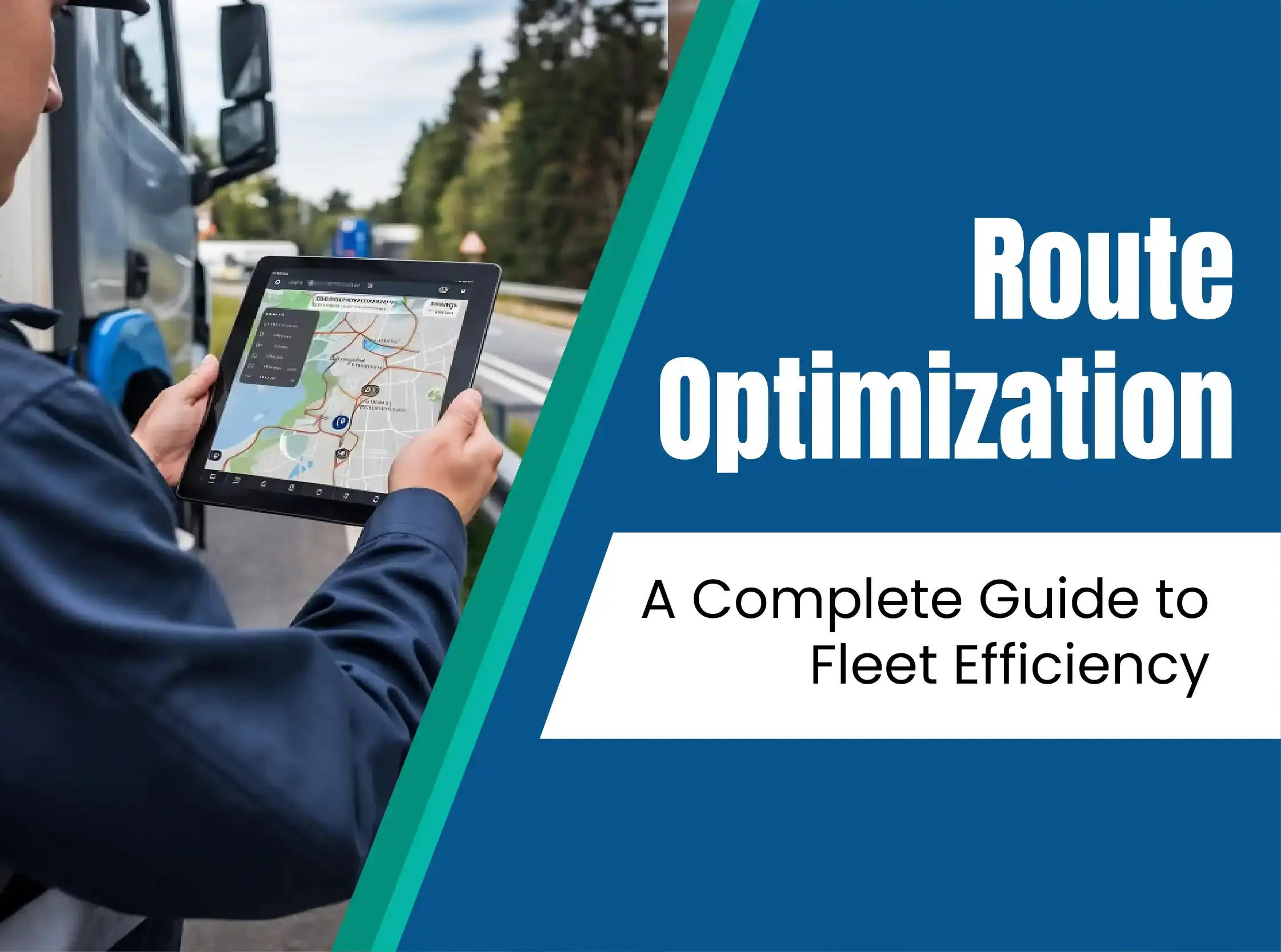
Route Optimization: A Complete Guide to Fleet Efficiency

Managing a fleet in traditional ways won’t work for your business operations anymore. The traditional ways have many challenges, such as keeping track of fuel consumption, vehicle health, driver schedules, and more. But the single factor that impacts overall fleet efficiency the most is route optimization. Usually, traditional fleet systems depend on basic maps and driver intuition regarding the best route for deliveries. This is why the traditional fleet management often experiences higher fuel consumption, delayed deliveries and higher operational costs due to inefficient routes. On the other hand, intelligent route optimization software uses IoT, AI, and real-time analytics. Since this software uses data such as GPS vehicle location, traffic conditions, delivery windows, driver availability, and fuel consumption, it can calculate the best time-efficient routes for your vehicles. In such intelligent systems, you can view real-time insights on your fleet through a unified dashboard, therefore you gain complete visibility for your fleet operations. Let SpincLabs show you how the advanced technology can help you with fleet efficiency!

Technology should make your work simpler and efficient. That’s what fleet management software does for your business! As we know to manage the fleet requires a lot of effort. This means managing fuel consumption, operations, vehicle health, driver availability and many other aspects. However, there is one aspect that impacts your operations the most, the route optimization. Usually, in a traditional fleet management solution, route planning relies mostly on basic human instincts, basic maps, and luck regarding traffic. This is why traditional fleet management system not only have limited scalability but also consume much fuel. Therefore, your operations become costly. On the other hand, intelligent route optimization software includes advanced technologies, such as IoT, AI, and real-time data analysis, to help you achieve higher efficiency for your business operations. Smart route planning provides you with complete fleet optimization, hence, complete visibility and scalability for your business.

Let SpincLabs show you how intelligent route optimization software enhances fleet efficiency for your business! We promise you that your business operations will become more efficient than ever with such fleet optimization and route planning through our complete guide to fleet efficiency!

What Is Route Optimization?

A better route planning needs a perfect route optimization, which means using advanced systems for efficient routes. AI-enabled fleet management software includes smart route planning through route optimization software and uses smart algorithms and analytics to calculate the most efficient path for quick deliveries. It combines car location, traffic patterns, your required delivery windows or time, fuel efficiency, and other aspects to find the best routes for you. These suggested routes will minimize distance, time, and expense; hence, your deliveries will be smoother and reach he destinations efficiently. Let’s see what efficiencies it can bring to your fleet operations!

  • Route optimization software uses advanced algorithms and real-time data to suggest the most efficient routes.
  • This process includes analyzation of so many aspects, such as vehicle location via GPS, current traffic conditions, driver availability, delivery time windows, fuel consumption, driver availability, road restrictions, and vehicle capacity. 
  • It analyzes and recalculates routes in real-time, hence minimizing the distance and operational costs. 

How Does it Work?

Not every route is efficient for your logistics operations. Most people, especially in a traditional fleet management system, rely on their usual paths for deliveries. However, they remain unaware that they are still following inefficient routes that are time-consuming for their operations. They trust the same old routes because there is no alternative for them. On the other hand, you can plan a better route planning with a route optimization software! It uses smart, intelligent algorithms to get the best possible routes for vehicles. This means to ensure deliveries with minimum travel time, distance, and cost.

  • The System Collects Real-time Data

Route optimization software includes the usage of advanced GPS, IoT sensors, and telematics. These smart features consistently collect real-time data of vehicle health, location, fuel consumption, driver availability and current status. They analyze the data and give you insights on every aspect through a unified platform. This kind of fleet optimization provides you with complete visibility.

  • Advanced AI-enabled Algorithms

A route optimization software uses advanced AI-enabled algorithms, which means it evaluates different route possibilities and analyzes aspects, such as delivery deadlines, vehicle load, and road conditions. This smart process finds the most efficient routes that save time, reduce fuel consumption, and reduce wear and tear on your vehicles. Hence, it enhances the fleet efficiency.

  • Unified Dashboard For Complete Visibility

Complete visibility is necessary for every logistics business. Smart route optimization software shows real-time updates and generates detailed reports on every aspect. You can see the detailed reports about the fleet through the unified dashboard and get updates on mobile devices. Also, you can use these dashboards to track progress, identify inefficiencies, and do better route planning based on detailed data insights.

  • Real-time Monitoring & Insights

As we discussed earlier, a route optimization software provides you with detailed reports on delivery times, fuel consumption, driver availability, driver behaviour, and other aspects. These reports help you identify inefficiencies so you can work on them to improve. Also, it keeps historical data on through video telematics about driver behaviour. You can check their efficiencies and identify where they need improvement. With this smart fleet management software, your fleet efficiency gets better over time.

Let’s Enhance Fleet Efficiency With Smart Route Optimization!

Nowadays, efficient route optimization software has become important for every logistics business. We need to replace the inefficient traditional route planning as it makes your business unscalable. On the other hand, smart fleet management solution provide you with consistent real-time insights, smart automation, better route planning, and improved fleet efficiency. Therefore, we must change the traditional ways and negate the inefficiencies with smart route optimization. Let SpincLabs help you in this process!


FAQ’s

What is route optimization in fleet management?
In fleet management, route optimization uses advanced algorithms and real-time data to identify the most efficient routes for vehicle fleets. This means it can reduce travel time, fuel consumption, identify driver availability, reduce operational costs and ensure timely deliveries.

How does route optimization reduce fuel consumption?
The route optimization software calculates shorter, less congested routes and minimizes idle time for your fleet. The route optimization lowers unnecessary fuel consumption, hence, cuts operational costs for your logistics operations.

How does driver availability influence route optimization?
In fleet management, driver schedules and working hours are important aspects. Route optimization ensures fair workload distribution and efficient use of available drivers.

What benefits does integrating route optimization with fleet management software provide?
It boosts delivery accuracy and speed, reduces fuel and maintenance expenses, improves driver productivity, increases scalability, and enhances fleet efficiency.

How can SpincLabs support fleet optimization?
SpincLabs uses AI algorithms, IoT sensor data, telematics, and unified dashboards to provide your fleet operations with real-time visibility, better route planning, and detailed insights. These efficiencies make your fleet operations smarter and fleet management more scalable.

Smart IoT Sensors for Temperature Control in Fleets

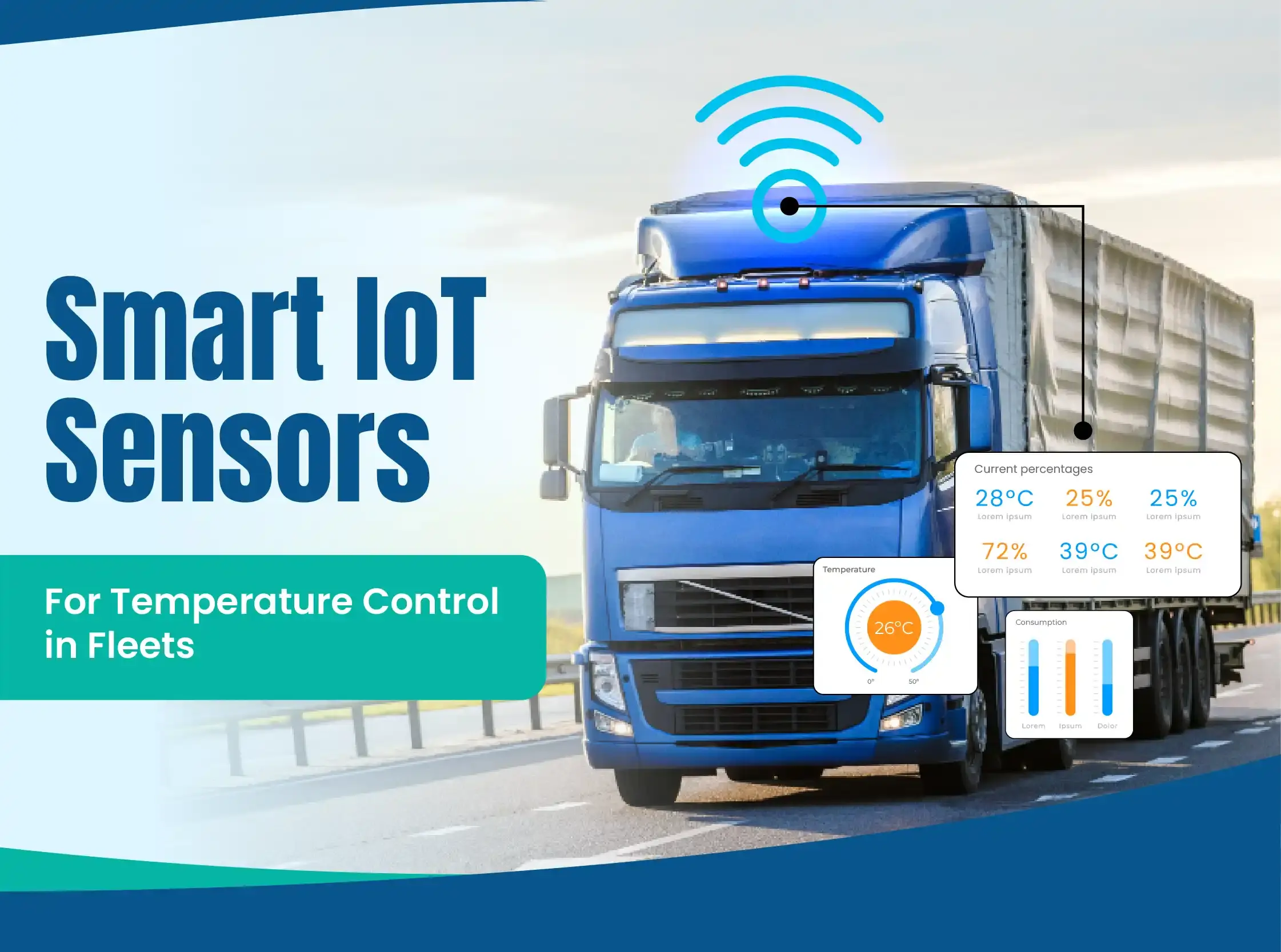
Traditional fleet management solutions lack temperature monitoring. This is why they remain inefficient in transporting perishable goods. On the other hand, smart IoT temperature sensors can enhance the efficiency of your sensitive cargo management, such as pharmaceuticals, food, and chemicals. Hence, it has become essential for cold-chain management. While traditional fleet systems that rely on manual checks and lack real-time data, IoT sensors provide real-time, precise temperature monitoring for multiple vehicle zones. These sensors transmit real-time data via various communication networks to cloud platforms, and therefore, help you to see cargo conditions from anywhere. Let SpincLabs help you understand how smart IoT sensors for temperature control help businesses!

Years before intelligent fleet management software and Internet of Things temperature sensor, we never knew that you could monitor the temperature of your sensitive cargos. We are talking about temperature monitoring in fleets transporting sensitive cargo such as pharmaceuticals, food products, and chemicals or other perishable goods. The moment we discovered IoT sensors, it changed everything for our industrial operations. With these intelligent temperature sensors, the temperature of goods remains within precise temperature ranges throughout the delivery or storage. Therefore, the quality of goods remain intact and in optimum condition. Now, recall if your traditional fleet management system could do this. Of course, it is impossible to do so with traditional fleet management solutions.

Nowadays, every smart business is integrating Internet of Things temperature sensor or IoT sensors in their fleet management solution. These temperature sensors have become an important aspect of a fleet to preserve quality, comply with regulatory standards, and help you negate the costly spoilage of your perishable goods. Traditional fleet management system rely on manual methods, hence, lack accuracy, visibility, temperature monitoring, real-time monitoring of goods and other efficiencies. Let SpincLabs show you how smart IoT temperature sensors can transform your business operations!

What Are IoT Sensors Capable Of?

The capabilities of IoT sensors or Internet of Things temperature sensor aren’t limited. These smart temperature sensors sense, measure, and collect the data of connected devices and analyze the temperature you need for your goods. They are capable of real-time monitoring and alert you instantly if they identify any changes in temperature. The temperature monitoring systems are also capable of detecting and measuring a range of environmental and operational parameters, such as temperature, humidity, pressure, motion, light, sound, gas levels, and other important aspects. All this data will be monitored in real-time, hence, the information remains updated. The smart automation of these teeny-tiny devices provides you with smooth data transmission, where this real-time monitoring turns into instant responses. Nowadays, people are using these intelligent temperature sensors or temperature monitoring systems in smart homes, factories, industries, vehicle health tracking in fleets and even in agriculture to improve yields through soil moisture readings. Let SpincLabs tell you what this Internet of Things temperature sensor is capable of and how temperature sensors work!

  • Real-time Monitoring and Immediate Alerts

Smart temperature monitoring systems include IoT sensors that consistently monitor temperatures inside vehicles with accuracy across multiple compartments. They transmit real-time data via cellular networks, satellite, or low-power wide-area networks to cloud platforms. Hence, you can access this real-time data on your fleet from anywhere. Such real-time data through Internet of Things temperature sensor helps you prevent cargo or goods damage. Also, this round-the-clock complete visibility provides you with instant alerts when temperatures deviate from set thresholds.

  • Multiple Sensors for Multi-Zone Accuracy

Modern fleets often require segmented temperature control because there are different products that need different temperatures within the same vehicle. Advanced temperature monitoring systems use several Internet of Things temperature sensor. Once placed inside your vehicle, these temperature sensors work consistently to monitor multiple zones independently. This granular monitoring will ensure that each section maintains its ideal environment and highlights specific areas that need your immediate attention.

  • Wide Temperature Range

Internet of Things temperature sensor can tolerate or withstand harsh logistical conditions. This means they are waterproof, remain in dustproof casings and operate with accuracy within wide temperature ranges such as from below freezing to over 80°C. The durability of temperature sensors ensures that the accuracy and efficiency remain intact in hot climates, cold storage facilities, or any other conditions. They keep perishable products in optimum condition through consistent temperature monitoring.

  • Integration with Fleet Telematics and Automation

The smart Internet of Things temperature sensor can be integrated smoothly with GPS tracking and telematics systems. This ease of fusion enhances operational efficiency for your fleet management system, linking temperature data to route analytics, vehicle idling times, door openings, and driver behaviour. Anything that could affect the temperature, these smart sensors notify you instantly. Advanced fleet management software even includes smart automation that helps you remotely adjust refrigeration settings, optimizing energy consumption, reducing fuel costs and other important aspects.

Devices And Gateways in IoT

IoT fleet management, devices and gateways in IoT keep on transforming the data for you. This Internet of Things temperature sensor is making your operations smarter. As we know that IoT devices, such as sensors, trackers, and actuators, are the fleet’s sensory and operational tools. These devices can be placed on your vehicle to consistently monitor and collect real-time data, such as temperature, location, fuel level, or vehicle health. Hence, you gain complete visibility, accurate monitoring and immediate real-time alerts.

Gateways in IoT connect devices to central cloud systems. They gather and preprocess information sent from multiple devices, translate network protocols, and then transmit this data to management platforms. Since these gateways have advanced computational abilities, they can run local analytics and keep necessary data during outages, regardless of location or connectivity issues.

Aspect Traditional Fleet Management Solution IoT-based Temperature Sensor Integration
Temperature Monitoring Manual process or checks with manual logs etc. Consistent real-time automated monitoring
Data Accuracy High possibility of human error and data errors High precision digital sensors with consistent readings
Response Time Issues are detected after damage occurs Predictive; instant alerts on temperature drop or rise
Data Access Physical collection or delayed reporting Remote, real-time access via cloud and mobile apps
Integration Separate systems for temperature, GPS, and logistics Integrated telematics including temperature, GPS, driver behaviour

How Do Temperature Sensors Work?

Temperature sensors can detect temperature changes by measuring variations. These variations in electrical properties, like voltage or resistance, help them to identify the change. These electrical changes will be converted into signals and processed to provide accurate real-time temperature readings. This is how temperature sensors work. There are different types of sensors to suit different types of operations, such as simple household devices to complex industrial systems.

IoT Sensors Are Essential For Your Fleet!

If you want scalability and efficiency for your business operations, then IoT sensor integration is essential for your fleet management system. Advanced fleet management software includes smart IoT temperature sensors that provide you with accuracy, real-time data monitoring, and integration capabilities to fleet temperature control. Hence, your sensitive cargo or perishable goods will remain in perfect condition. If you are still relying on traditional fleet management solutions, temperature is something that remains beyond your control. Smart Internet of Things temperature sensors can transform your business. Let SpincLabs help you to integrate temperature sensors for your fleet!


FAQ’s

What are smart IoT temperature sensors used for?
They monitor and maintain precise temperatures for sensitive goods during transportation. Hence, product quality remains intact and in optimum conditions.

How do IoT temperature sensors improve fleet management?
They provide real-time temperature monitoring, give instant alerts for temperature changes, multi-zone accuracy, and integration with GPS and telematics systems for accurate vehicle tracking and control.

Are IoT temperature sensors durable enough?
Yes. Most IoT temperature sensors are waterproof, remain in dustproof casings, and operate with accuracy within wide temperature ranges, such as from below freezing to over 80°C.

Is IoT temperature monitoring suitable for all types of fleets?
IoT temperature control is beneficial for all types of fleets, especially fleets transporting perishable or sensitive goods.

Can IoT systems help reduce operational costs?
Yes. Since IoT sensors can monitor temperature in real-time, they prevent spoilage, enable consistent vehicle health monitoring, optimize fuel usage, and improve route efficiency for fleet operations, reducing operational costs.