Indoor Navigation Explained: Tech, Benefits & Use Cases

” Indoor navigation helps you where your GPS doesn’t. Yes, it is tough for satellite signals to penetrate the thick indoor walls and therefore, indoor spaces need a different system for navigation. Indoor navigation systems are specially crafted for indoor spaces. They provide precise and real-time assistance since they use advanced tech like ‘Bluetooth Low Energy’ beacons, ‘Wi-Fi-based positioning’, and ‘Ultra-Wideband’. So, indoor navigation system improves wayfinding, logistics and staff efficiency and also improves the service of a particular place.
Spinclabs’ indoor navigation system is a necessity for complex indoor spaces like airports, transport hubs, hospitals, shopping malls, corporate offices and college campuses. They make large indoor spaces more accessible, manageable, and user-friendly.”

We feel helpless when GPS doesn’t respond or loses the network? And then we get overwhelmed with frustration and anxiety asking people for directions. This is not a worst-case scenario, but a common scenario that happens to most of the people. You lose your precious time and money. All these scenarios we are talking about include complex indoor environments like airports, hospitals, shopping malls, corporate office complexes and buildings. These places are so complex and crowded that sometimes finding your way out becomes hard and confusing.

Navigation systems like GPS help a lot to find your way (especially the outdoor navigation). However, they have their limitations. Why such a distinction? There is no doubt that GPS provides us with location data through satellite signals. But these signals weaken the minute you step inside a building, especially in basements and other underground structures. Since these satellite signals can’t penetrate walls, go underground, or even work well in crowded city streets, we need Indoor navigation to help us. They work where GPS doesn’t. How? Let’s see it!

What is Indoor Navigation?

Indoor navigation isn’t dependent on GPS and still gives you precise and real-time guidance within the maze-like spaces. How does it do that? Well, indoor positioning or wayfinding uses hardware and software to pinpoint a user’s location and provide step-by-step directions to reach the destination. Thus, where GPS signals weaken, this alternative technology can be used for accuracy. What are these alternative technologies that indoor navigation uses? Let’s find out with Spinclabs!

Let’s Understand The Tech!

Indoor positioning helps you find your way indoors in the exact way and with the same ease as GPS does outdoors. As we already have elaborated how Indoor wayfinding includes Bluetooth low energy beacons, ultra-wideband and location data to Wi-Fi signals. The use of these specialized features permits indoor navigation to negate the confusion of complex buildings and shows the easy way out to reach the destinations. Let’s see how this tech works!

  1. Bluetooth Low Energy (BLE) Beacons:
    Small, battery-powered devices or beacons, once placed throughout a building, they emit signals. These signals then are picked up by users’ smartphones, and that’s how they permit the system to triangulate the user’s position. Nowadays, BLE beacons are quite popular because they are low-cost, easy to install, and use minimal energy.
  2. Wi-Fi-Based Positioning:
    Wi-Fi networks are a great help when it comes to indoor navigation and hence, many indoor positioning systems use existing Wi-Fi networks. They analyze the strength of the signal from multiple access points and this is how the system can estimate a device’s location. This process is cost-effective in facilities where Wi-Fi is already widespread. However, the downside is that it may offer slightly lower accuracy than BLE.
  3. Ultra-Wideband (UWB):
    This technology provides highly precise location tracking in indoor navigation. It measures the time it takes for radio waves to travel between the devices and gives you a precise location. If you need the exact, precise location of something such as complex structures (hospitals or manufacturing plants), UWB will be helpful.
  4. Indoor Mapping:
    This is the most important thing in indoor wayfinding that makes everything possible. Indoor mapping creates detailed digital maps of indoor spaces and these maps include important mapping points of interest such as elevators, restrooms, stores, or meeting rooms. It shows you an accurate reflection of the building’s layout. So, the combination of mapping and positioning authorizes the system to provide real-time directions to their desired  destination.
  5. Way-finding:
    The indoor wayfinding systems update everything in real time and hence, give you an updated way of way-finding. This means they can update routes in real time as soon as it notices changes in the environment such as closed corridors, or if there is any maintenance work going on or if there is certain crowd congestion. This way it ensures users always receive the most efficient guidance.

The Benefits of Indoor Navigation Systems:

  1. The Ease of Wayfinding:
    Indoor positioning systems help visitors to find their way in unfamiliar environments. Hence, it negates the stress. There are many places and buildings that have large spaces and complex infrastructure. These complex structures can feel like a labyrinth and that’s why if you are looking for a particular store or space, it gets so frustrating and troublesome. Indoor navigation systems provide easy wayfinding.
  2. The Ease of Logistics:
    This kind of navigation system is beneficial for visitors and super efficient for the staff or people who work in a certain complex space. Indoor wayfinding systems regulate the flow of people as well. In ever busier places, these systems direct the traffic in particular area and prevent hindrance. Hence, maintains order as well as safety in such busy venues.
  3. Data-Driven Insights For Service Improvement:
    Surprised? Yes, whenever anyone uses the indoor navigation system, the system generates data. This data shows how spaces are being used. We can identify high-traffic areas, and improvise layouts for better service.
  4. Cost Savings:
    These positioning systems minimize your need to hire extra staff just for navigation and guidance or assistance. Whether your organization is large or small, this will provide greater cost savings.

Use Cases:

Airports and Transport Hubs:
We know how stressful it gets when you have to navigate your way out in large airports or railway stations. This scenario is even more stressful when you are a first-time visitor. Indoor navigation apps help travellers quickly locate their destinations. These systems also provide real-time updates on flight changes or delays, it reduces stress for the passenger.

Hospitals:
Visiting a hospital is never a pleasant experience for anyone. All of the above, a hospital’s complex space is one thing that gets even more frustrating for a visitor. In such a situation, indoor navigation systems are a great help that guide patients and visitors to their destinations such as the right department or the ward. This way, it reduces their anxiety.

Shopping Malls and Retail:
Usually, shopping malls and retail have a complex layout. Whether if a person wants to locate their desired store or looking their way to restroom, these systems will benefit in such situations. Also, if you are a retailer, you can use the system to send promotions or guide customers to special events. This system also is crucial for mall operators as they can see through and analyze visitor behaviour.

Office Building and Campuses:
It’s so common to have large office buildings and campuses to be confusing for employees, visitors, and vendors. Now, if these complexes have indoor navigation, then users will face fewer issues regarding navigation.

Industries and Warehouses:
Without a doubt, in warehouses and factories, this system should be a mandatory thing to have. It can be used to track assets, monitor worker movement, find their way and even optimize logistics. This system can negate issues like downtime and can improve safety by routing and real-time adjustments to workflows.

Spinclabs’ Indoor Navigation is a Necessity!
Still thinking why you need an indoor wayfinding? Well, Spinclabs can help you to understand it even more. Let us tell you that these systems are a necessity nowadays, it gives easier way to move through complex indoor spaces. Since the system uses technologies like BLE beacons, Wi-Fi positioning, and dynamic mapping, it delivers you precise and real-time guidance. So, let’s change the way of your usual navigation and make large spaces more accessible, manageable, and user-friendly for everyone!
FAQ’s

What is indoor navigation and why is it needed?
Indoor navigation helps people find their way inside large, complex buildings where GPS signals are weak or unavailable. Since satellite signals from GPS struggle to penetrate thick walls and roofs, it becomes unreliable indoors. Indoor navigation systems provide precise, real-time, step-by-step directions for indoor spaces.

What does it do?
Indoor mapping creates detailed digital maps of indoor spaces and these maps include important mapping points of interest such as elevators, restrooms, stores, or meeting rooms. It shows you an accurate reflection of the building’s layout.

How can hospitals benefit from indoor navigation?
Hospitals have large, confusing and complex spaces, which can add to the anxiety of patients and visitors. An indoor navigation system can guide them directly to the correct department, ward, or doctor’s office, making their visit less stressful.

Is Ultra-Wideband (UWB) better than BLE or Wi-Fi for positioning?
It depends on the need. UWB provides the most precise and accurate location tracking. It is ideal for environments where exact positioning is needed, such as in complex manufacturing plants for asset tracking or in hospitals. BLE and Wi-Fi are more cost-effective and are excellent for general wayfinding in places like malls and airports where slightly lower accuracy is acceptable.

Can indoor navigation be used in warehouses and factories?
It can be used to track assets, monitor the movement of workers for safety and efficiency, guide employees through complex layouts, and optimize internal logistics as it can make real-time adjustments.

10 Strategies for Smarter & Efficient Fleet Management

“Is your fleet management strategy stuck in the past? Nowadays, fleet management uses advanced technology, data, and proactive ways to efficiently manage their operations. SpincLabs’ curated guide sheds light on ten strategies that can transform your fleet operations into a much smarter and more efficient fleet management. 

Let’s see how to set clear goals for your business, analyze your fleet’s current status, establish key performance indicators, implement preventive maintenance, invest in driver training, optimize routes, use GPS tracking and telematics, manage fuel consumption effectively, adopt fleet management software, and continuously evaluate and improve. Since regular vehicle maintenance is lacking in many ways, you need to include data-driven decision-making to boost productivity, manage rising fuel costs, and future-proof your fleet’s success!”

Nowadays, everything has become smarter, whether it is your phone, your ways of the world or your home. Even the businesses around us have become much smarter such as fleet management. Fleet management systems have transformed so much that they are no longer just about keeping vehicles on the road and keeping operating costs under control. Fleet operations and management, nowadays, uses advanced technology such as real-time tracking data and fleet management dashboard with AI analytics. As the pressure to deliver faster, safer, and more efficient services mounts higher than ever, the demands and operational complexities continue to grow as well.

Hence, you need an advanced playbook to thrive in such an environment. That’s why modern fleet management systems are using real-time analytics, AI, and IoT to gain in-depth insights into every aspect of their operations. Whether it is about fuel consumption and driver behaviour or predictive maintenance and compliance, these advanced systems enhance your fleet management. So, whether you’re managing a fleet of vehicles or nationwide logistics operations, our curated guide will boost productivity, reduce costs, and future-proof your fleet efficiently. Let SpincLabs shed light on such fleet management tips to make your regular vehicle maintenance much smarter!

Tip 1. You Should Set Clear Goals and Define Your Strategy

Let us ask you a question! What is the first rule of successful fleet management? To know exactly where you’re going. Yes, every successful fleet operation starts with proper planning and a roadmap. Hence, before you seek a fancy tech or start with your operations, you should take a step back and make a base. It means you should set crystal-clear and measurable goals. Are you trying to slash fuel costs or your operational costs? Or want to boost on-time deliveries? Or opting to reduce accident rates? Whatever your priorities are, you should write them down and make them specific. 

Once these goals are in sync with your company’s big picture objectives, you can move further. In other words, if your company is all about sustainability, then reducing emissions should be a top priority for your fleet. Or do you want real-time tracking for your fleet? Or looking for a fleet management dashboard for your ease? Just like this, the strategic goals must be your first priority. This step will guide you further in choosing the right vehicles and tech to optimize your routes. Think of it as your fleet management compass, always pointing you in the right direction. 

Tip 2. Now, Analyze Your Fleet’s Current Status

Time for a reality check now! Our tip is before you make any big change, you need to know exactly what you’re working with. That means taking a hard look at your fleet. You should conduct a thorough assessment of your fleet’s size, vehicle age, condition, and performance data. It means to assess how many vehicles you have? How old are they? What condition are they in? And what’s their performance data telling you? 

This audit will help you spot those underutilized vehicles and also identify the ones that are ready for the scrap heap. This way you will see what factors are slowing you down. Trust us, this isn’t some extra work but it’s about gathering accurate baseline data that ensures your strategy is grounded in reality, not based on just assumptions. Ready to go through more fleet management tips?

Tip 3. It’s Time to Establish KPIs and Risk Management Plans

We all know, what gets measured gets managed, right? So, it’s time to define your key performance indicators (KPIs). Yes, the metrics that will tell you whether you’re on track to reach your goals or not. We’re talking about things like fuel efficiency (miles per gallon), maintenance costs (per vehicle per month), and driver safety scores (based on things like speeding and harsh braking). 

SpincLabs suggests that you should check these numbers regularly and then you can set up a system to monitor your KPIs. Just when things start to go off course, you will get real-time alerts. So, what should be your plan B if a vehicle breaks down? Or if there’s a sudden change in regulations? You can take care of all these worries with proactive risk management. This is what keeps your fleet humming, no matter what life throws your way, means it will keep your fleet agile and resilient.

Tips 4. The Advance Preventive Maintenance Can Help

Stop relying on those manually planned schedules because they are time-consuming and higher in cost. This is the most negative aspect of regular vehicle maintenance. SpincLabs’ next tip is preventive maintenance. This advanced preventive maintenance uses real-time data to schedule detailed inspections, oil changes, and show notifications about part replacements when they are actually needed. 

Hence, advanced fleet management software and telematics can make the whole task easier for your entire fleet operation. They will automate reminders and even spot problems before they turn into major problems. The result will be smoother than ever as your fleet will experience less downtime, and fewer expensive repairs, and your fleet will be running efficiently.

Tip 5. Time to Invest in Driver Training and Engagement

Drivers are not just behind the wheel; they’re the face of your entire operation. Hence, by investing in regular training on safe driving, and fuel-efficient techniques, you are securing a better way for your fleet management and operations. It not only reduces accidents and saves you money on fuel, but it also boosts the morale of drivers. 

Engaged, well-trained drivers are more likely to stick around and represent your company with pride. A fleet management software can negate the requirement of manual tracking and keep track of driver behaviour with advanced features so it can provide insights where are the areas of improvement.

Tip 6. Optimize Routes and Scheduling

Stop wasting time and fuel on inefficient routes! If you opt for route optimization tools such as GPS, you can get real-time data on traffic and weather. This way your deliveries can be smooth and fastest as GPS suggests the fastest, most fuel-efficient paths for your drivers. This means less time on the road, lower fuel bills, and longevity for your vehicles. Here, smart scheduling ensures that every vehicle is being used to its full potential and your customers will get the timely service they deserve. What’s next on SpincLabs’ fleet management tips? Let’s explore further!

Tip 7. Use Advance Tech Such As GPS Tracking and Telematics

Want to know what’s really going on with your fleet? High-quality GPS trackers and telematics systems can do that for you. GPS tracking which means real-time tracking and telematics provides you with real-time visibility of locations, driver behaviour, and your vehicle’s health. This data enables you to plan better routes, respond instantly to accidents or breakdowns, and continuously monitor performance. Hence, it makes your fleet safer, more efficient, and more cost-efficient.

Tip 8. Don’t Forget to Monitor and Manage Fuel Consumption

We all know that fuel is often a fleet’s largest expense. But, are you ready to slash this biggest expense? Our tip is that you start tracking fuel usage like a hawk. If you track fuel usage closely, you can identify and correct wasteful behaviours (like excessive idling or speeding), and also can reward drivers for fuel-efficient habits. Or you can cut the manual tracking with a much smarter data-driven fuel management. It will reduce your costs and can identify the loopholes. Also, a fleet management dashboard can give you all the minute details and insights about your fleet. Regular vehicle maintenance can’t provide you with such details, you tend to miss things.

Tip 9. You Must Adopt Fleet Management Software

Answer us first, are you still drowning in paperwork and spreadsheets? It’s time to upgrade to modern fleet management software. These platforms will be a central command center for your entire operation. They pull all your data into one place, automate all kinds of tedious tasks, and deliver insights that you can actually use. It includes maintenance tracking and compliance alerts to analytics and reporting as well. Fleet management software can streamline your operations. It provides every data through a fleet management dashboard and frees you up to focus on the big picture for your business. 

Tip 10. Don’t Stop, Continuously Evaluate and Improve!

Fleet management is a constantly evolving business, and that’s why you need to stay on your toes to stay ahead. That means regularly checking your KPIs, listening to your customers’ feedback, and rummaging through your data to spot new trends and opportunities. It calls for a time to experiment with new technologies and pilot innovative solutions.

The Last Note From SpincLabs!

SpincLabs’ curated fleet management tips can help you in many ways whether it’s about managing rising fuel costs, or to include modern tech such as AI and IoT in your business. So, set clear goals, use advanced technology and include data-driven tech in your fleet operations so you can transform your fleet into a strategic asset.


Enhance Your Shopping Malls with Indoor Mapping

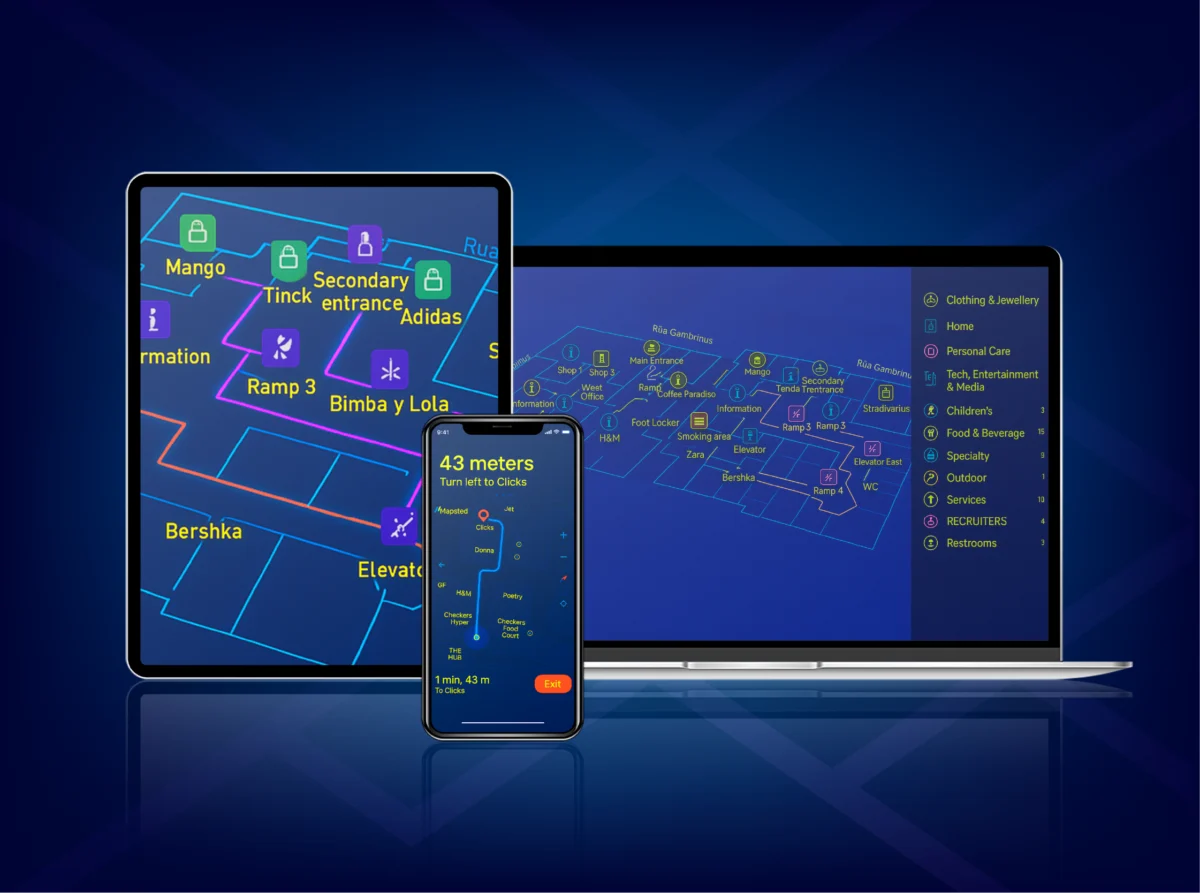
“Are your shoppers wandering aimlessly in your shopping mall to locate their favourite store? Do they often feel frustrated due to this? Finding the way to favourite store, the food court, or even the nearest restroom can turn a fun outing into a tiring quest. But what if navigating these vast retail landscapes was as easy as using GPS outdoors? Spinclabs’ Indoor Mapping technology can transform your confusing mall layouts into easy digitized maps.

Also, this technology provides precise, real-time navigation within the mall, helping shoppers effortlessly locate stores, amenities, and emergency exits. By integrating an indoor navigation system, malls can offer pinpoint accuracy for directions. For shoppers, it will enhance their shopping experience. For your mall, it will improve customer satisfaction, enable better crowd and traffic management, and will help you to manage an emergency response better. Hence, Spinclabs’ curated solution transforms complex mall designs into easy digitized spaces. So, every shopper will experience a smooth, efficient, and stress-free visit every time they visit your shopping mall.”

Every weekend, we crave to go somewhere. In urban cities, people usually prefer to go to shopping malls. Especially during summer, when they have no desire to roam outside in hot weather. Shopping malls and their breezy environment feel like a comfortable space for all urbanites. Of course, shopping is something everyone loves. But even in shopping malls, things can get tiring. How? Usually, shopping malls have large infrastructure and such big spaces can make everything puzzling. So, how do you navigate inside large shopping malls without getting lost?

That’s why indoor malls should improve their infrastructure and upgrade themselves with indoor mapping technology. Adding an indoor wayfinding solution eliminates all these issues related to navigation and hence, people can relax without getting tired. So, how does it actually work? The indoor positioning system’s accuracy is so precise, that people can find their desired places easily. It gives you real-time maps and navigation, and hence, shopping malls can improve customer satisfaction rates with a well-integrated indoor navigation system.

Let’s find out with Spinclabs and make your shopping mall a place where people can visit their favourite places without getting lost and without a hassle when they visit the shopping complex.

Why Do Shopping Malls Need it?

As we have already discussed how shoppers often end up wandering aimlessly in large spaces of a shopping mall. Whether it’s about searching their favourite stores, locating the food courts, or even the nearest restroom, everything becomes easily accessible with an indoor mapping system. These are digitalized versions of the mall design and infrastructure that guide visitors effortlessly through the maze of shops and amenities using advanced indoor navigation systems. Hence, it makes their visit smoother and more enjoyable.

Let’s see the reasons why shopping malls need this tech in their large spaces and how mapping indoor spaces can help them attain a smooth shopping experience for their customers.

Easy Wayfinding and Navigation

When shoppers visit shopping malls, they want a feeling of leisure and relaxation. However, they often end up wandering here and there in search of basic amenities and shops. Of course, wandering aimlessly will not count as leisure or comfort. It is unnecessarily tiring and a hassle for everyone. But why does this happen? Because shopping centres often lack easy navigation. Hence, mapping indoor spaces is truly important for these large spaces so that shoppers can easily locate the stores they want to visit, amenities they wish to use and the guide to restrooms if they need it.

Indoor wayfinding tools like real-time digital maps show the turn-by-turn directions to everything, which reduces the hassle and frustration shoppers often face.

How it works?: Indoor mapping converts your floor plans into digital maps and these digital maps can be accessed via mobile apps or QR codes. A digital map of your mall design concept gives visitors ease in navigating every complex layout of the entire indoor mall and seeking the way out for themselves through an efficient indoor navigation system.

For Easy Crowd and Traffic Management

Often we see even large spaces of shopping malls get crowded, especially during the weekends. Weekends are the busiest times of the week for shopping centres in metropolitan cities. Sometimes it even becomes impossible to control the crowd. But most of this crowd wanders aimlessly around because they can’t find their desired destination.

Indoor mapping shows all the stores available in a mall design concept. This way, there will be no traffic on elevators and escalators. Also, you can send pop-ups regarding new openings, and ongoing promotions as well. This will encourage people to explore the complex and increase the flow of impulse purchases. Combined with indoor wayfinding, the shopping experience becomes more efficient and less chaotic.

How it works?: Your shopping mall can greatly benefit from indoor mapping systems. As customers move through the mall, they can receive real-time push notifications and geofenced offers that will guide them to particular stores, sales and events—enhancing the value of the indoor navigation system.

To Improve Customer Loyalty and Experience

Who doesn’t love returning customers? Yes, we all do love them, right? It depends on several factors such as aesthetics, comfort, amenities, stores and ease of navigation. But why would a customer return to your mall if they face too many issues with navigation?

Hence, quick, accurate navigation and personalized recommendations in navigation become necessary for every shopping mall. You can improve your customers’ overall shopping experience and hence, they will be a loyal shopper for your mall. With interactive maps and indoor wayfinding features, they are less likely to feel lost and more likely to return.

How it works?: Indoor mapping apps have such accessibility features that can help your shoppers. It includes easy routes and even audio-visual guidance, which ensure inclusivity for all visitors and complements a well-designed indoor navigation system.

Easier Mall Management

Whatever the indoor mall design concept you have, and no matter how many floors it has, indoor mapping systems can clone them and digitize it. When you apply indoor mapping systems in your mall, they will be able to collect information that can help you manage the flow such as foot traffic. Also, these systems will show the popular routes, and dwell times. This way, you can think of better placement for a popular or particular store, and it will provide better marketing. Even you can see and identify the best points where crowd is being drawn through these indoor maps.

How it works?: Shopper behaviour is very important to understand but it is never easy to monitor such a behaviour because it is unpredictable. But systems like indoor mapping make it predictable. You can understand shoppers’ behaviour and can optimize layouts accordingly with the help of data from your indoor navigation system.

For Easy Emergency Response

In large and crowded spaces such as a shopping centres, if any unfortunate things such as fire or explosions occur etc., happens, emergency response by management becomes the most important thing. The readiness for unfortunate events will depend on how easy and efficient your systems are. Indoor mapping helps you to prepare for such emergencies. The Indoor positioning system’s accuracy will be able to show the users the best way to exit.

How it works?: With it, you can view indoor maps with real-time location data, the location of emergency response kits and the exit points etc. easily. Also, it has the ability to guide visitors to exits during incidents through smart indoor wayfinding tools and real-time alerts.

Features of a Modern Mall Indoor Mapping System

  • You will get interactive and zoomable maps for all floors.
  • Indoor maps will show turn-by-turn navigation and include location sharing.
  • Apps will display searchable directories for stores, services, amenities and even guidance to emergency exits.
  • You will be able to view real-time parking availability and guidance for each spot.
  • Indoor navigation system accuracy is precise.
  • The system shows the most accessible routes to your desired place.
  • It can send push notifications for promotions and events as well.
  • Indoor mapping systems come with the analytics dashboard for easier mall management.


Spinclabs believes that the indoor navigation system and indoor wayfinding solutions can make your shopping centres a leading shopping destination for shoppers. The implementation of a customized indoor map will not only improve the navigation but also will increase visitor or shopper satisfaction. So, no matter how complicated your mall design concept is, mapping systems can digitize it!


FAQ’s

What is indoor mapping for a shopping mall?
Indoor mapping transforms a mall’s complex floor plans and layouts into easy-to-use digital maps. Shoppers can access these maps on their phones (via an app or QR code) to get precise, real-time, turn-by-turn navigation to stores, food courts, restrooms, and other amenities, much like using GPS outdoors.

Why do modern shopping malls need indoor mapping?
Multi-level malls can be confusing and frustrating for shoppers to navigate. Indoor mapping negates the hassle and solves this by providing easy wayfinding. It enhances the customer experience, reduces frustration, and makes their visit more enjoyable. It also helps with crowd management and improves mall operations.

How does indoor mapping help shoppers find stores easily?
Instead of wandering aimlessly, shoppers can use the digital map to search for a specific store or category. The system will then show them the most efficient route from their current location, providing clear, turn-by-turn directions on their smartphone. This reduces their search time and stress.

How can indoor mapping be used in an emergency?
In an emergency situation like a fire, it can instantly show all visitors the safest and nearest emergency exits from their real-time location. It can view the location of emergency kits and navigate quickly through the complex layout.

Is this technology difficult to implement for a complex mall design?
No matter how many floors or intricate designs your mall has, the indoor mapping system can clone and digitize it. It turns the complicated physical space into a simple, user-friendly digital map.