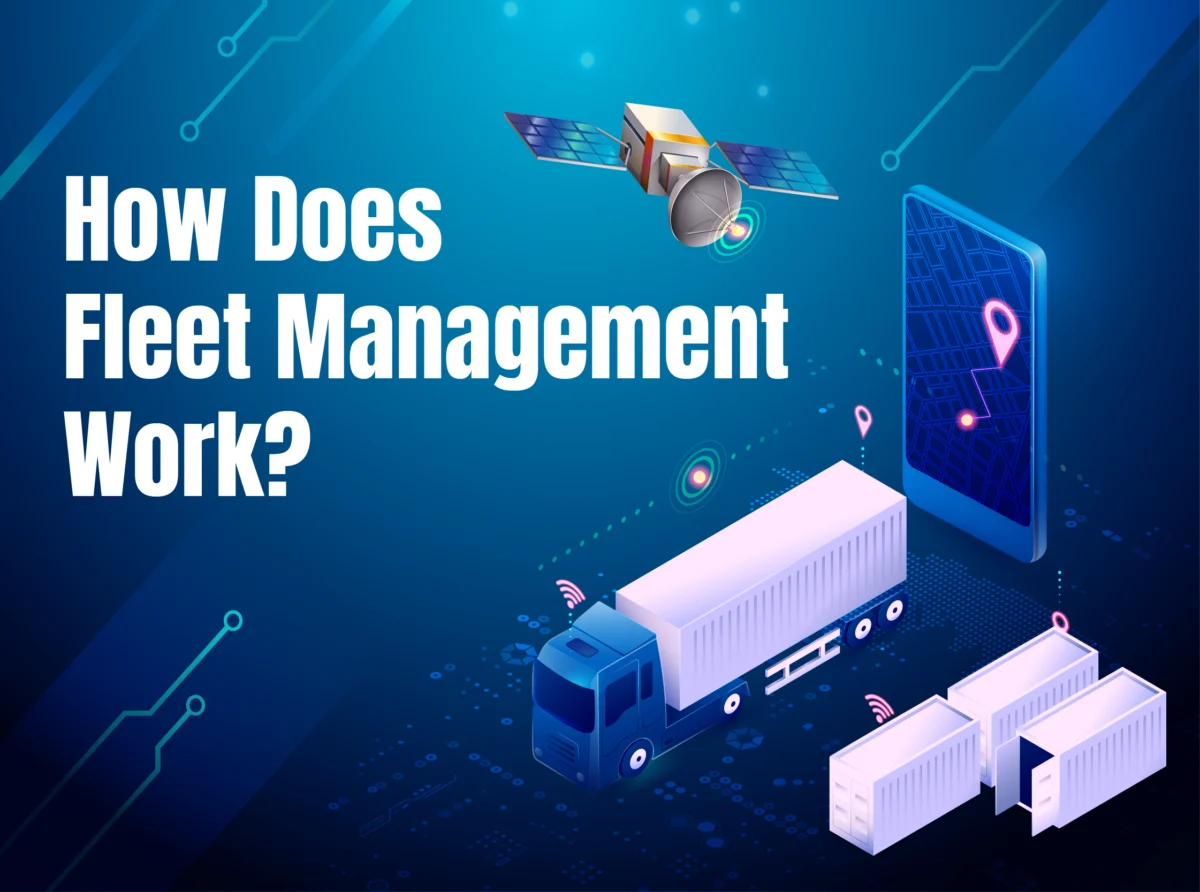
How Does Fleet Management Work?

“Do you think the phrase ‘Fleet Management’ stands for managing trucks? You are not alone. Numerous individuals have similar misconception. Nowadays, the phrase ‘Fleet Management’ comprises of intelligent and interconnected operations! IoT in Fleet Management is the driving force behind these smarter operations. The embedded sensors and connectivity of modern fleet management systems unlock the real-time data and insights for your fleet operations. This system gives you total control over your fleet. Hence, fleets now have become smarter, safer, and more efficient than ever before. From real-time tracking to predictive analytics, IoT is one tech that is transforming everything for logistics. SpincLabs curated article will help you understand how fleet management actually works.”

Very few people know about ‘Fleet Management Systems’ and most of us have no clue about, ‘How Fleet Management conducts business on the move’, isn’t it? In Layman’s terms, fleet management is the job of looking after all those vehicles and the people who drive them. You have to make sure everything runs efficiently, safely, and doesn’t cost too much. But we wish it was that simple. Let us tell you that fleet management, nowadays, works in a multidimensional discipline. A discipline that combines technology, data analytics, and strategic planning to optimize vehicle operations across industries.

What is Fleet Management in Logistics?

In recent years, global supply chains have evolved so much because we want same-day delivery or expedited deliveries of goods. These rising customer expectations led us to introduce systems that can fulfill these demands efficiently. This is the reason why fleet management has become important for modern commerce. Synchronization in fleet management is dire because, here, the stakes are higher than ever. How? Okay? Answer us what happens if your shipment gets delayed? Yes, a delayed shipment can lead to lost revenue. It’s a chain reaction where a delayed shipment can lead to empty shelves, empty shelves leave customers frustrated and hence, lost revenue. Thus, to avoid such scenarios, fleet management is utmost important and it makes the difference between a business that thrives and one that gets left behind.

What Does it Include?

As we have already discussed how fleet management today is transforming logistics and making supply chains a more dynamic and technology-driven discipline. Hence, fleet management ensures vehicles are not just moving, but moving smarter, safer, and more sustainable. It includes such crucial features as Real-time tracking, predictive maintenance, driver behaviour and several other things to give you ease and maintains smooth operations. Let’s see what does it include!

Feature What Does it Do?
Vehicle Tracking Real-time tracking, speed, route efficiency and constant monitoring through GPS/telematics 
Maintenance Reduces downtime, scheduled servicing and repairs through predictive analytics and insights
Fuel Management  Tracks fuel consumption, optimizes routes and reduces idle time, hence, cuts costs
Driver Behaviour Management Constant driver behaviour monitoring and training, Compliance – safety protocols
Compliance Ensures that it follows necessary regulation


This way ‘Logistics Fleet management’ becomes efficient and easy. A fleet management system can run it as smoothly and efficiently as possible. It is a well-organized system that keeps an eye on everything. Whether it is about knowing where the vehicles are, looking after the drivers and taking note of each behaviour, or making sure vehicles are well-maintained and following all the rules, the fleet management system helps you to do it efficiently.

Let’s Understand The Process ‘How it Works?’

So, now, let’s understand how fleet management works. It is a multilayered process that includes the use of tech, planning, and human expertise. All these things together make sure that operations run smoothly. Whether a company operates a handful of delivery vans or a vast network of trucks, fleet management is efficient enough to manage all things at once. The process involves a continuous cycle of acquiring vehicles, maintaining them, monitoring their use, managing drivers, as well as route optimization. Now, remember that here, each step is interconnected and requires real-time data for clear communication. Hence, they can minimize costs, reduce risks, and maximize productivity. Let’s break down this process and see how each thing contributes to the movement of goods and services.

Step 1. Keeps Hawk Eye Through Real-time tracking and telematics:

No need to stress over your fleet’s location as every vehicle can be the data generator, equipped with GPS and IoT sensors. Traditional ways of managing a fleet no longer remain effective. Modern solutions can transmit location, speed, engine diagnostics, and even keep a hawk eye over driver behaviour. Even you can monitor unauthorized use, and receive alerts in case of theft or even when a vehicle needs maintenance. This level of visibility makes decision-making easy, and hence, becomes from reactive to proactive.

Step 2. Makes Maintenance management Easy:

We all are aware that the maintenance of a vehicle is a time-taking process. That’s why it’s not enough to fix vehicles when they break. What does this mean? It means our goal should be to predict and prevent breakdowns before they happen. Can we even do that? Yes, fleet management can analyze everything through telematics data and maintenance logs. It spots patterns, like a truck that is starting to consume more fuel or a van that’s due for brake service. It instantly alarms you. In such a way, scheduled and predictive maintenance not only extends vehicle lifespans but also keeps drivers safe.

Step 3. Makes Fuel Management Super Efficient:

Fuel management is as important as the maintenance of a fleet. Why? Because it’s a big part of operational cost control. Since fuel prices always remain volatile, we need to be sustainable and hence, tracking every drop matters. Modern fleet systems make fuel management super easy with fleet management dashboard. They can monitor fuel consumption in real time and flag anomalies that might indicate theft or inefficiency. Also, it supports eco-driving initiatives and helps drivers to adopt habits that reduce unnecessary fuel usage and emissions.

Step 4. Driver Behaviour Management Becomes Easy As Well:

Driver behaviour is something that we can’t control. But what if we tell you that you can control it as well? Why does driver behaviour monitoring matter though? Well, it is quite important as behaviour such as harsh braking, overspeeding and rash driving can damage your fleet. Telematics and fleet management dashboard keeps track of every driver behaviour. This trains and motivates your fleet drivers to stick to safety measures. 

Step 5. The Most Importantly, Compliance:

Compliance and risk management have become non-negotiable in fleet management. Whether you need electrical vehicle fleet management or regular one, regulations around emissions, driver hours, and vehicle safety are tightening worldwide. Having a logistics fleet management system can automate compliance by tracking service records, licenses, and regulatory requirements, generating reports that make audits painless.

SpincLabs’ Fleet Management Makes it Easier!

One of the most popular reason, why our fleet management is becoming popular is access to real-time data. Nowadays, every vehicle can stream information about location, fuel consumption, engine health, and even driver behaviour if they use a fleet management dashboard. They can get insights about everything that goes on within their fleet. Hence, you can easily spot a developing engine problem or anything else before it becomes a roadside breakdown. You can reroute a van around a traffic jam to make an on-time delivery, or even identify drivers who need extra training to improve safety. Yes, all this becomes possible with SpincLabs’ fleet management systems!
FAQ’s

What is an Indoor Navigation System for hospitals?
The indoor navigation systems are far accurate than GPS and provide step-by-step directions to help patients, visitors, and staff find their way within a complex hospital building.

How does it work without GPS?
Indoor navigation systems digitize the physical maps of a particular place and use a combination of tech in a process called sensor fusion. The process includes Wi-fi positioning, BLE-beacons, UWB, IMUs, Visual Positioning, and Magnetic Field Mapping.

What are the benefits for patients and visitors?
With indoor navigation system, patients, visitors and even staff can easily navigate amidst the complex maze-like spaces such as dense parking lots and different departments. These systems can lead you directly to where you need to go. It will be beneficial for first-time visitors as it will be less stressful and create less confusion for them.

How difficult is it to create a digital map of entire hospital?
In the past, this was a slow and manual process. However, advanced indoor mapping solutions like those from SpinClabs have made it incredibly simple and fast. Our software uses AI to digitize existing floor plans or CAD files automatically.

What happens when a hospital’s layout changes? How are the maps updated?
Updates can be made in minutes through a simple web-based dashboard. Facility management teams can close off routes, move points of interest, or edit pathways in real-time. For major changes, the same mapping process used for the initial setup can be used to quickly re-scan and update the areas. Hence, maps stay updated.

Logistics Management Software in Indonesia

“In the world’s largest archipelago, Indonesia, managing logistics often becomes a puzzle. Connecting each island altogether and managing businesses presents a challenge here. As e-commerce is booming and infrastructure is improving, things are changing fast for Indonesia. However, so many businesses are still using old ways, and they can never be able to keep pace with modern needs. So, businesses need to change their old ways and upgrade them with ‘Logistics Management Software’. It is the digital upgrade for your business can keep up with the increasing demands for speed and transparency. So, it makes things better in terms of efficiency and cost management. It makes logistics data management easy and well ordered. SpincLabs’ ‘Shipping and Logistics Management software’ includes real-time tracking and provides you with smarter routes and so many other necessities. It is becoming a must-have for Indonesian businesses to negate the issues of their growing supply chains.”

Usually, we know Indonesia as a fascinating country that has several islands. It’s a popular destination for travel enthusiasts. But, do you know that Indonesia has been transforming a lot? Yes, your favourite destination is floating high with the modern tech in trade. It is growing at a dizzying pace and metamorphosing the ways of managing logistics. Yes, the ways of the world are changing, and so is Indonesia. Indonesia’s logistics sector and businesses are choosing to upscale themselves.

Still, we can’t deny that its geography makes it harder for supply chains. This is the reason that each day businesses and various other sectors in Indonesia, are facing many logistical challenges. Ever since the economy of Indonesia has been expanding because of the boom in the e-commerce sector, tourism and other sectors, businesses in Indonesia have been looking for advanced solutions for their logistics that can provide better logistics data management.

Let’s see how the logistics and supply chain of Indonesia are transforming their traditional ways!

Let’s Look at The Changing Scenarios in Trade:

So, how are things changing for Indonesia’s logistics sector? What are these new scenarios in trade? Well, there has been a surge in Indonesia regarding using interconnected systems such as advanced software in logistics management. Businesses are eying this advanced shipping and logistics management software that can help them to achieve efficiency and scalability for their logistics operations. Yes, this advancement in tech is changing everything, from economic aspects of the domestic to the international front.

However, we know that ‘with opportunity comes complexity’. As the e-commerce market is growing, there is an increase in customer expectations for better speed and more transparency. This immense pressure on Indonesian logistics providers and businesses, makes this software, utmost important for them.

Why We Need it?

Nowadays, everything has become accessible and easy with new advancements in tech. For years, we have been managing the logistics operations manually and we all know such traditional ways of managing logistics lack in so many ways. Nowadays, everything has become advanced whether it is our business or the ways of doing business. Hence, traditional ways don’t work anymore. That’s why we insist that the Indonesian logistics sector needs to go through a digital transformation as it is the need of the hour. But how to do that and what is the primary reason to do that? 

Well, the primary reason is that, in Indonesia, the logistics sector is a major contributor to the national economy. Here, the logistics sector is so diversified that includes large international players, established local firms, and a vast number of small and medium-sized enterprises. 

Let’s see why this lucrative sector needs digital platforms in logistics!

Logistics Management Software

  1. The E-commerce is Growing Like Never Before: 
  2. Everyone loves to shop online, don’t they? E-commerce is the most convenient way of getting products. Just like every other country, Indonesia too, has witnessed so much growth in the e-commerce sector. All this online rush is a result of global shifts and hence, the need for online logistics platform has become a necessity more than ever. Yes, this e-commerce tidal wave brought with it an insatiable demand. Demand to meet expedited deliveries, demand to have efficient warehouse management and demand for real-time tracking capabilities. Of course, manual logistics cannot fulfill these demands. All these demands can be fulfilled by advanced technology such as LMS.

  3. Infrastructural Development is on The Rise:
  4. There is so much happening in Indonesia regarding infrastructural development. It is on the rise. Since the Indonesian government and private investments are already looking to transform the infrastructure. The need to have such tech becomes a necessity. Soon, there will be new ports, highways, railway projects (Jakarta-Surabaya high-speed rail) and airports as well.

    SpincLabs believes that these infrastructural developments will change the picture of urban infrastructure, especially the ongoing construction of the new capital city, Nusantara, on Kalimantan Island. That’s why we need to indulge in smarter ways to manage the flow of goods so there will be no hindrance in infrastructural development.

  5. Because of Complex Supply Chains and Globalization:
  6. As we know Indonesian businesses are expanding not at just local periphery, they are stretching beyond national borders. Yes, they are moving along with complex networks of international suppliers and manufacturers. This means they have to fulfill the needs of various customers across continents. Yes, not only are they managing international shipments, and multi-modal transport, but also are managing diverse supplier networks. Hence, this process requires a powerful logistics management program to ensure visibility and control.

  7. Customer Expectations Are Rising Constantly: 
  8. Nowadays, customers want everything at a fast pace. Also, since major cities like Jakarta face significant traffic, it impacts the timely delivery of things and fuel costs. Whether it is B2B or B2C, the demand for faster delivery and accurate tracking information, has become important for enhanced experiences. So, how do we solve such problems? Here, having an online logistics platform can negate all the issues.

  9. Rising Cost Pressures and Efficiency Drives: 
  10. Rising cost pressures are the most worrisome things, businesses come across. Hence, the first thing to manage in logistics is logistics cost management. Why? The competition is growing fiercer than ever, the pressure is on businesses to keep up with the rising cost pressures. Hence, managing businesses in such a competitive market needs a lot more than just one thing. They should focus on basic things such as to reducing fuel consumption, keeping track of maintenance and easing the administrative tasks. All these things remain crucial to gaining profitability for any business. Logistics management program can help businesses achieve logistics cost management efficiently.

Other Complexities:

All things we mentioned aren’t the only issues, there are many other challenges such as cross-border complexities. Yes, these are the complex issues here that include managing customs, following necessary regulations, and documentation for international shipments. Thus, if your business is still relying on manual processes, it will create inefficiencies and a lack of transparency. 

How Shipping and Logistics Management Software Can Help?

Now you must be wondering this question all along. There is no doubt that Indonesian logistics operations can negate all their operational issues with this software. This software works in integrated modules that can manage the multilayered flow of a supply chain. Let’s see what specifications they have and how can they help you!

The Specifications:

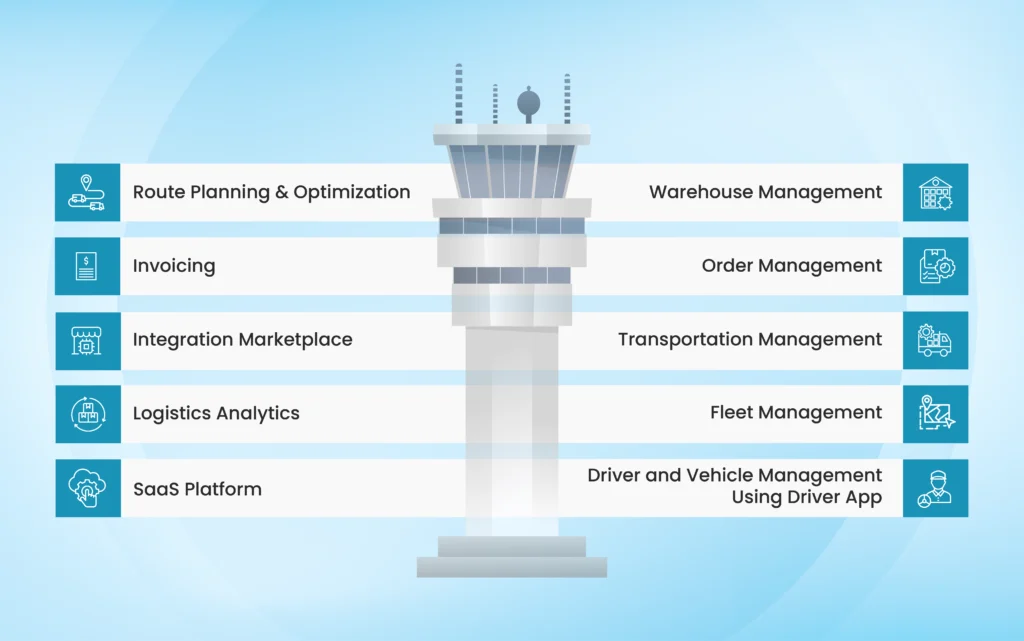
Not many people are aware of how exactly this software works. They often think that these software are all about real-time tracking. Let SpincLabs elaborate on it. No, these software are not all about real-time tracking. Modern and advanced online logistics and chain management platforms provide businesses with modular solutions. Yes, these platforms can be modified according to the logistical needs of a particular business. Their specifications go further with warehouse management, optimization of routes, and real-time shipment tracking. 

software works

The other specification of this software is RFID tagging, IoT sensors, and GPS/GPRS technologies, hence, they can easily monitor your cargo’s conditions and vehicle locations. If we say that it will reduce all the manual errors by up to 40%, it wouldn’t be a hyperbole. Also, RFID systems set off automated inventory checks in cryogenic containers, and compliance with cold-chain requirements. They provide you with smart and advanced analytics so you can keep track of everything related to your logistics needs.

Benefits:

  • Better Visibility and Transparency: 
  • SpincLabs’ advanced logistics management program provides you with real-time tracking and data that provides a clearer picture of operations. Also, it gives you better control and proactive solutions for all your logistics-related problems. 

    These solutions (logistics and chain management) from SpincLabs can provide Indonesian businesses with critical insights about their operational performance and allow end-to-end transparency across the entire supply chain. 

  • Efficiency & Cost Reduction:
  • SpincLabs’ LMS can improve all your logistics operations. It will benefit the logistics operations to increase their efficiency and reduce costs for your business. How? Well, with the use of advanced logistics data management and logistics cost management, businesses can keep an eye on everything. This software can easily optimize routes, maximize vehicle and warehouse utilization, achieve better fuel management, reduce errors, lower administrative overhead, and minimize detention/demurrage fees.

    We all are aware of how congested these regions are- Southern Bali, Medan, Jakarta and Bandung. In these regions, it often gets difficult for traditional supply chains to tackle the traffic. But when you are using logistics and chain management, it can suggest alternative routes in real time. Also, since it gathers historical traffic data as well, you can see what is the main issue with your cargo and you can reduce idle times accordingly. This way, you can be assured of fuel savings and on-time delivery.

    We all know that growing businesses need a lot more than the workforce. They require software that can scale with their operations and handle increasing volumes of orders and shipments without a proportional increase in manual rates. SpincLabs’ shipping and logistics management solution can help you with all these things efficiently.

Let’s Transform Logistics Management With SpincLabs!

There is no doubt the logistics management program is making things easy for you. It is changing the way how goods move within and throughout Indonesia. As the nation continues growing and developing, we believe that the use of SpincLabs’ integrated, and intelligent logistics and chain management solution will be useful for all businesses. So, Indonesia! Let’s embrace it, so businesses, here, can overcome operational challenges!

How does the GPS vehicle tracking system work?

“Have you ever wondered how to track vehicle location with GPS and how does this GPS live location tracker work? SpincLabs opens the science and technology behind GPS vehicle tracking systems layer by layer. Let’s see how a network of satellites and the base of trilateration enable real-time, pinpoint location accuracy for your fleets, cars or any other vehicle and other assets. We have covered everything, from the inner workings of GPS trackers and their data transmission processes to the advanced analytics and practical applications in fleet management. Here, you’ll discover how these devices transform raw satellite signals into simplified insights that make navigation easier, and enhance safety, and efficiency for your everyday reality. Whether you’re curious about the basics or eager to understand the latest features, our curated guide provides a clear, step-by-step look at how GPS tracking powers the modern world.” Can you imagine navigating your day without relying on technology? Or, better yet, remember trying to find your way before GPS was a thing? Seems like stepping back into the Stone Age, isn’t it? Ever wonder what would happen if we did not have access to modern technologies in our daily lives? In a world where time is money (and safety is everything), GPS vehicle tracking is one such thing. We rely on it for our day-to-day navigation. But how does GPS work in a car? Have you ever wondered how you can pinpoint a car’s location on a map in real-time? Let’s understand how the car tracking system works! GPS is the secret sauce for smooth navigation, especially in fleet operations. Since we live in modern times where every second and every mile counts, GPS vehicle tracking systems have become the backbone of our lives. They make your fleet management super efficient and consume less time to navigate your fleet. Whether it is about safety or simplifying the tracking, the GPS live location tracker is a part of this lifesaver technology. But how do these systems transform satellite signals into much-simplified ways of insights? Let SpincLabs shed light on this transformative technology.

Let’s Understand The Process!

Whenever someone says the word satellites, we often link them with TV and weather forecasting. But the truth is, they’re not just for TV and weather forecasts anymore. Answer this, do you know how to track vehicle location? Yes, satellites are also the very backbone of GPS tracking. Surprised? We thought so! But let’s understand it’s not just one system up there. In fact, America’s GPS, Russia’s GLONASS, and India’s NavIC work in synchronization. Now, how do these satellite systems communicate and work together to deliver such precise location data? Let’s find out how a GPS live location tracker works!

How Does GPS Tracker Work?

The base of this accuracy of location is trilateration. Yes, trilateration is the one scientific principle behind the pinpointing of the accuracy of GPS devices. But what is this trilateration? Let SpincLabs simplify it!

Satellites and Trilateration

So, if the sky is a vast web of satellites, each satellite constantly broadcasts its position and the precise time. They constantly send signals. Now, your GPS receiver listens for these signals, measuring how long each one takes to arrive. Since radio waves travel at light speed, the time it takes tells the device how far away each satellite is. But knowing your distance from a single satellite only tells you that you’re somewhere on a giant, invisible sphere surrounding it. Now, add a second satellite, and you’re somewhere along the circle where two such spheres intersect. Similarly, by adding the third one, the possibilities shrink to just two points where all three spheres overlap, lastly, with a fourth satellite, the system can resolve your exact position in three dimensions, latitude, longitude, and altitude.  Now, we all know that at the heart of GPS tracking lies a constellation of satellites orbiting Earth. As we already discussed how the U.S.-operated Global Positioning System (GPS) comprises 24 satellites, while other networks like Russia’s GLONASS and India’s NavIC (IRNSS) add redundancy and precision. Look how they collaborate with each other!
  • Signal Transmission: 

In this process, the satellites continuously broadcast their location and the exact time of the signal’s transmission.
  • Trilateration: 

It’s all about timing. The receiver measures how long it takes for signals to travel from at least four satellites, and then uses that information to calculate its location in three dimensions (latitude, longitude, and altitude). That’s how the accuracy comes down to just a few meters. This process is a continuous one and that’s how it updates the vehicle’s position in real-time. Now we believe you understand how does GPS tracker work

What is a GPS Tracker?

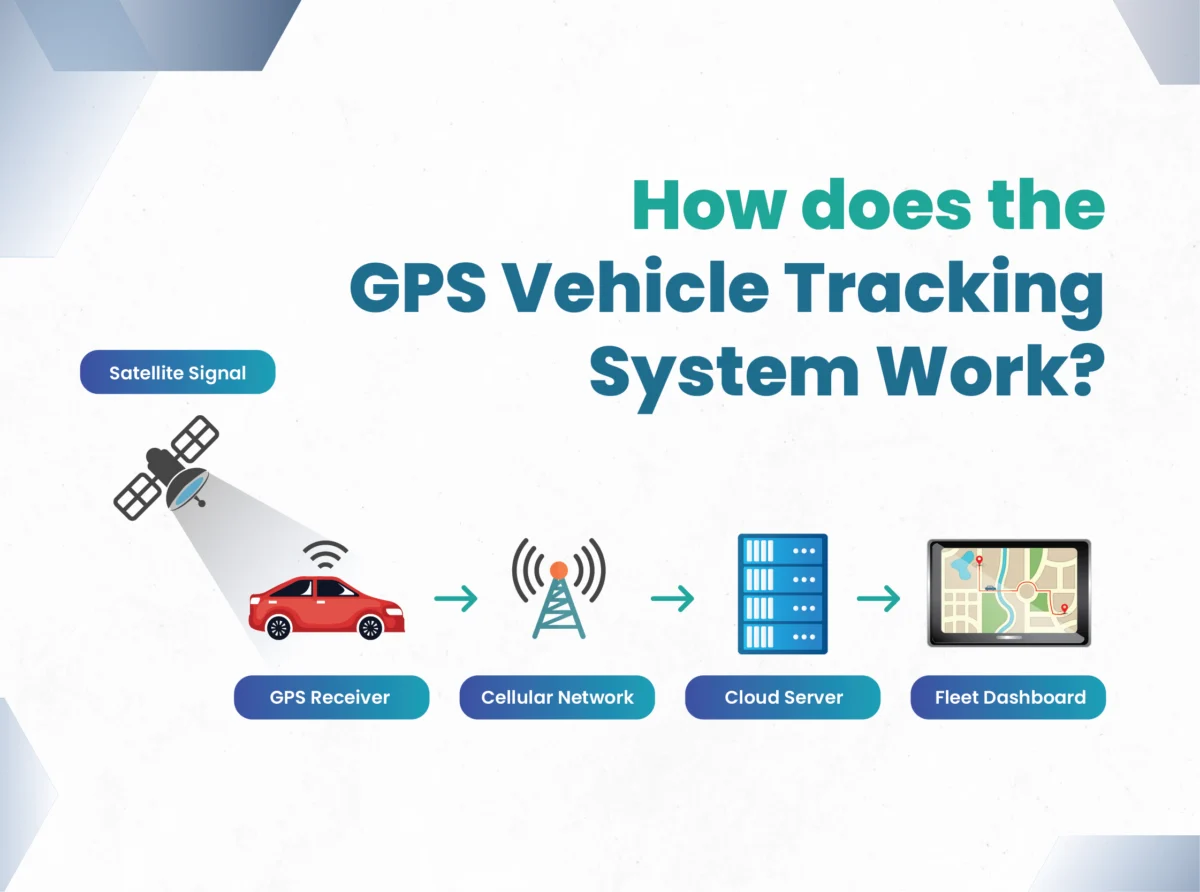
It has become a universal knowledge that a GPS tracker is an advanced and compact, high-tech device that can pinpoint and monitor your real-time location. Whether it is your car, any other vehicle or any asset, it can be applied anywhere on Earth. But what does it consist of? Your GPS tracker is much more than just a receiver. It combines several components such as an antenna for capturing satellite signals, a communication module (like GSM, Wi-Fi, or satellite networks) for transmitting data, and often memory storage to save location history during connectivity gaps. Hence, inside a GPS you will find-
  1. GPS Receiver: Captures signals from satellites.
  2. Cellular Transmitter: Sends data to the cloud via 4G/5G networks (in active systems).
  3. Microprocessor: Processes location data and integrates inputs from vehicle sensors (e.g., engine diagnostics, fuel levels).
  4. Power Source: Draws power from the vehicle’s OBD-II port, cigarette lighter, or an internal battery for standalone units.
In fleet management, these advanced trackers such as SpincLabs also can provide you with onboard diagnostics to monitor your fleet’s engine health, and fuel efficiency, and also can monitor the driver behaviour.

How Does it Transmit The Data? 

Okay, since you know how GPS works in car or any vehicle, it’s time to indulge in more information. Yes, we are talking about the data transmission. The tracker uses cellular networks (like the ones your phone uses) or satellite connections (for those really remote spots) to beam that data to a central computer. On a centralized server, the software processes it into user-friendly insights. In other words, the computer turns all that data into something you can actually understand. It shows the map and pinpoints your location on the screen. Still wondering, how to track vehicle location, know this process-
  1. Real-Time Maps and live updates to show vehicle movements on digital maps.
  2. Geofencing i.e. the virtual boundaries triggers alerts when vehicles enter or exit designated zones.
  3. Historical playback to review routes, stops, and idle times from past trips.
  4. For passive systems, data is stored locally (e.g., on a SIM card) and uploaded later when synced.

What Else Does it Do?

There is always something beneath the hidden layers of data. Hence, modern GPS trackers go beyond simple mapping. They have such advanced sensors and software that can deliver you more than just location. If you upgrade your car with such an advanced car tracking system, (especially for businesses) it will enhance transparency for your business. Fleet management systems these days are upgrading themselves with such advanced GPS trackers. Let’s see what can they do for you!
  • Driver Behaviour Analytics – These are the type of scorecards on speeding, idling, or aggressive driving, they can track all your driver’s behaviour in real-time and save the data for later review.
  • Predictive Maintenance – In this feature, you get alerts for engine faults, low battery voltage, or tyre pressure issues.
  • Route Optimization This advanced feature is AI-enabled which suggests fuel-efficient paths by analyzing traffic, weather, and road conditions.
  • Cargo Monitoring – Track temperature for perishables or detect unauthorized door openings.
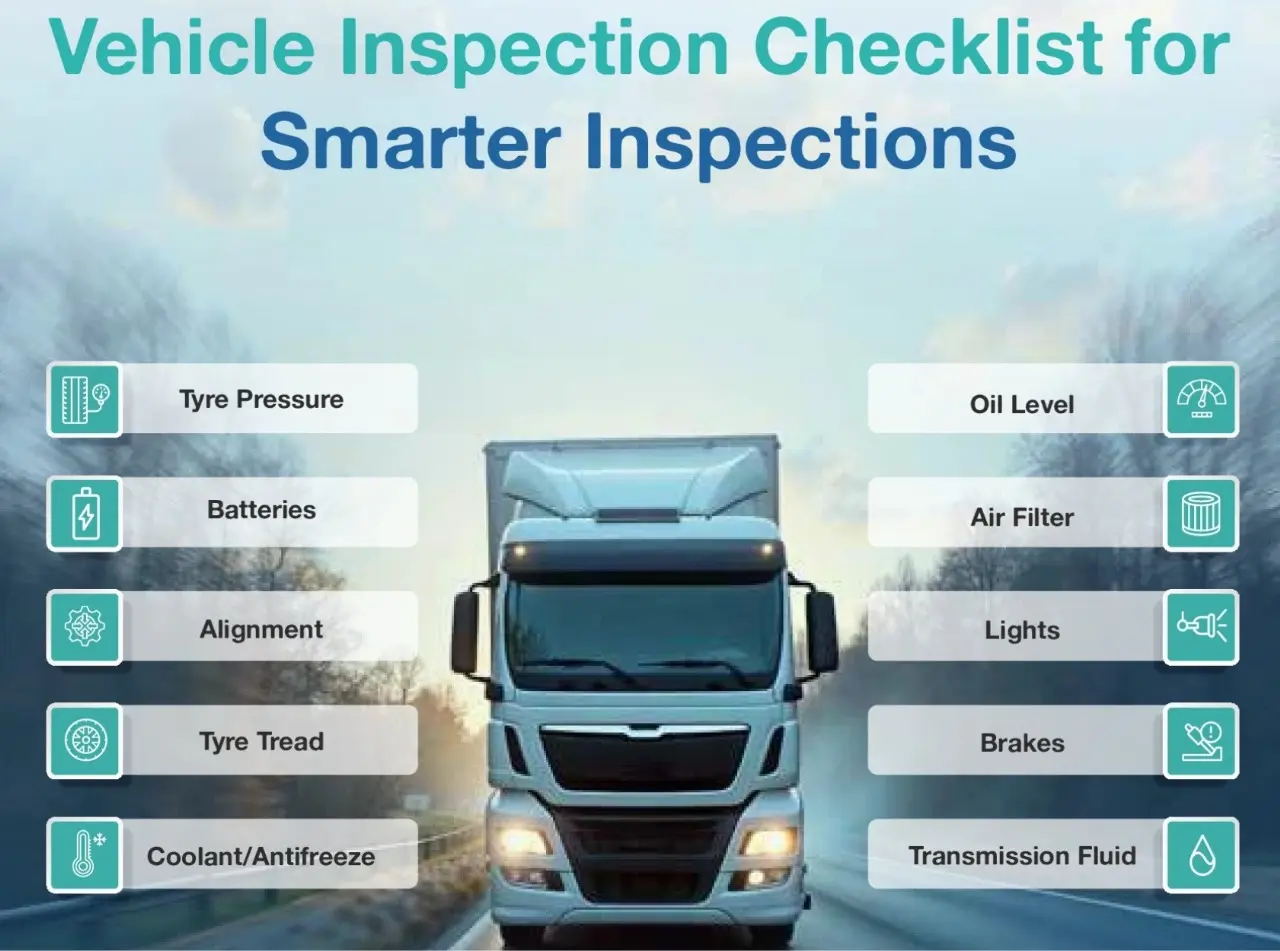
For a comprehensive approach to vehicle maintenance, integrating a Vehicle Inspection Checklist for Smarter Inspections can further enhance your fleet’s efficiency and safety.

How to Use GPS Tracker Device?

Ready to start tracking? Since we already know now how GPS works in car, the next step will be to pick the right GPS tracker. Once you’ve got your tracker, you’ll probably need to pop in a SIM card (like the one in your phone) so it can send data. Just make sure the SIM card is activated and has both SMS and data enabled. Then, give the tracker a good charge or plug it into your car’s power. Finally, stash it somewhere discreet, where it can still see the sky clearly, that’s how it gets the best signal from the satellites. Next, activate the device according to instructions or manuals. Once it is activated, you can link the tracker to its companion app or web dashboard by scanning a QR code or similar instructions. Now you can monitor real-time location on the app, set up geo-fences for alerts if the tracker leaves a designated area, and review route history. And it’s all done!

Ready to Explore The World With GPS?

We hope our curated tips help you in upgrading your traditional systems and now you know how to track vehicle location. Since next-gen trackers are already blooming with AI for predictive analytics, 5G for faster data transmission, and edge computing to process data onboard, the future of fleet management is way ahead of what it was before. GPS vehicle tracking systems have become an inseparable part of our lives and it will transform our lives further!

FAQ's

How does GPS maintain accuracy in urban environments with tall buildings or tunnels that can obstruct satellite signals?
In urban environments, GPS systems often use **assisted GPS (A-GPS)**, which uses cellular towers and Wi-Fi hotspots to supplement satellite signals and improve accuracy. **Inertial sensors** can also help maintain positioning when satellite signals are temporarily blocked.
Can the location data be accessed or compromised if the SIM card is removed or the device is tampered with? What security measures are in place?
GPS trackers require a **PIN or password** to prevent unauthorized access to the device and its data. **Tamper alerts** can also be triggered if the device is physically removed or if the SIM card is changed.
What are the options for managing data usage and costs?
Data usage depends on the **frequency of location updates** and the amount of data transmitted (e.g., engine diagnostics, driver behaviour). Users can easily configure the update frequency to **optimize data usage** and minimize costs.
What happens when the battery runs out or is disconnected?
Most GPS trackers have a battery lifespan of several days to several weeks. **Low battery alerts** notify users when the battery needs to be recharged. Upon disconnection or battery depletion, the device will enter a **low-power mode** and preserve stored location data.
How frequently does a GPS tracker update its location?
Update frequency can range from **once per minute to once per hour** and it depends on your configuration. You can balance accuracy and battery life by adjusting the update frequency based on your needs.

Vehicle Inspection Checklist for Smarter Inspections

“Tired of tedious, unreliable manual vehicle inspections? SpincLabs’ curated guide gives you the power of smart vehicle inspections, and they can cut down vehicle maintenance expenses. They are transforming manual vehicle inspections into much advanced data-driven, efficient, and cost-effective processes. 

Together, we will explore what a traditional vehicle inspection checklist includes such as essential exterior, structural, and under-the-hood checks. Also, discover how AI-enabled technology is transforming fleet management with automated damage detection, predictive maintenance insights, real-time IoT data, and digitized platforms. It is time to take a step towards the future of vehicle inspections for safer, more reliable, and more profitable operations.”

These days, all the smart cars and connected tech have become necessary elements of our lives. Of course, all our vehicles need a regulatory check. But these vehicle inspections are actually a necessity for us. In fact, it’s a smart move that keeps everyone safer and makes things run smoother. One more thing, it will save you a lot of money! Nowadays, modern inspections mix the usual check-ups with cool digital tools, AI, and IoT. It’s like turning vehicle inspection into a super-accurate, data-powered operation that can even predict problems even before they happen. 

But what should be on your vehicle inspection checklist? Have you ever thought about it? If not, don’t worry, SpincLabs can help you understand the whole checklist.

Why do you need a vehicle inspection checklist?

So, let’s get started, but answer us first, why bother with a vehicle inspection checklist? It is your car’s annual check-up but way more thorough. A vehicle inspection checklist is a step-by-step guide that makes sure every important part of your vehicle is in perfect shape and safety features are well intact. These factors decide how your vehicle performs on the road, and even whether it’s meeting all the rules and regulations or not. Trust us, this checklist will be a real lifesaver for you. It will help you catch problems early, before they turn into major breakdowns or accidents.

Nowadays, the best checklists aren’t just paper and pen anymore or something you do manually. They’re digitised which means you can use them on your phone or tablet.

What should be on your vehicle inspection checklist?

Let’s see what is part of the daily vehicle inspection checklist

1. Exterior and Structural Checks:

Whenever you start with a vehicle inspection, exterior and structural checks come first. Whether it’s body condition or tyres, this is the basis of every vehicle inspection checklist

  • Body Condition: 

Spotting trouble on the surface level can save you troublesome vehicle maintenance expenses. Glance over your vehicle thoroughly and search, is there any dents, scratches, rust spots, or uneven paint visible? Also, look for the signs of corrosion as rust can damage your vehicle.

  • Condition of Glass & Mirrors: 

The condition of your vehicle’s windshield, windows, and mirrors can compromise the visibility. This is the reason why it is necessary to keep them in good condition because any kind of cracks or scratches can impair your vision.

  • All The Lights & Signals:

From time to time, you should check whether all your lights are working properly or not. One by one check headlights (both high and low beams), taillights, brake lights, turn signals, hazard lights, and fog lamps.

  • Check The Tyres: 

Your vehicle’s tire condition will determine your safety and that’s why you need to check whether they are in perfect shape or not. Measure the tread depth and make sure it’s above the legal minimum. Also, check for tear and wear patterns, and scrutinize the sidewalls for any cuts, or cracks. And yes, don’t forget to verify the air pressure using a tyre pressure gauge.

2. Under-the-Hood & Fluid Checks:

This is where you check all about the heart of your vehicle, the engine. Don’t worry, you don’t need to be an expert; just a keen observer to see what’s lacking.

  • Engine Oil:

The Lifeline of your engine is engine oil. It keeps everything lubricated and running smoothly. You can use the dipstick to check the oil level. Also, pay attention to the colour and consistency of the oil. It should be a light brown or amber color. If it’s dark brown or black, or if it has a gritty texture, it’s time for an oil change.

  • Coolant, Brake, and Transmission Fluids:

These fluids are the main elements that keep your engine from overheating and ensure your brakes work properly. The fluids will make your shift gears work smoothly. Check the levels of each fluid in their respective reservoirs and inspect the possible leaks, such as puddles under your car or stains on the engine components. 

  • Belts & Hoses: 

These are the connectors that connect different components so fluids and air flow freely. Inspect all belts and hoses to detect cracks, fraying, leaks, or loose fittings. If you see any of these problems, it’s time to replace the affected belt or hose. 

  • Battery: 

Test charge, inspect terminals for corrosion, and check for secure mounting.

Let’s see what else it includes!

For your ease, we have curated a list of things that needs to be on your vehicle inspection checklist!

Checklist

Inspection Points

Exterior  Whole body, windshield, mirror, paint, tyres, wipers
Under-the-hood  Coolant, engine oil, belts, hoses, air filter, battery
Safety & Interior Brakes, suspension, steering, airbags, dashboard lights, HVAC
Emissions & Exhaust Emission, exhaust system, noise levels
Digital & Docs VIN/odometer scan, insurance, registration, maintenance recods

Now, Forget All These Manual Checklists, AI-enabled Technology Makes it Smarter and Easier!

Recently, in fleet management, there have been advanced developments that negate the need for manual inspections. We are talking about a much smarter way to do these vehicle inspections through AI-powered vehicle inspections. These smarter inspections have transformed the regular and traditional automotive industry. Fleet management software is a great help that provides you with efficiency, accuracy, and scalability more than your traditional manual inspections. Let SpincLabs shed light on how they do it and what is part of the daily vehicle inspection checklist in such systems! 

How Are They Smart?

Why did we say that we must forget manual checks? Not only do they consume too much time but also are less accurate. Sometimes it works all on figuring out what’s wrong with your vehicle. On the other hand, AI-enabled technology is more reliable than ever before. See what they do for you!

Accuracy 

Smart fleet management software includes AI systems that can detect even the smallest scratches, dents, or structural issues. Usually, when you do it on your own, it takes a lot of time. But these AI-enabled systems can do it for you within minutes. Not only this, these systems provide this inspection check with precision and accuracy.

AI Analytics

While manual vehicle checks rely on your anticipation, AI-enabled fleet management software collects and analyzes vast amounts of inspection data, uncovering patterns for advanced predictive maintenance. This helps you in scheduling repairs before breakdowns, which reduces downtime, and extends your vehicle’s lifespan. It works on damage detection and analyzes photos and videos to spot dents, scratches, and paint issues invisible to the naked eye. Also, it extracts VINs and odometer readings, reducing fraud and manual entry errors.

IoT & Telematics

Now this is how it makes it all smarter and easier. Can you get real-time data on your fleet with traditional fleet systems? Of course not. But AI-enabled systems provide you with real-time data for your fleet. In such a system, sensors monitor engine health, fluid levels, and tyre pressure and if something is lacking, it sends you instant alerts.

Also, it keeps an eye on the driver’s behaviour. Since the telematics can track harsh braking, acceleration, and idle time, it is smarter than your regular fleet management system. 

Digitized Platforms

These software will cut your vehicle management expenses. They provide you with a cloud-based checklist, so inspections are logged, shared, and analyzed in real-time. This way it ensures transparency and provides easy access for all. Also, these vehicle inspections can be done on mobile apps. Hence, you can do your inspection in remote locations.

Still Thinking About The Future? 

So, tell us, are you still relying on manual way of vehicle inspections? Digitized way of vehicle inspection will give you a 360-degree assessment of your vehicle in minutes. So, let’s forget the old-school checklist and make your vehicle inspections much smarter and more efficient. Wish to know more? Connect with SpincLabs!


FAQ’s

What types of reports and analytics are available with SpincLabs’ smart vehicle inspections and how can we use this data to improve their operations?
Smarter inspections include detailed reports and analytics including damage summaries, maintenance needs and compliance reports. This data helps you identify inefficiencies or areas for improvement. Hence, you can improve the operations by negating these inefficiencies.

How can I save my time through these smart vehicle inspections?
Smart fleet management software includes AI systems that can detect even the smallest scratches, dents, or structural issues. Usually, when you do it on your own, it takes a lot of time. But these AI-enabled systems can do it for you within minutes. Hence, you can save a lot of time.

Can SpincLabs provide a detailed cost-benefit analysis customized to my specific fleet size, vehicle types, and operational conditions?
Yes. SpincLabs provides customized cost-benefit analysis. We analyze your fleet size, vehicle types, operational conditions, and historical maintenance data. This analysis provides a potential cost savings and ROI you can expect from implementing our IoT+AI-powered system.

How does AI analytics help identify issues? Is it better than manual inspections?
Manual vehicle checks rely on your anticipation but AI-enabled fleet management software collects and analyzes vast amounts of inspection data. It uncovers patterns for advanced predictive maintenance. It works on damage detection and analyzes photos and videos to spot dents, scratches, and paint issues invisible to the naked eye. Also, it extracts VINs and odometer readings, reducing fraud and manual entry errors.

Can we access it from remote location?
It provides you with a cloud-based checklist, so inspections are logged, shared, and analyzed in real-time. It ensures transparency and provides easy access for all. These vehicle inspections can be done on mobile apps. Hence, you can do your inspection in remote locations.