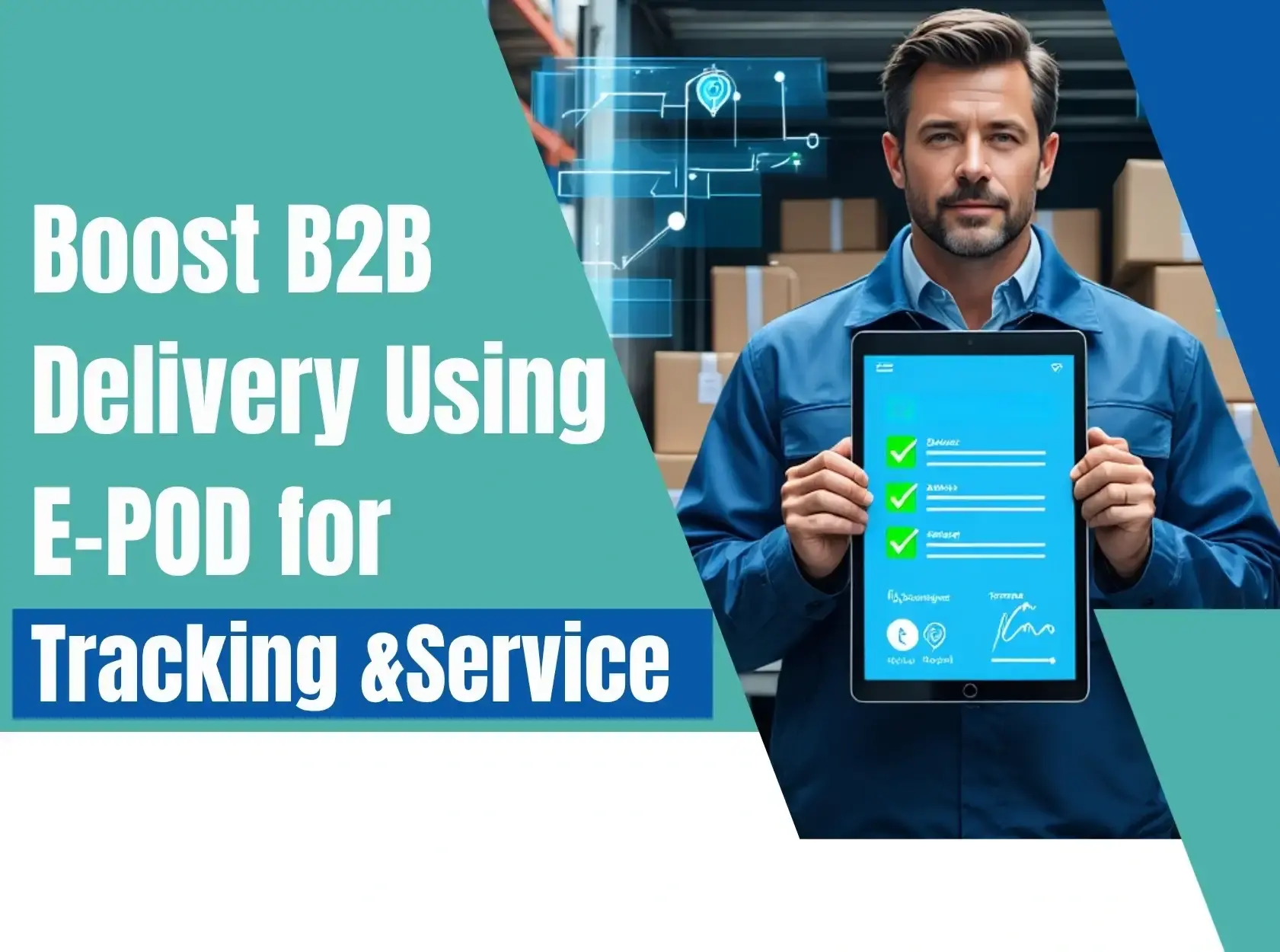
Boost B2B Delivery Using E-POD for Tracking & Service

Reduce delivery inaccuracies & costs with ePOD: Achieve 41% fewer errors, 33% higher customer satisfaction, & seamless real-time tracking for B2B operations.

In today’s fast-paced business environment, the ability to deliver goods efficiently and accurately is paramount. For businesses operating in the B2B sector, managing logistics and ensuring timely deliveries can be challenging, especially when dealing with outdated systems. Electronic Proof of Delivery (ePOD) systems have emerged as a crucial solution, streamlining the delivery process and significantly reducing manual intervention. This blog explores the multifaceted benefits of ePOD systems in enhancing B2B delivery operations.

What is Electronic Proof of Delivery (ePOD)?

Electronic Proof of Delivery, or ePOD, is a digital solution that replaces traditional paper-based methods like stamp and sign on Lorry receipt (LR) for confirming and recording deliveries. This system uses electronic documents, which can be accessed via smartphones, tablets, or other digital devices, allowing drivers and delivery personnel to capture delivery information in real-time. This data typically includes time-stamped signatures, photos, and GPS coordinates, ensuring that each delivery is accurately and securely documented.

How Does ePOD Work?

The process begins when a delivery is initiated, with the ePOD system tracking the shipment from departure to arrival. At the delivery point, the recipient confirms receipt by signing on a digital device. This action captures the exact time and location, adding layers of verification that were previously unattainable with paper records. The information is instantly uploaded to a cloud-based system, accessible to both the sender and receiver, streamlining the delivery confirmation process and enabling immediate invoicing and record-keeping.

The Benefits of ePOD in B2B Deliveries

Reduction of Manual Errors

Switching to ePOD dramatically reduces human errors associated with paper documentation. Businesses see fewer lost documents, reduced fraudulent claims, and a decrease in data entry errors—contributing to a more reliable and accurate delivery process.

Real-time Tracking and Visibility

With ePOD, businesses gain real-time insights into the delivery process. This enhanced tracking capability allows companies to manage operations more effectively, ensuring that goods are delivered on time and to the right location, thus improving resource allocation and operational transparency.

Improved Customer Experience

Customers benefit from ePOD systems through real-time updates and reduction of customer-initiated inquiries. It assists in building confidence and satisfaction, for customers feel that transparency and efficiency characterize the delivery process.

Enhanced Efficiency

The automation of delivery documentation through ePOD, therefore, means a quicker delivery process and less administrative burden on staff. Such efficiency translates to quicker turnarounds and the capability to hold greater delivery volumes without greater use of resources.

Environmental Benefits

Adopting ePOD contributes to environmental sustainability by significantly reducing paper use. This shift not only helps companies meet their corporate social responsibility goals but also resonates well with increasingly eco-conscious consumers.

Data-Driven Insights

ePOD systems provide a treasure trove of data that can be analyzed to glean insights into delivery performance, customer preferences, and potential operational improvements. This information is crucial for strategic planning and helps businesses stay competitive in a dynamic market.

Increased Accuracy and Accountability

Digital records are clear, verifiable evidence of delivery, enhancing accountability and reducing disputes. This accuracy is, therefore, of essence to good customer relations and the law in certain extents in other professions.

Cost Savings

By reducing mistakes and increasing efficiency in processes, ePOD minimizes operational costs. Quite often, this saving is large, especially scaled across a number of deliveries and operational processes.

Seamless Integration with Existing Systems

ePOD solutions are designed to integrate seamlessly with existing logistical and CRM systems, enhancing data flow and reducing the need for duplicate entries, thereby improving overall operational efficiency.

Competitive Advantage

It is the ability to deliver efficiently and accurately that gives any business leverage in a competitive B2B marketplace. ePOD systems help companies do just this: enhance the quality of service, shorten delivery time, and improve customer satisfaction.

Recommended ePOD software solution

Spinclabs integrates Electronic Proof of Delivery (ePOD) within their advanced shipment visibility solution, enhancing delivery accuracy and customer satisfaction. Along with ePOD, their system offers real-time monitoring, detailed insights, seamless ERP integration, and robust alerts for operational disruptions. This comprehensive solution optimizes supply chain operations, automating various processes to improve efficiency and decision-making. 

For a more detailed look, you can visit Spinclabs’ Shipment Visibility and Tracking.

Conclusion

The implementation of ePOD systems in B2B deliveries offers a transformative solution for businesses looking to enhance efficiency, reduce errors, and improve customer satisfaction. By addressing common logistical challenges, ePOD systems not only streamline delivery processes but also support sustainable and cost-effective operations. As businesses continue to evolve, the adoption of such technologies will be key to maintaining competitive advantage and achieving long-term success.
Tailor-made and Integrated

Discover how SMEs can adopt a tailored Transportation Management System to optimize logistics, reduce costs, and enhance efficiency in a competitive market.

Logistics is a department often seen as disorganized and neglected when it comes to digitization, especially in India, where it’s often met with a casual ‘Ho jayega’. However, as consumer demands evolve rapidly and e-commerce companies rise, the need to digitise logistics—even for small businesses—has grown significantly.

How can an SME adopt ERP for logistics?

In today’s rapidly evolving logistics landscape, small and medium-sized enterprises must continually optimise transport operations while keeping costs low. A Transportation Management System (TMS) can offer a solution by providing tools to streamline and manage logistics effectively. For SMEs to fully benefit from a TMS, it needs to be tailored to their specific needs and seamlessly integrated with their existing systems. Here’s how an SME can successfully adopt a TMS for logistics.

1.UNDERSTANDING THE ROLE OF TMS IN LOGISTICS

A Transportation Management System (TMS) is crucial for planning, executing, and optimizing the physical movement of goods. It offers real-time visibility, optimizes routes, reduces transportation costs, and enhances overall efficiency. By leveraging technology to streamline logistics, a TMS helps small and medium-sized enterprises (SMEs) compete more effectively against larger companies, levelling the playing field.

2.SELECTING THE RIGHT TMS FOR YOUR BUSINESS

The first step in adopting any new system is selecting the right one; choosing TMS is no exception. Businesses need to focus on finding a system that will align with their needs so that it can easily scale if necessary while still being user friendly. Some of them include;

Customization – Make sure your TMS can be adjusted to satisfy your unique needs during transportation processes.

Scalability – Ensure that your TMS has capacity to accommodate more business volumes in future as well as new service offerings.

Integration Capabilities – Your chosen TMS should seamlessly integrate with your existing systems, such as ERP, WMS (Warehouse Management System), and CRM, to ensure smooth data flow and operational efficiency.

3.CUSTOMIZING YOUR LOGISTICS NEEDS TO FIT THE SYSTEM

A one-size-fits-all approach doesn’t work for supply chain management systems, whether for large corporations or small businesses. SMEs need to customise their TMS to address the specific processes and challenges they encounter. Here’s how this can be achieved:

  • Process Mapping: Begin by mapping out your current transportation processes. Identify inefficiencies, bottlenecks, and areas that need improvement.

  • Vendor Collaboration: Work closely with your TMS provider to configure the system according to your needs. This could involve setting up specific routing rules, automation workflows, and custom reporting.

  • Pilot Testing: Conduct a pilot test to ensure the TMS works as intended before rolling it out company-wide. Use this phase to make adjustments and fine-tune the system.

4.INTEGRATION OF THE TMS INTO EXISTING SYSTEMS

A fully integrated TMS is critical for a smooth running logistics operation. Such integration enables a seamless flow of data enhancing visibility while minimising errors. Consider the following:

API Integration – Ensure your chosen TMS offers robust API capabilities for easy connection with other critical systems, such as ERP and WMS.

Data Synchronisation – Plan for seamless data synchronisation between existing platforms and the TMS, ensuring real-time updates across various interfaces.

Automated Workflows – Leverage integration options to automate key tasks like order fulfilment, shipment tracking, and invoicing.

5.TRAINING AND CHANGE MANAGEMENT

Implementing a new TMS isn’t just about the software itself; it’s also crucial to train people to use it effectively. For SMEs, focusing on training and change management is key to a smooth transition from old to new processes. At Spinclabs, we excel in this area by providing:

User Training: Tailored training programs for various roles, from planners and dispatchers to drivers and customer service representatives.

Ongoing Support: Continuous support through help desks, training refreshers, and user manuals to tackle any challenges users might face during and after the system rollout.

6.PERFORMANCE MONITORING AND CONTINUOUS IMPROVEMENT

After the implementation of TMS, it is vital to keep track of its performance and effects on your logistics. Use key performance indicators such as on-time delivery rates, transportation costs, and route efficiency to assess how well the system is functioning. Periodically review these metrics, identify issues from data obtained thereby resulting in an improved TMS.

Conclusion

Adoption of a Transportation Management System (TMS) by SMEs operating in the logistics industry will strategically boost transportation efficiency, minimise expenses, and enhance customer satisfaction. Such firms can therefore implement a customised integrated TMS capable of meeting their unique needs as well as ensuring that goals are realised through effective usage. Given that customization, integration, and training can be accomplished accordingly, a TMS becomes one of the most effective tools for facilitating growth and success in logistics.

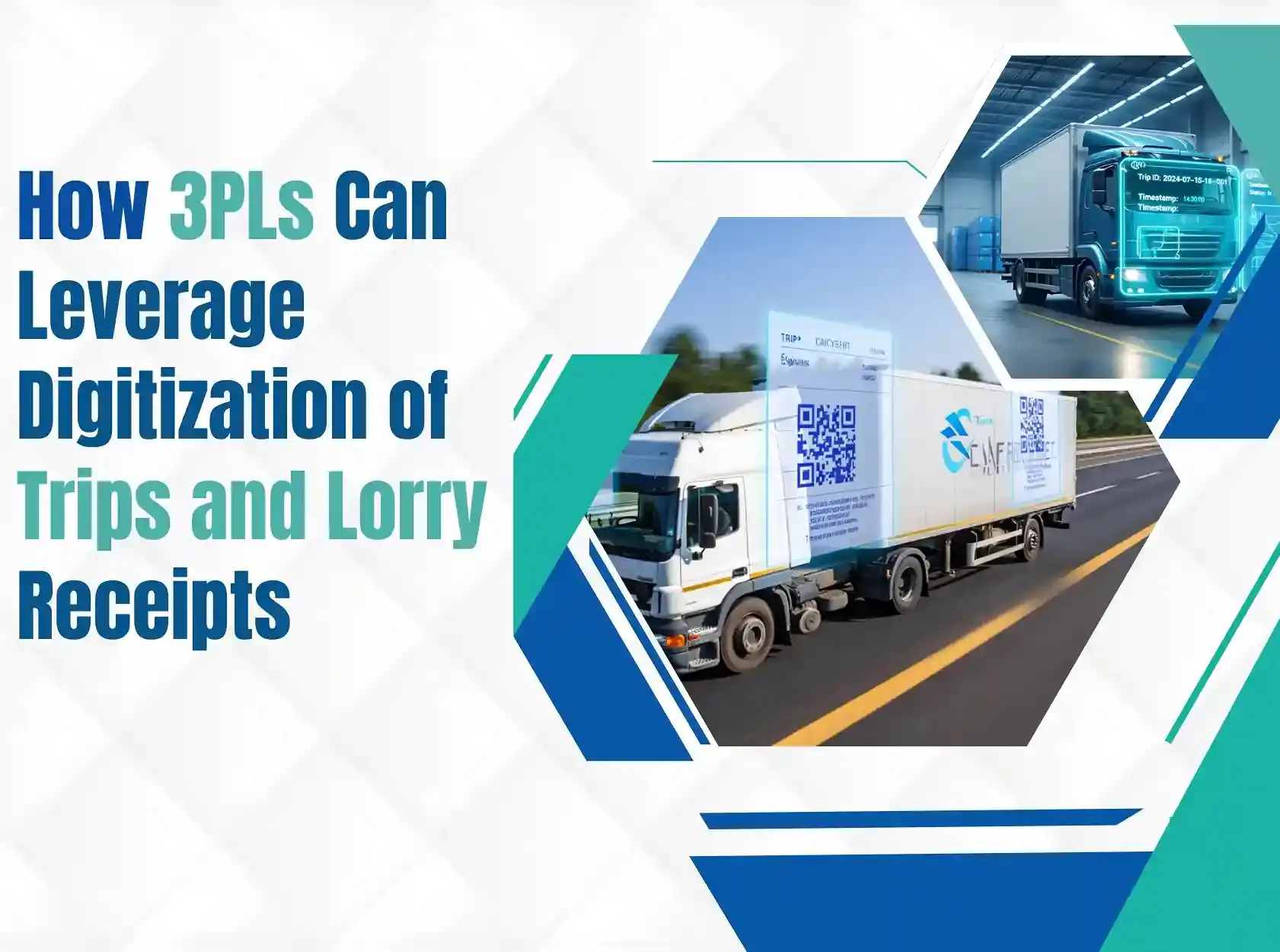
How 3PLs Can Leverage Digitization of Trips and Lorry Receipts

Explore how digitizing Lorry Receipts (LR) with TMS can streamline logistics, enhance communication, and improve insurance claims management for 3PLs.

Every logistics service provider is deeply involved in numerous operational activities and the handling of paperwork. It’s well-known that the logistics industry in India is highly disorganised, making communication between related and unrelated parties chaotic. Establishing a proper sequence of activities becomes challenging if not managed from the outset.

The key to streamlining logistics is to organise communication effectively from the moment a vehicle is requested until it leaves the source location. While large corporations and 3PL/4PL companies manage this through established controls and stable operations, SMEs and small-to-large fleet owners face significant challenges. They rely heavily on fluctuating market demands. So, how do they manage daily activities on a digital platform and ensure that information is readily available when needed?

The above-mentioned issue can be solved through digitization, which organises communication, streamlines operations, and ensures that crucial information is accessible when needed.

But how can you digitise the creation of a Lorry Receipt (LR)?

Small and medium transporters can greatly benefit from an easy-to-use, subscription-based application to generate LR copies digitally, eliminating the need for manual creation. Larger 3PL companies can gain even more by using custom-designed LR forms tailored to their specific needs, ensuring a seamless flow of trips and related information. Applications like the TMS offered by us enable transporters to create LRs online and integrate them with customers for efficient LR tracking.

How is it helpful in tracking ? 

If Lorry Receipt (LR) is digitised and linked to the ERP system 

  • Parcel shipment tracking can be simplified through API integration with delivery partners. 
  • SIM tracking becomes straightforward as the driver’s phone number is linked to the LR, which can also serve as the tracking number. 
  • Proof of Delivery (POD) can be digitised by sending the LR copy electronically, allowing the recipient to sign digitally, providing a secure and verifiable proof of delivery.
  • Payment processes are streamlined as well. Many transporters face delayed payments due to discrepancies between trip details, LR information, and PODs. Digitization easily resolves these issues by aligning all data, ensuring accurate and timely billing.

How Digitization of LR will help with Insurance claim management?

As mentioned earlier, many transporters, whether big or small, rely on physical LR copies to obtain proof of delivery, often writing notes and collecting customer signatures and stamps on the back of the physical LR. However, these physical LRs often don’t reach the transporter’s office promptly. Digitising the LR process allows for immediate access to damage and shipment information, enabling faster and more efficient insurance claims for damaged or stolen goods. With all the information centralised, there’s no risk of data loss or delays, ensuring a smoother claims process.

Conclusion 

In conclusion, digitising the Lorry Receipt (LR) process through a robust Transport Management Solution (TMS) offers significant benefits for the logistics industry, particularly for small and medium-sized transporters. By enhancing communication, improving tracking, and ensuring timely access to critical information, TMS not only simplifies daily operations but also optimises payment processes and insurance claim management. Embracing such digital solutions is crucial for overcoming industry challenges and achieving greater efficiency, accuracy, and reliability in logistics operations.

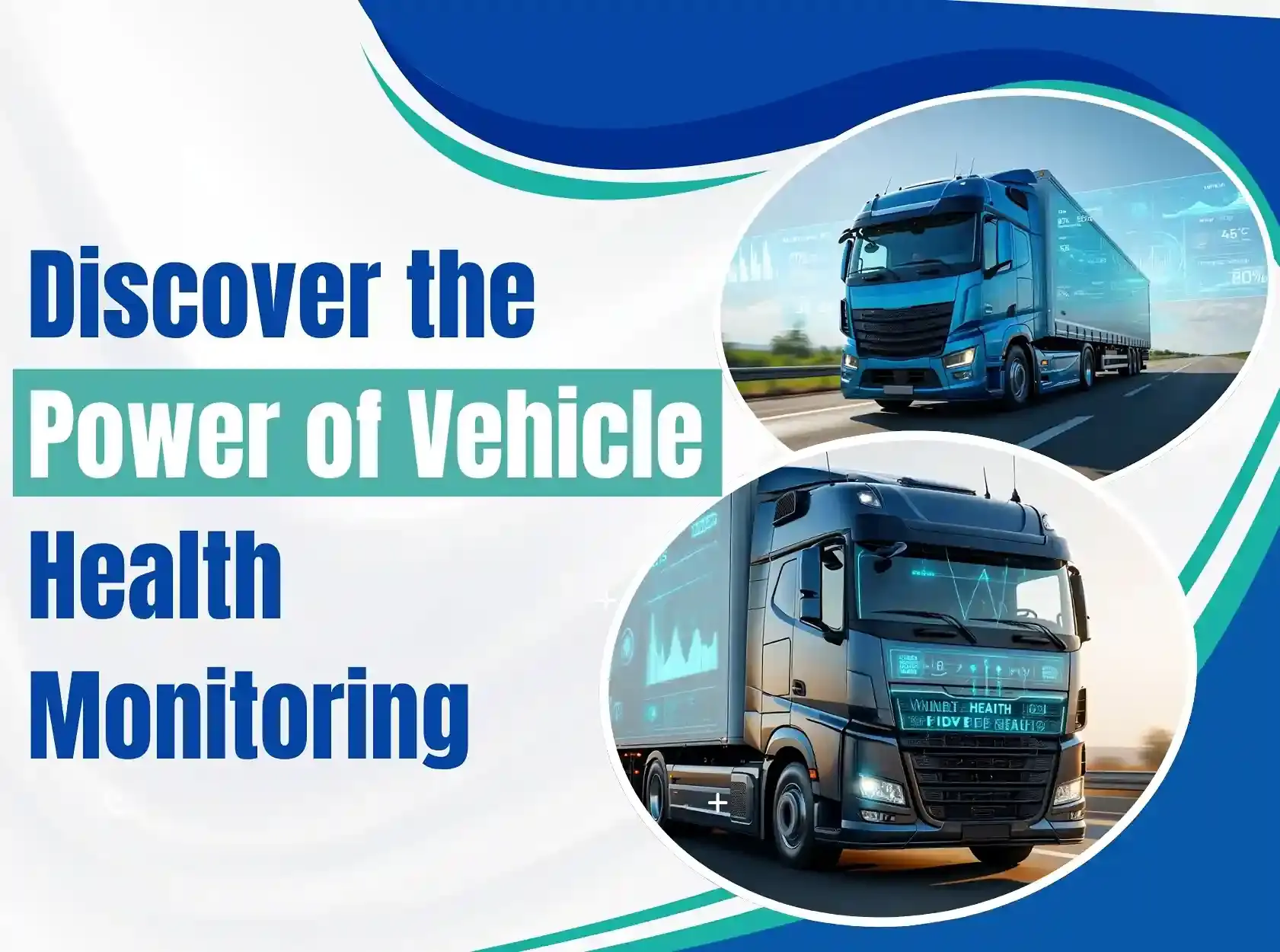
Discover the Power of Vehicle Health Monitoring

Optimize your fleet with our top-rated fleet management solution. Ensure vehicle health with real-time monitoring and predictive maintenance.

In today’s fast-paced world, where consumer needs are constantly evolving, transport owners are working tirelessly to meet the demand for vehicles across all types of deliveries—from primary and secondary to last-mile. This rush can sometimes lead to compromised vehicle conditions, which is a significant concern. Just like regular health checkups are vital for maintaining a healthy life, ensuring the health of vehicles is crucial for smooth logistics operations.

This is where technology like predictive maintenance and vehicle health monitoring becomes essential for fleet managers. With the help of easy-to-install IoT devices, whether hard-wired or OBD, trucks can be tracked and monitored effectively. These devices not only ensure timely maintenance but also prevent potential breakdowns, making fleet management solutions more efficient and reliable.

The Importance of Vehicle Health Monitoring

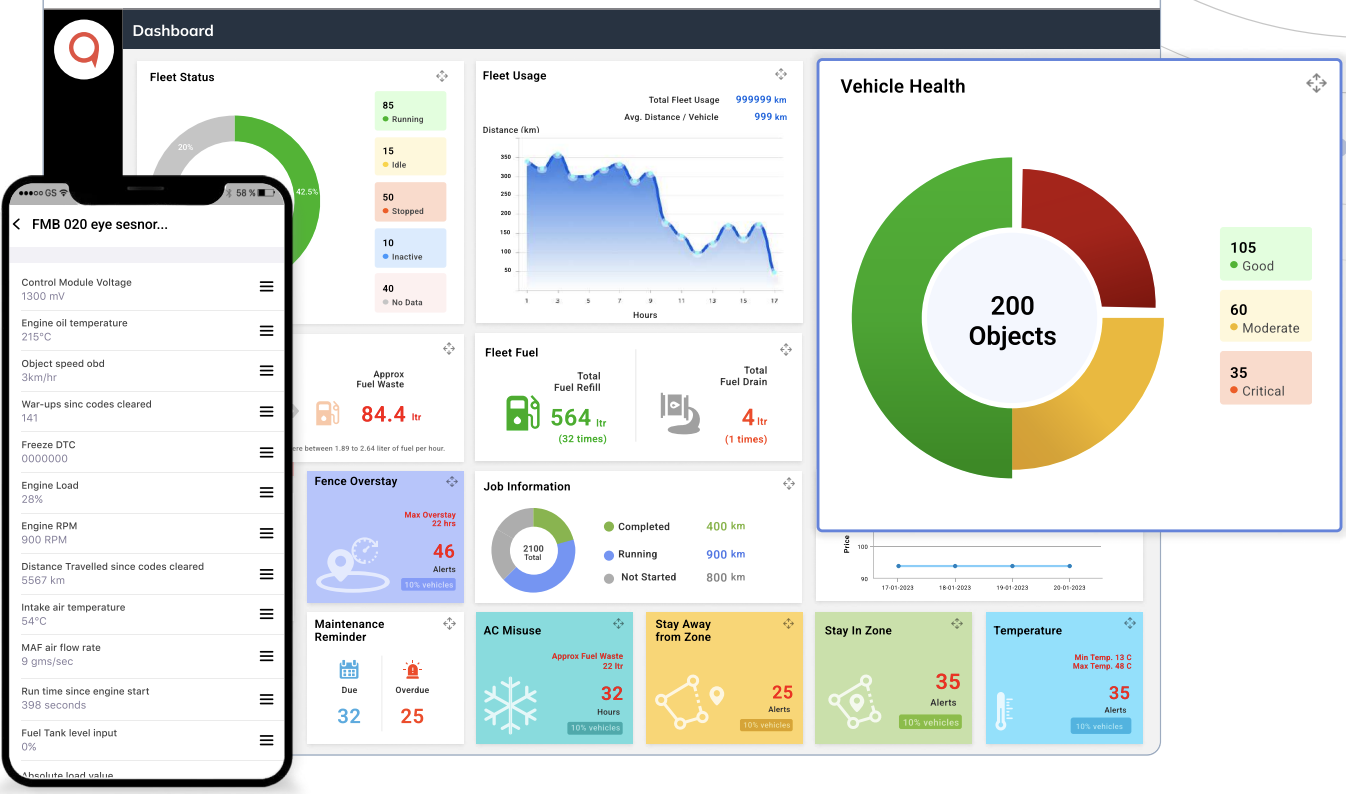
Vehicle health monitoring involves keeping a close eye on various critical parameters, including engine coolant levels, battery status, and engine oil temperature, all in real-time. Fleet managers easily can set thresholds for these parameters using the fleet management software to generate alerts to take corrective action before any trip. This proactive approach ensures that vehicles are in optimal condition before they are loaded with goods and sent out for delivery.

Key Benefits and Features

  1. Real-Time Vehicle Health Reports: Via vehicle tracking system
    • Engine Coolant Level: Monitoring coolant levels helps prevent overheating and potential engine damage.
    • Battery Voltage: Tracking battery health ensures reliable starts and avoids unexpected breakdowns.
    • Engine Oil Temperature: Maintaining optimal oil temperature is crucial for engine performance and longevity.
  2. Health Status Reports:
    • Receive a comprehensive health score for each vehicle, indicating the overall condition and highlighting any detected faults.
    • Utilize this report as a “report card” for corporate logistics teams or 3PL (Third-Party Logistics) teams to assess vehicle readiness before loading and dispatching goods.
  3. Data Analysis for Proactive Maintenance:
    • By analyzing data on vehicle health parameters, fleet managers can identify trends and patterns that may indicate potential issues.
    • Take proactive measures to address these issues before they escalate, reducing downtime and maintenance costs.
  4. Detailed Parameter Insights:
    • Engine Temperature: Get detailed information on distance traveled, engine running and idle times, and temperature fluctuations.
    • Battery Voltage: Monitor maximum and minimum voltages, and track the number of instances where battery levels deviate from ideal conditions.
    • OBD Parameters: Gain insights into ignition status, power usage, speed, and battery percentage, allowing for efficient fleet management.

Customizable Vehicle Monitoring Alerts

There is a possibility for fleet managers to establish exclusive limits for various parameters so as to match their demands. Through real-time notifications, any problems and faults can be rectified instantly hence avoiding major issues.

  1. Engine Fault Alerts:
    • Receive notifications when fault codes related to the engine system are detected, allowing for immediate investigation and resolution.
  2. Battery Alerts:
    • Stay informed about low battery levels or issues with the battery charging system, ensuring that vehicles remain operational.
  3. Tire Pressure Alerts:
    • Get alerts when tire pressure drops below the recommended level, maintaining safety and fuel efficiency.
  4. Fuel Alerts:
    • Monitor fuel levels and receive notifications about any issues with the fuel system, preventing unexpected fuel shortages.

Conclusion

In order to maintain high performance and reliability, vehicle health monitoring should be included in your fleet management strategy. With the help of advanced technology offered by Spinclabs, managers can always have their vehicles ready for primary, secondary and last-mile deliveries. This improves operational efficiency and maintains overall fleet performance which guarantees customer satisfaction and business success.

Embrace the power of vehicle health monitoring and take your fleet’s performance to new heights. Reach out to team Spinclabs for further information.