Discover how cloud-based transportation management systems transform UAE’s small and medium logistics businesses, enhancing efficiency and competitiveness.
In the heart of the UAE where global trade routes converge, a revolution is underway. With the era of manual logistics management slowly fading away, small and medium businesses can no longer afford the inefficiencies associated with manual logistics management.
Small and medium businesses are at the forefront of this revolution, driven by the adoption of cloud-based Transportation Management Systems (TMS).
These innovative solutions are not merely tools for managing shipments; they are catalysts for growth by equipping businesses in the UAE with the tools they need to navigate any complexity they come across with confidence, agility and efficiency.
In this blog post, let’s take you through the key benefits which small and medium businesses in the logistics industry in the UAE experience by adopting a cloud-based Transportation Management System (TMS).
Accessibility and Flexibility: Leveling the Playing Field
Cloud-based Transportation Management System has democratized access to sophisticated logistics technology. Small and medium businesses can now leverage powerful tools without the burden of hefty upfront investments in IT infrastructure.
This accessibility is a game-changer, allowing businesses to manage their operations from anywhere and anytime. And this flexibility is particularly crucial in the UAE’s dynamic business environment, where adaptability is key to survive and thrive.
Why Is It A Smart Investment for Small And Medium Businesses?
Cloud-based TMS solutions offer a compelling value proposition by eliminating the need for expensive hardware and software installations.
For small and medium businesses, cost effectiveness is of paramount importance. Subscription-based models allow these businesses to pay only for the features they need, making advanced technology accessible without straining their budgets. This cost-efficiency empowers businesses to compete with larger enterprises on a more level playing field.
Did You Know?
Small and medium-sized businesses contribute massively towards the UAE’s economy, accounting for over 94% of all companies operating in Dubai alone! Cloud-based TMS empowers these businesses to contribute even more to the nation’s economic growth.
Key Benefits Of Transportation Management System (TMS) In Transforming Logistics Operations
1) Unified Shipping Workflow:
Cloud-based TMS streamlines shipping processes across various carriers and modes of transport (road, air, sea). This unification simplifies logistics management and allows small and medium businesses to handle everything, right from small parcel deliveries to large-scale freight shipments on a single platform.
By eliminating manual processes, businesses can improve accuracy and efficiency by reducing costly errors and delays.
2) Real-Time Tracking and Visibility:
Cloud-based TMS gives businesses the power of foresight by providing businesses with up-to-the-minute information on the location and status of their goods. This transparency creates trust and strengthens relationships with clients.
3) Data Analytics and Insights:
Data is the new currency of business, and logistics is no exception. Cloud-based TMS solutions capture and analyze vast amounts of data, providing valuable insights into shipping performance, cost trends, and carrier efficiency.
Small and medium businesses can leverage this data to identify areas for improvement, negotiate better rates with carriers, and optimize their overall logistics strategy.
4) Improved Customer Service:
In a highly competitive market such as the UAE, customer service is a key differentiator. And with cloud-based TMS solutions, businesses can provide a whole new level of service by proactively communicating with clients and offering real-time updates on their shipments.
This focus on customer satisfaction not only builds loyalty but also transforms your brand into a trusted partner which is renowned for its transparency and reliability.
5) Scalability In Growing Your Business:
As small and medium businesses expand, their logistics need to evolve too. Cloud-based TMS solutions offer the scalability to adapt to changing requirements.
Businesses can easily add new features or expand their capabilities as needed, ensuring that their Transportation Management System grows alongside their operations. This adaptability provides a future-proof solution that can support long-term growth.
Future-proof your Logistics Business: Take The Leap Towards The Cloud
In the UAE’s logistics industry, cloud-based Transportation Management System isn’t just an option anymore. It is the key to survival and future success for small and medium businesses.
That’s because the UAE continues to position itself as a leading logistics hub of the world, and embracing cloud technology will be crucial to thrive. By leveraging this, businesses can not only streamline their operations, but also contribute to the growth and innovation of the logistics industry.
Ready to Transform Your Logistics Operations?
Tap into the true potential of your logistics operations with SpincLab’s Transportation Management System to achieve operational excellence and thrive in the global marketplace like never before!
We offer a comprehensive suite of cloud-based solutions designed to empower small and medium businesses in the UAE.
Contact us today and schedule a demo to discover how we can help you optimize your logistics operations for success!
Explore how a Transportation Management System enhances eco-friendly transport in Dubai, optimizing routes and reducing emissions for a greener future.
The world is going green, and transportation needs to catch up. In Dubai, where the roads are busy and the air quality is a concern, making transportation eco-friendly is crucial. Recent data shows just how important this is:
By the end of December 2023, Dubai had 25,929 electric vehicles (EVs), a big jump from 15,100 EVs at the end of 2022.
Dubai aims to have more than 42,000 electric cars on its roads by 2030.
The Dubai Roads and Transport Authority (RTA) has committed to achieving emissions-free public transport by 2050.
A TMS, or Transportation Management System, is a smart computer program companies use to help make transportation greener. In fact, a TMS system has evolved from simple map tools to powerful programs that can improve the entire transportation process.
This blog explores how TMS is helping to mend big ills in ecologically friendly transportation-from finding the ideal routes to tracking how green a company’s transport is. In the end, TMS is going to be a must for any business that wants to be kinder to our planet.
The Environmental Impact of Transportation
The transportation sector plays a crucial role in global economic development, but it also significantly contributes to environmental challenges, particularly in terms of carbon emissions.
Current Statistics on Transportation-Related Emissions
Recent data highlights the growing impact of transportation on global emissions:
In 2023, global transportation-related carbon dioxide emissions increased by 4%, reaching 8.24 billion metric tons (GtCO₂).
This accounts for approximately 21% of global CO₂ emissions.
Since 1990, global transportation CO₂ emissions have increased by almost 80%.
Road vehicles are the primary contributors, producing 12% of total global greenhouse gas emissions in 2021.
The Urgency for Sustainable Solutions in the Logistics Industry
The rapid growth in transportation emissions underscores the urgent need for sustainable solutions:
Regional Disparities: While emissions vary by region, developing areas are experiencing faster growth rates in transportation emissions compared to North America and Europe.
Dominant Polluters: The United States remains the sector’s biggest carbon polluter, although countries like China have seen their emissions more than triple since 2000.
Local Initiatives: Cities like Dubai are taking proactive steps. The Dubai Road and Transport Authority (RTA) has unveiled a comprehensive plan to achieve zero-emission public transport by 2050.
Economic Impact: Sustainable transportation not only reduces emissions but also offers economic benefits. Dubai’s RTA estimates that its strategy will save Dh3.3 billion while reducing carbon dioxide emissions by 10 million tonnes.
Technological Shifts: The transition to electric and hydrogen-powered vehicles is gaining momentum. Dubai aims to convert 10% of public buses to electric and hydrogen vehicles by 2030, increasing to 100% by 2050.
These statistics and initiatives necessitate innovative, sustainable solutions to logistics. The rapidly growing global transportation needs only increase the need to impose environment-friendly practices and technologies, making it almost an economic imperative by itself in the years to come.
Addressing Key Challenges with TMS
Transportation Management Systems (TMS) offer powerful solutions to the sustainability challenges faced by the logistics industry. Let’s explore how TMS addresses some of the most pressing issues:
Challenge 1: Inefficient Route Planning and Fuel Consumption
One of the biggest contributors to transportation emissions is inefficient route planning, leading to excessive fuel consumption. TMS tackles this problem through:
Advanced Route Optimization:
TMS uses sophisticated algorithms to determine the most fuel-efficient routes.
Factors considered include traffic patterns, delivery windows, and vehicle capacities.
Real-time data integration allows for dynamic route adjustments.
Load Consolidation:
TMS helps ensure trucks are fully utilized, minimizing the number of trips needed.
This functionality is crucial for reducing the overall carbon footprint of transportation operations.
For instance, according to one study by the American Transportation Research Institute, the trucking industry can save 32.2 million gallons of fuel yearly by eliminating just 10% of empty miles.
Challenge 2: Choosing Sustainable Transport Modes
Selecting the most environmentally friendly mode of transportation can be complex, especially in global supply chains. TMS offers solutions through:
Intelligent Mode Selection:
TMS provides a comparative analysis of different transport modes.
It helps companies balance cost, time, and environmental impact.
For instance, shifting from air to ocean freight for long-distance transport can significantly reduce carbon emissions.
Intermodal Transportation Optimization:
TMS can seamlessly combine multiple transport modes into a single, optimized route.
This further enhances efficiency and sustainability.
A report by the World Economic Forum suggests that optimizing mode selection and embracing intermodal solutions could reduce logistics-related emissions by up to 10%.
Challenge 3: Lack of Real-time Visibility and Data-Driven Decision Making
Without real-time visibility, transportation operations can suffer from inefficiencies that lead to increased emissions. TMS addresses this through:
Real-time Tracking and Monitoring: By integrating with IoT devices, TMS provides continuous visibility into transportation operations, allowing for quick identification and resolution of issues that may arise during transit.
Advanced Analytics and Reporting: TMS offers robust analytics dashboards and reporting tools that highlight key performance indicators (KPIs) related to sustainability. This enables data-driven decision-making to continuously improve sustainability efforts.
Challenge 4: Regulatory Compliance and Safety Concerns
Ensuring compliance with environmental regulations while maintaining safety standards is a significant challenge. TMS helps by providing:
Automated Compliance Management: TMS includes tools for monitoring and tracking compliance-related information, such as emissions data, ensuring adherence to regional and international standards.
Enhanced Safety Features: TMS can plan safer routes by considering weather and traffic conditions, and can monitor driver behavior to improve overall safety.
Challenge 5: Urban Logistics and Last-Mile Delivery
The growth of urban areas presents unique challenges for eco-friendly transportation. TMS addresses these through:
Smart Urban Route Planning: TMS can optimize routes within urban areas, considering factors like traffic congestion and time-based restrictions on truck movements.
Last-Mile Delivery Optimization: TMS helps plan more efficient last-mile deliveries, reducing the environmental impact of urban logistics. This can include consolidating deliveries and integrating with micro-fulfillment centers.
Challenge 6: Sustainability Reporting and Goal Tracking
Meeting sustainability goals and reporting on progress is increasingly important. TMS facilitates this process by providing:
Comprehensive Sustainability Metrics: TMS can track and report on key sustainability metrics, helping companies monitor their progress towards environmental goals.
ESG Reporting Support: TMS assists in generating data for Environmental, Social, and Governance (ESG) reporting, which is increasingly important for stakeholders and regulators.
Understanding Transportation Management Systems (TMS)
A Transportation Management System (TMS) is a sophisticated software solution designed to streamline logistics operations by managing the movement of goods across various modes of transportation including land, air, and sea. These systems have evolved to become integral components of modern supply chain management.
Key Features of TMS
Comprehensive Logistics Management: TMS optimizes load planning, delivery routes, and shipment tracking while automating critical tasks such as trade compliance and billing.
Data Centralization: By centralizing logistics data, TMS provides valuable insights that enable data-driven decision-making across the organization.
ERP Integration: Modern TMS solutions, like SpincIQ, seamlessly integrate into the most used ERP systems from SAP, Oracle, and Microsoft to enable exchanging data in real-time and enhance operational efficiency.
Enhanced Visibility: TMS offers comprehensive visibility not just for shipped orders, but also for pending invoices, expected arrival times, delays, detention charges, and quality check reports, all accessible through a single interface.
Real-time Tracking: Advanced tracking capabilities allow logistics teams to monitor in-transit vehicles, shipments, invoices, orders, and trips in real time, with timely notifications and alerts.
Billing and Invoice Management: TMS streamlines the process of handling multiple versions of top sheets and invoices from various transporters, simplifying freight charge payments and bill approvals.
Benefits of Implementing a TMS
Efficiency Improvement: By optimizing transportation processes, TMS helps reduce operational costs and improve delivery times.
Cost Reduction: Through better planning and capacity utilization, TMS minimizes transportation costs.
Enhanced Decision Making: Real-time data and analytics enable quick and accurate decision-making in response to evolving situations.
Sustainability: TMS contributes to sustainability goals by optimizing routes, reducing fuel wastage, and providing carbon footprint reports.
Advanced Features
Third-party Integrations: TMS can integrate with various systems including ERPs, courier partners, and fleet management systems.
Predictive Analytics: Utilizes advanced analytics and AI for forecasting and optimization.
Document Management: Secure handling of important trade documents using blockchain technology.
Customized Control Towers: Tailored dashboards and metrics for different stakeholders in the logistics process.
By providing a centralized platform for managing and optimizing transportation operations, TMS has become an essential tool for businesses looking to improve both operational efficiency and environmental sustainability in their supply chain management.
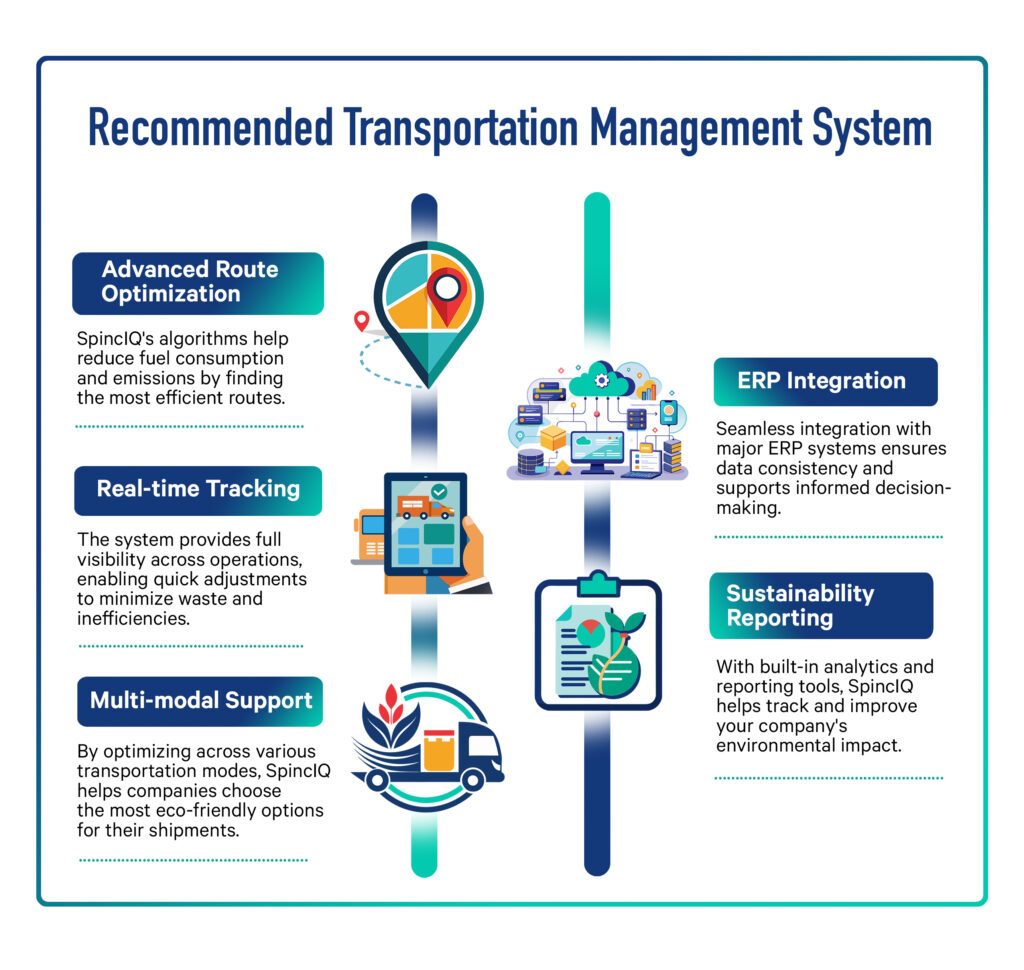
Recommended Transportation Management System
As we’ve explored the challenges and solutions in eco-friendly transportation, it’s clear that implementing the right Transportation Management System (TMS) is crucial. One solution that stands out in addressing these challenges is SpincIQ TMS by Spinclabs.
SpincIQ offers a comprehensive suite of features that align well with the sustainability goals we’ve discussed:
Advanced Route Optimization: SpincIQ’s algorithms help reduce fuel consumption and emissions by finding the most efficient routes.
Real-time Tracking: The system provides full visibility across operations, enabling quick adjustments to minimize waste and inefficiencies.
Multi-modal Support: By optimizing across various transportation modes, SpincIQ helps companies choose the most eco-friendly options for their shipments.
ERP Integration: Seamless integration with major ERP systems ensures data consistency and supports informed decision-making.
Sustainability Reporting: With built-in analytics and reporting tools, SpincIQ helps track and improve your company’s environmental impact.
What sets SpincIQ apart is its scalability and flexibility. Whether you’re a small business or a large enterprise, the system can be tailored to meet your specific needs. Its cloud-based nature also ensures that you’re always working with the latest features and updates.
By implementing a robust TMS like SpincIQ, companies can take a significant step towards more sustainable transportation practices. It not only helps in reducing the carbon footprint but also drives operational efficiencies that can lead to cost savings.
As we look to the future of eco-friendly transportation, leveraging advanced TMS solutions will be key to balancing business needs with environmental responsibilities. SpincIQ represents the kind of comprehensive, forward-thinking solution that can help businesses navigate this crucial transition.
Conclusion
Transportation Management Systems have been crucial in the move toward sustainable logistics. They address some of the key challenges that lie in route optimization, mode choice, and real-time visibility. Through them, a company can drastically reduce its environmental footprint while improving operational efficiency.
The evolving nature of transportation in Dubai means TMS solutions like SpincIQ will be more necessary in meeting ambitious sustainability goals, enabling cost savings while enhancing overall supply chain performance.
Such uses will only continue to grow as we look into the future, providing new ways to balance the needs of business with the pressures of environmental responsibility. Therefore, a robust TMS is not simply a good business decision for companies committed to sustainable practices-it is a necessary step toward a greener, more efficient future in transportation.
Enhance fleet performance with real-time insights using advanced fleet management software. Discover Video Telematics 2.0 for improved safety and efficiency.
In today’s fast-paced logistics world, fleet management softwareis evolving beyond basic GPS tracking. With the new age passenger card and commercial vehicles coming on the road. They are equipped with level 1 ADAS features and safety alerts like seat belt warning, lane change warning, speed alerts etc. With Video telematics we can change the game more towards safety and empowering fleet managers with real-time, actionable insights that go beyond location data. Video Telematics 2.0 is a new frontier, providing an advanced solution to improve safety, efficiency, and overall fleet performance.
At Spinclabs, we’re at the cutting edge of these innovations, offering fleet management software that fully integrates the most advanced video telematics capabilities to keep your operations efficient and your assets safe.
What is Video Telematics 2.0?
Traditional telematics primarily focused on vehicle data—location, speed, and engine diagnostics. However, with the advent of video telematics, the game has changed. Video Telematics 2.0 combines the power of real-time video footage with telematics data, delivering comprehensive visibility into fleet activities.
Now, fleet managers don’t just know where their vehicles are, but they can see what’s happening on the road—helping them make smarter, quicker decisions with the help of cameras , trackers and sensors.
Key Advanced Use Cases of Video Telematics 2.0
1. Real-Time Driver Monitoring and Coaching
Video telematics systems, equipped with interior and exterior cameras, provide live streaming and AI-driven insights into driver behaviour. From detecting signs of fatigue to flagging distracted driving, using phones while driving, these systems can immediately notify both the driver and fleet manager. This results in real-time coaching opportunities that can help reduce accidents, improve driving habits, and ensure compliance with safety standards. On Indian roads we hear about a lot of road rage and accidents everyday. Why because, drivers are not so educated about minor but important things. Insights from video telematics can be used to train drivers on a time to time basis. This will even help uplift the quality of drivers personality, health and attitude towards logistics driving.
In the event of an accident or near-miss, video telematics delivers critical footage and context, such as the driver’s perspective and environmental conditions. These insights offer indisputable evidence, speeding up insurance claims and protecting your company from false accusations. Since insurance is a hassle, video footage makes life easy for transport owners. Moreover, fleet managers can conduct post-incident analyses to prevent future occurrences.
3. Optimized Route Planning with Contextual Awareness
Video telematics data goes beyond conventional route optimization. By pairing visual insights with environmental data, such as traffic conditions, road hazards, or construction zones, fleet managers can make real-time adjustments to routes. This minimises delays and enhances fuel efficiency, ensuring your fleet stays productive on the road. This also leads to understanding the quality of roads for better driving performance.
4. Cargo and Asset Protection
For fleets transporting high-value or sensitive goods, video telematics provides extra security. Cameras placed within cargo areas can monitor the condition of goods, detect tampering, or track unloading activities. Alerts triggered by unauthorised access help secure valuable assets and prevent theft.
5. Regulatory Compliance and Driver Safety
Video telematics helps fleets stay compliant with a range of regulations, from hours of service (HoS) to vehicle safety checks. By monitoring driving patterns, seatbelt usage, and other safety parameters, managers can ensure adherence to regulations in real-time, preventing violations and costly penalties.
The power of Video Telematics 2.0 lies in its ability to offer real-time insights. Instant access to video footage and telematics data gives fleet managers the ability to respond immediately to critical events. Whether it’s coaching drivers, optimising routes, or preventing cargo theft, the ability to act in real time ensures your fleet is always ahead of the game.
At Spinclabs, our fleet management software seamlessly integrates advanced video telematics to provide 360-degree visibility. We enable fleet managers to operate more efficiently, keep their drivers safer, and reduce operational costs, all while boosting overall fleet performance. Bring us any hardware devices and we will be already integrated or we can do it in 7 working days for you.
The Future of Fleet Performance with Spinclabs
As fleet management technology continues to advance, Video Telematics 2.0 will only grow in importance. The ability to blend video insights with telematics data offers unmatched visibility, making fleets safer, smarter, and more efficient than ever before. Contact at teams@spinclabs.com.
Ready to experience the future of fleet management? Spinclabs is here to provide the tools and solutions you need to take your fleet to the next level. Explore our video telematics capabilities and see how real-time insights can transform your operations.
Discover key logistic technology trends reshaping the industry: IoT, automation, machine learning, and AI. Learn how these innovations optimize operations.
Technology is transforming logistics in a profound way, making it one of the largest users of digital solutions. With a complex ecosystem involving multiple stakeholders and numerous transactions, the vast amounts of data generated are creating significant opportunities for technology to address the evolving needs of the industry. These advancements help optimise operations, enhance transparency, and drive efficiency across the supply chain
What are a few trends in logistics?
IoT in Logistics
In the logistics world, IoT is often associated with GPS devices and sensors, and while that is accurate, IoT extends far beyond GPS. Various other technologies and hardware are delivering significant benefits to the industry. With the growing adoption of electric vehicles, warehouse automation, and the increasing demand for quicker deliveries, IoT is playing a crucial role in transforming logistics.
Spinclabs leverages IoT in key areas such as:
Enhanced fleet management through advanced 4G and 5G tracking devices, enabling real-time monitoring of vehicle performance and route optimization.
GNSS tolling: In India, AIS 140 devices help reduce time spent at toll booths, improving overall transport efficiency.
Asset tracking: IoT sensors on vehicles, containers, and goods provide real-time data on location, temperature, and conditions, ensuring better shipment visibility, minimising delays, and maintaining the quality of sensitive goods like pharmaceuticals and perishable items.
RFID Managing the attendance in school bus and remote employees at field and also helping in solid waste management.
Indoor tech helps in a big sense to change the landscape of navigation and tracking in large premises. Big retail giants are using Indoor tech for Tracking goods in warehouse and managing inventory.
Automation in Logistics
The term “autonomous” is now ubiquitous across various industries, especially logistics, and for good reason. Autonomous technology is fundamentally transforming how systems operate, leading to enhanced efficiency and precision in achieving the core objectives of logistics—delivering goods to the right place at the right time.
Spinclabs harnesses automation in key areas such as:
Warehouse Automation: Automated systems such as robots, conveyor belts, and Automated Guided Vehicles (AGVs) streamline tasks like picking, packing, and sorting. This reduces manual labor, speeds up operations, and improves accuracy, especially in high-demand sectors like e-commerce and retail.By integrating autonomous solutions, logistics companies can optimize their entire workflow—from warehousing to transportation—leading to significant cost savings, reduced delivery times. And the recent TMS systems are actually making this happen.
Predictive Maintenance: Automation helps in monitoring equipment and vehicles, predicting maintenance needs, and reducing the risk of breakdowns, which improves the overall reliability of logistics operations.
Machine Learning in Logistics
We often talk about optimization—whether it’s load optimization for maximising capacity or route optimization for selecting the best path for efficient delivery. But is it humanly possible to build that intelligence in real time? No.
The system is designed to learn and apply the right logic. For example, when goods are delivered from a factory to various stores, human efforts alone cannot efficiently streamline fulfilment and delivery. However, a system can recognize patterns, analyse data, and determine the most efficient solution, such as scheduling a single delivery day per week to send all goods to a particular store at once, rather than multiple half-truck deliveries. This ensures better capacity utilisation and reduces operational costs.
AI in Logistics
Logistics generates vast amounts of data and involves multiple stakeholders, making efficient service delivery critical. Recent advancements in AI are helping integrate AI-driven applications into logistics operations, simplifying tasks for operational teams while enhancing customer service.
Chatbot Integration for Customer Service: AI-powered chatbots streamline customer interactions, handling inquiries, tracking shipments, and providing real-time support, improving response times and customer satisfaction.
Automating Mundane Tasks: AI tools like Generative Pre-trained Transformers (GPT) can automate repetitive tasks, such as generating simple reports or handling routine data analysis, freeing up time for staff to focus on more strategic activities.
Predictive Analytics – Use AI to generate the future trends, driver performance, Transporter rating, fleet maintenance etc.
Conclusion
As logistics continues to evolve, emerging technologies like AI, IoT, automation, and data analytics are redefining the way businesses operate. These advancements are helping companies optimize processes, enhance visibility, and improve customer satisfaction, all while reducing costs and increasing efficiency. The integration of these technologies not only enables better decision-making but also offers a competitive edge in a fast-paced, globalized world. Staying ahead of these trends will be crucial for businesses looking to streamline operations and meet the growing demand for faster, more reliable logistics solutions.
Discover how to choose the right Transportation Management System for your logistics needs. Optimize operations and stay competitive with tailored TMS solutions.
The logistics landscape is evolving rapidly, with technology transforming every facet of the supply chain. In the Indian context, the government is also pushing logistics digitization with their initiatives on the Gati shakti project, ULIP ( Unified logistics interface platform). B2B businesses are now opting for a quick deliveries model which needs deep tech integration and use of AI based models.
Among these technologies, Transportation Management Systems (TMS) stand out as critical for any business reliant on transportation. No longer a luxury, TMS is essential for improving operational efficiency and staying competitive in a complex market.
This guide will help you navigate the process of selecting the right TMS for your business, offering insights on logistics technology and providing practical tips on choosing a system that meets your specific needs.
1. Understanding Your Business Needs
When selecting a TMS, you’re investing in a solution that will integrate with your operations for years to come. And every company has their own process and challenges. So get the expectation in place and opt for customised solutions especially made for your needs.
Identify Operational Bottlenecks: What are the logistical pain points that slow down your business? Whether it’s managing routes or controlling costs, think about how overcoming these challenges would reshape your operations.
Long-term Vision: Consider where you want your business to be in the next few years. How can a TMS help you achieve that vision? A robust system should not only meet your current needs but also be scalable as your business grows.
Financial and Operational Balance: There’s a cost to implementing a TMS, but there’s also a cost to inefficiencies. Balancing the financial investment with the operational impact is key to choosing the right system. For small and medium-sized enterprises (SMEs), adopting TMS for logistics can streamline operations and reduce costs. Learn more in our blog How an SME Can Adopt ERP for Logistics.
A TMS has the potential to elevate not only your transportation processes but also other areas of your business.
2. Crafting a Strong TMS Request for Proposal (RFP)
A well-prepared RFP is the bridge between identifying your logistics needs and finding the technology that addresses them. It sets clear expectations for vendors and helps streamline the selection process.
Here’s what to include:
Essential Features: Clearly outline the features your Transportation Management System must have to align with your logistics operations. This is also a great time to involve your IT team to ensure smooth integration with existing systems. Which helps build your vehicle tracking, multimodal tracking and setting up control towers.
User Experience: Collect feedback from your teams to define your expectations around user interface, ease of use, and the level of customer support you’ll require.
Security and Compliance: Define your security needs, ensuring that data integrity, internal governance, and industry compliance are top priorities.
Integrations Platform which can directly talk to your ERP, existing Fleet management or warehouse management system is best. Which can help you navigate the data to and fro for easy handling of robust logistics data.
New age AI and Machine learning ability – Invest in AI for analytical insights.
Collaborating with key departments from the outset ensures that the solution aligns with your infrastructure and security requirements, preventing future obstacles and speeding up the implementation process.
3. Evaluating TMS Solutions
With a shortlist of TMS vendors, it’s time to evaluate their RFP responses and see the systems in action. At this stage, you’ll get a clearer view of which solutions align best with your operational needs.
Here are key steps to take:
Engage Vendors: Think of the RFP responses as résumés, and now it’s time to “interview” the top candidates. Ask clarifying questions and request demos to see how the TMS handles real-world logistics scenarios.
Real-World Testing: If possible, visit a customer site where the TMS is actively used. Seeing the system in action provides valuable insights into its strengths, weaknesses, and the level of support offered.
This hands-on evaluation will help you visualise how each Transport Management solution fits with your operations, making it easier to identify the right one.
4. Making the Final Decision
After evaluating all options, there should be a clear front-runner. Here’s what to look for:
Meets Core Requirements: The chosen TMS should meet or exceed your transportation and logistics needs.
Strategic Alignment: The system should align with your business’s growth initiatives, offering scalability as your operations expand.
Return on Investment: Ensure the TMS delivers value through efficiency gains, process automation, and improved logistics optimization.
Competitive Edge: The right system will provide insights through data analysis, giving you a competitive advantage in the market.
By selecting a TMS that aligns with your evolving business needs, you’ll ensure that your logistics operations are efficient, scalable, and future-ready.
Confidently Choose the Right TMS with Spinclabs
At Spinclabs, we specialize in helping businesses navigate the complex world of logistics technology. Whether you’re selecting your first TMS or upgrading to a more advanced solution, we’re here to guide you through the process.
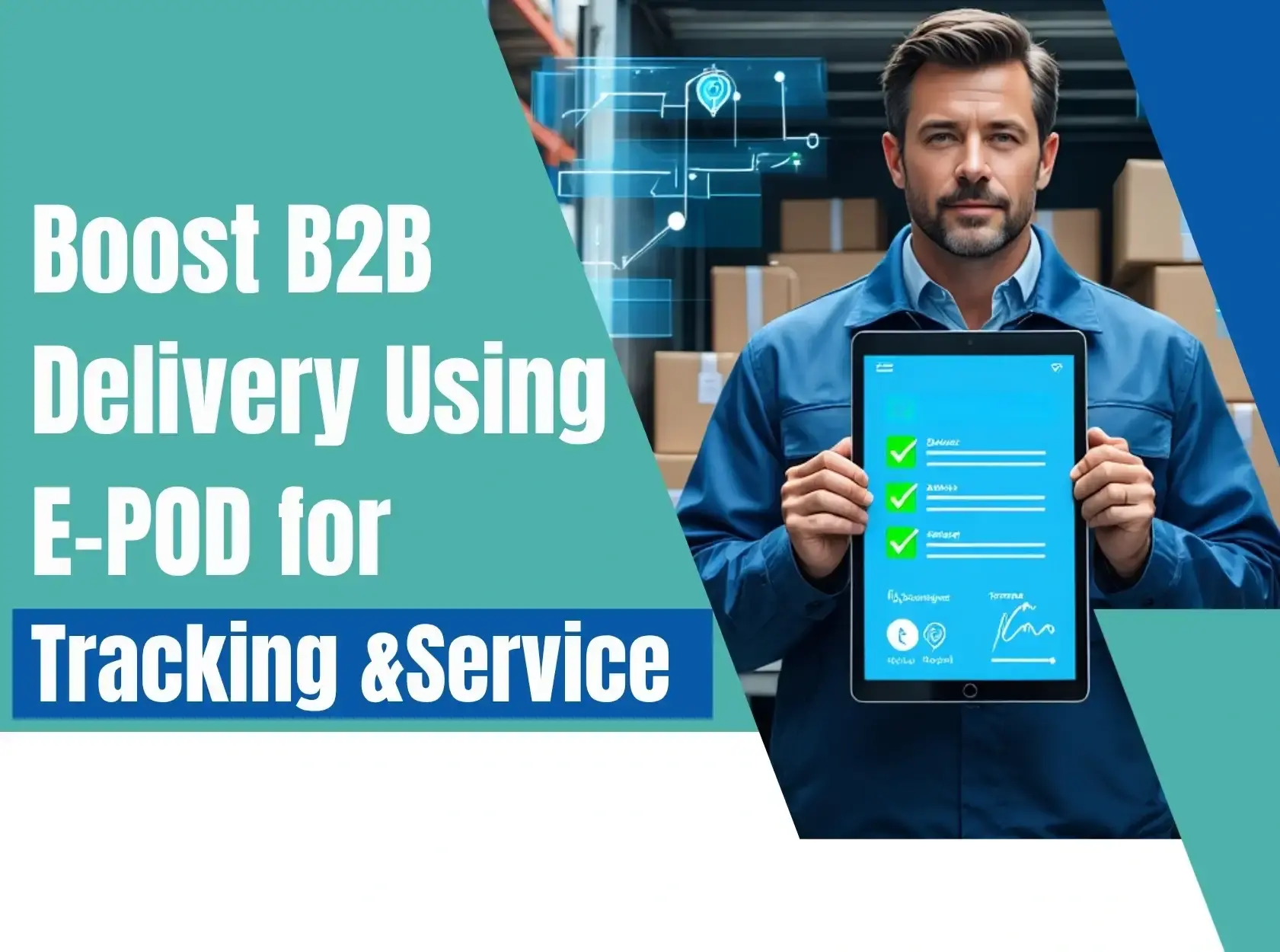
In today’s fast-paced business environment, the ability to deliver goods efficiently and accurately is paramount. For businesses operating in the B2B sector, managing logistics and ensuring timely deliveries can be challenging, especially when dealing with outdated systems. Electronic Proof of Delivery (ePOD) systems have emerged as a crucial solution, streamlining the delivery process and significantly reducing manual intervention. This blog explores the multifaceted benefits of ePOD systems in enhancing B2B delivery operations.
What is Electronic Proof of Delivery (ePOD)?
Electronic Proof of Delivery, or ePOD, is a digital solution that replaces traditional paper-based methods like stamp and sign on Lorry receipt (LR) for confirming and recording deliveries. This system uses electronic documents, which can be accessed via smartphones, tablets, or other digital devices, allowing drivers and delivery personnel to capture delivery information in real-time. This data typically includes time-stamped signatures, photos, and GPS coordinates, ensuring that each delivery is accurately and securely documented.
How Does ePOD Work?
The process begins when a delivery is initiated, with the ePOD system tracking the shipment from departure to arrival. At the delivery point, the recipient confirms receipt by signing on a digital device. This action captures the exact time and location, adding layers of verification that were previously unattainable with paper records. The information is instantly uploaded to a cloud-based system, accessible to both the sender and receiver, streamlining the delivery confirmation process and enabling immediate invoicing and record-keeping.
The Benefits of ePOD in B2B Deliveries
Reduction of Manual Errors
Switching to ePOD dramatically reduces human errors associated with paper documentation. Businesses see fewer lost documents, reduced fraudulent claims, and a decrease in data entry errors—contributing to a more reliable and accurate delivery process.
Real-time Tracking and Visibility
With ePOD, businesses gain real-time insights into the delivery process. This enhanced tracking capability allows companies to manage operations more effectively, ensuring that goods are delivered on time and to the right location, thus improving resource allocation and operational transparency.
Improved Customer Experience
Customers benefit from ePOD systems through real-time updates and reduction of customer-initiated inquiries. It assists in building confidence and satisfaction, for customers feel that transparency and efficiency characterize the delivery process.
Enhanced Efficiency
The automation of delivery documentation through ePOD, therefore, means a quicker delivery process and less administrative burden on staff. Such efficiency translates to quicker turnarounds and the capability to hold greater delivery volumes without greater use of resources.
Environmental Benefits
Adopting ePOD contributes to environmental sustainability by significantly reducing paper use. This shift not only helps companies meet their corporate social responsibility goals but also resonates well with increasingly eco-conscious consumers.
Data-Driven Insights
ePOD systems provide a treasure trove of data that can be analyzed to glean insights into delivery performance, customer preferences, and potential operational improvements. This information is crucial for strategic planning and helps businesses stay competitive in a dynamic market.
Increased Accuracy and Accountability
Digital records are clear, verifiable evidence of delivery, enhancing accountability and reducing disputes. This accuracy is, therefore, of essence to good customer relations and the law in certain extents in other professions.
Cost Savings
By reducing mistakes and increasing efficiency in processes, ePOD minimizes operational costs. Quite often, this saving is large, especially scaled across a number of deliveries and operational processes.
Seamless Integration with Existing Systems
ePOD solutions are designed to integrate seamlessly with existing logistical and CRM systems, enhancing data flow and reducing the need for duplicate entries, thereby improving overall operational efficiency.
Competitive Advantage
It is the ability to deliver efficiently and accurately that gives any business leverage in a competitive B2B marketplace. ePOD systems help companies do just this: enhance the quality of service, shorten delivery time, and improve customer satisfaction.
Recommended ePOD software solution
Spinclabs integrates Electronic Proof of Delivery (ePOD) within their advanced shipment visibility solution, enhancing delivery accuracy and customer satisfaction. Along with ePOD, their system offers real-time monitoring, detailed insights, seamless ERP integration, and robust alerts for operational disruptions. This comprehensive solution optimizes supply chain operations, automating various processes to improve efficiency and decision-making.
For a more detailed look, you can visit Spinclabs’ Shipment Visibility and Tracking.
Conclusion
The implementation of ePOD systems in B2B deliveries offers a transformative solution for businesses looking to enhance efficiency, reduce errors, and improve customer satisfaction. By addressing common logistical challenges, ePOD systems not only streamline delivery processes but also support sustainable and cost-effective operations. As businesses continue to evolve, the adoption of such technologies will be key to maintaining competitive advantage and achieving long-term success.
Discover how SMEs can adopt a tailored Transportation Management System to optimize logistics, reduce costs, and enhance efficiency in a competitive market.
Logistics is a department often seen as disorganized and neglected when it comes to digitization, especially in India, where it’s often met with a casual ‘Ho jayega’. However, as consumer demands evolve rapidly and e-commerce companies rise, the need to digitise logistics—even for small businesses—has grown significantly.
How can an SME adopt ERP for logistics?
In today’s rapidly evolving logistics landscape, small and medium-sized enterprises must continually optimise transport operations while keeping costs low. A Transportation Management System (TMS) can offer a solution by providing tools to streamline and manage logistics effectively. For SMEs to fully benefit from a TMS, it needs to be tailored to their specific needs and seamlessly integrated with their existing systems. Here’s how an SME can successfully adopt a TMS for logistics.
1.UNDERSTANDING THE ROLE OF TMS IN LOGISTICS
A Transportation Management System (TMS) is crucial for planning, executing, and optimizing the physical movement of goods. It offers real-time visibility, optimizes routes, reduces transportation costs, and enhances overall efficiency. By leveraging technology to streamline logistics, a TMS helps small and medium-sized enterprises (SMEs) compete more effectively against larger companies, levelling the playing field.
2.SELECTING THE RIGHT TMS FOR YOUR BUSINESS
The first step in adopting any new system is selecting the right one; choosing TMS is no exception. Businesses need to focus on finding a system that will align with their needs so that it can easily scale if necessary while still being user friendly. Some of them include;
Customization – Make sure your TMS can be adjusted to satisfy your unique needs during transportation processes.
Scalability – Ensure that your TMS has capacity to accommodate more business volumes in future as well as new service offerings.
Integration Capabilities – Your chosen TMS should seamlessly integrate with your existing systems, such as ERP, WMS (Warehouse Management System), and CRM, to ensure smooth data flow and operational efficiency.
3.CUSTOMIZING YOUR LOGISTICS NEEDS TO FIT THE SYSTEM
A one-size-fits-all approach doesn’t work for supply chain management systems, whether for large corporations or small businesses. SMEs need to customise their TMS to address the specific processes and challenges they encounter. Here’s how this can be achieved:
Process Mapping: Begin by mapping out your current transportation processes. Identify inefficiencies, bottlenecks, and areas that need improvement.
Vendor Collaboration: Work closely with your TMS provider to configure the system according to your needs. This could involve setting up specific routing rules, automation workflows, and custom reporting.
Pilot Testing: Conduct a pilot test to ensure the TMS works as intended before rolling it out company-wide. Use this phase to make adjustments and fine-tune the system.
4.INTEGRATION OF THE TMS INTO EXISTING SYSTEMS
A fully integrated TMS is critical for a smooth running logistics operation. Such integration enables a seamless flow of data enhancing visibility while minimising errors. Consider the following:
API Integration – Ensure your chosen TMS offers robust API capabilities for easy connection with other critical systems, such as ERP and WMS.
Data Synchronisation – Plan for seamless data synchronisation between existing platforms and the TMS, ensuring real-time updates across various interfaces.
Automated Workflows – Leverage integration options to automate key tasks like order fulfilment, shipment tracking, and invoicing.
5.TRAINING AND CHANGE MANAGEMENT
Implementing a new TMS isn’t just about the software itself; it’s also crucial to train people to use it effectively. For SMEs, focusing on training and change management is key to a smooth transition from old to new processes. At Spinclabs, we excel in this area by providing:
User Training: Tailored training programs for various roles, from planners and dispatchers to drivers and customer service representatives.
Ongoing Support: Continuous support through help desks, training refreshers, and user manuals to tackle any challenges users might face during and after the system rollout.
6.PERFORMANCE MONITORING AND CONTINUOUS IMPROVEMENT
After the implementation of TMS, it is vital to keep track of its performance and effects on your logistics. Use key performance indicators such as on-time delivery rates, transportation costs, and route efficiency to assess how well the system is functioning. Periodically review these metrics, identify issues from data obtained thereby resulting in an improved TMS.
Conclusion
Adoption of a Transportation Management System (TMS) by SMEs operating in the logistics industry will strategically boost transportation efficiency, minimise expenses, and enhance customer satisfaction. Such firms can therefore implement a customised integrated TMS capable of meeting their unique needs as well as ensuring that goals are realised through effective usage. Given that customization, integration, and training can be accomplished accordingly, a TMS becomes one of the most effective tools for facilitating growth and success in logistics.
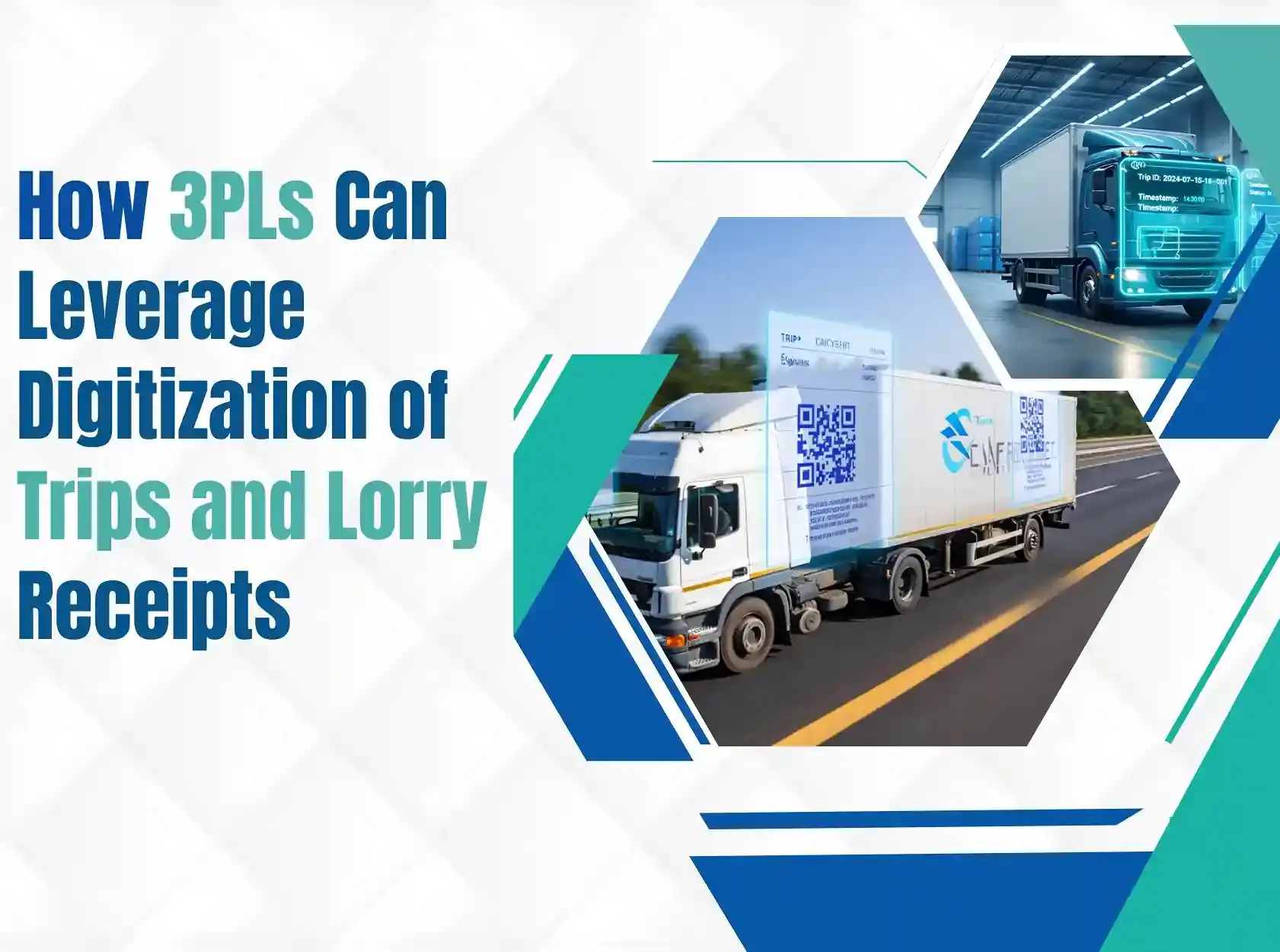
Explore how digitizing Lorry Receipts (LR) with TMS can streamline logistics, enhance communication, and improve insurance claims management for 3PLs.
Every logistics service provider is deeply involved in numerous operational activities and the handling of paperwork. It’s well-known that the logistics industry in India is highly disorganised, making communication between related and unrelated parties chaotic. Establishing a proper sequence of activities becomes challenging if not managed from the outset.
The key to streamlining logistics is to organise communication effectively from the moment a vehicle is requested until it leaves the source location. While large corporations and 3PL/4PL companies manage this through established controls and stable operations, SMEs and small-to-large fleet owners face significant challenges. They rely heavily on fluctuating market demands. So, how do they manage daily activities on a digital platform and ensure that information is readily available when needed?
The above-mentioned issue can be solved through digitization, which organises communication, streamlines operations, and ensures that crucial information is accessible when needed.
But how can you digitise the creation of a Lorry Receipt (LR)?
Small and medium transporters can greatly benefit from an easy-to-use, subscription-based application to generate LR copies digitally, eliminating the need for manual creation. Larger 3PL companies can gain even more by using custom-designed LR forms tailored to their specific needs, ensuring a seamless flow of trips and related information. Applications like the TMS offered by us enable transporters to create LRs online and integrate them with customers for efficient LR tracking.
How is it helpful in tracking ?
If Lorry Receipt (LR) is digitised and linked to the ERP system
Parcel shipment tracking can be simplified through API integration with delivery partners.
SIM tracking becomes straightforward as the driver’s phone number is linked to the LR, which can also serve as the tracking number.
Proof of Delivery (POD) can be digitised by sending the LR copy electronically, allowing the recipient to sign digitally, providing a secure and verifiable proof of delivery.
Payment processes are streamlined as well. Many transporters face delayed payments due to discrepancies between trip details, LR information, and PODs. Digitization easily resolves these issues by aligning all data, ensuring accurate and timely billing.
How Digitization of LR will help with Insurance claim management?
As mentioned earlier, many transporters, whether big or small, rely on physical LR copies to obtain proof of delivery, often writing notes and collecting customer signatures and stamps on the back of the physical LR. However, these physical LRs often don’t reach the transporter’s office promptly. Digitising the LR process allows for immediate access to damage and shipment information, enabling faster and more efficient insurance claims for damaged or stolen goods. With all the information centralised, there’s no risk of data loss or delays, ensuring a smoother claims process.
Conclusion
In conclusion, digitising the Lorry Receipt (LR) process through a robust Transport Management Solution (TMS) offers significant benefits for the logistics industry, particularly for small and medium-sized transporters. By enhancing communication, improving tracking, and ensuring timely access to critical information, TMS not only simplifies daily operations but also optimises payment processes and insurance claim management. Embracing such digital solutions is crucial for overcoming industry challenges and achieving greater efficiency, accuracy, and reliability in logistics operations.
Optimize your fleet with our top-rated fleet management solution. Ensure vehicle health with real-time monitoring and predictive maintenance.
In today’s fast-paced world, where consumer needs are constantly evolving, transport owners are working tirelessly to meet the demand for vehicles across all types of deliveries—from primary and secondary to last-mile. This rush can sometimes lead to compromised vehicle conditions, which is a significant concern. Just like regular health checkups are vital for maintaining a healthy life, ensuring the health of vehicles is crucial for smooth logistics operations.
This is where technology like predictive maintenance and vehicle health monitoring becomes essential for fleet managers. With the help of easy-to-install IoT devices, whether hard-wired or OBD, trucks can be tracked and monitored effectively. These devices not only ensure timely maintenance but also prevent potential breakdowns, making fleet management solutions more efficient and reliable.
The Importance of Vehicle Health Monitoring
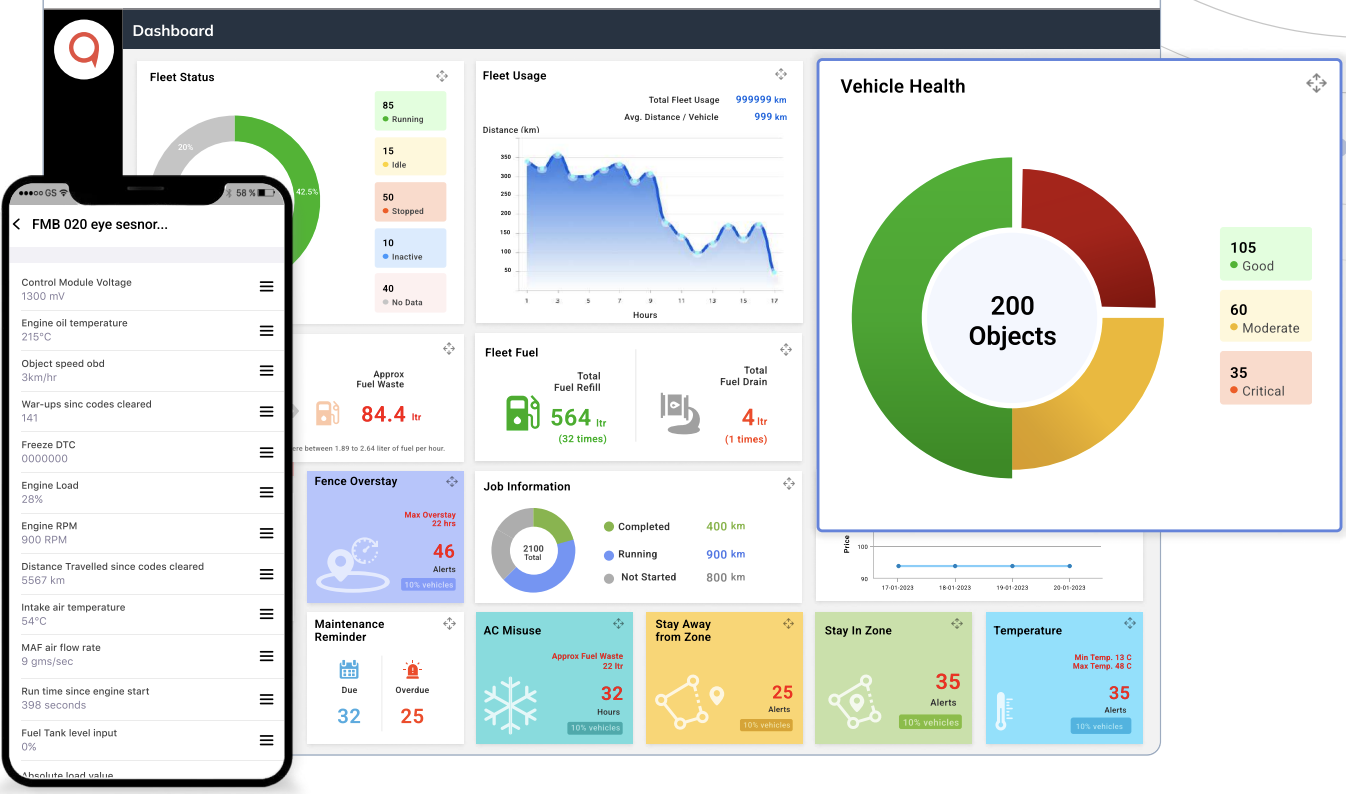
Vehicle health monitoring involves keeping a close eye on various critical parameters, including engine coolant levels, battery status, and engine oil temperature, all in real-time. Fleet managers easily can set thresholds for these parameters using the fleet management software to generate alerts to take corrective action before any trip. This proactive approach ensures that vehicles are in optimal condition before they are loaded with goods and sent out for delivery.
Key Benefits and Features
Real-Time Vehicle Health Reports: Via vehicle tracking system
Battery Voltage: Tracking battery health ensures reliable starts and avoids unexpected breakdowns.
Engine Oil Temperature: Maintaining optimal oil temperature is crucial for engine performance and longevity.
Health Status Reports:
Receive a comprehensive health score for each vehicle, indicating the overall condition and highlighting any detected faults.
Utilize this report as a “report card” for corporate logistics teams or 3PL (Third-Party Logistics) teams to assess vehicle readiness before loading and dispatching goods.
Data Analysis for Proactive Maintenance:
By analyzing data on vehicle health parameters, fleet managers can identify trends and patterns that may indicate potential issues.
Take proactive measures to address these issues before they escalate, reducing downtime and maintenance costs.
Detailed Parameter Insights:
Engine Temperature: Get detailed information on distance traveled, engine running and idle times, and temperature fluctuations.
Battery Voltage: Monitor maximum and minimum voltages, and track the number of instances where battery levels deviate from ideal conditions.
OBD Parameters: Gain insights into ignition status, power usage, speed, and battery percentage, allowing for efficient fleet management.
Customizable Vehicle Monitoring Alerts
There is a possibility for fleet managers to establish exclusive limits for various parameters so as to match their demands. Through real-time notifications, any problems and faults can be rectified instantly hence avoiding major issues.
Engine Fault Alerts:
Receive notifications when fault codes related to the engine system are detected, allowing for immediate investigation and resolution.
Battery Alerts:
Stay informed about low battery levels or issues with the battery charging system, ensuring that vehicles remain operational.
Tire Pressure Alerts:
Get alerts when tire pressure drops below the recommended level, maintaining safety and fuel efficiency.
Fuel Alerts:
Monitor fuel levels and receive notifications about any issues with the fuel system, preventing unexpected fuel shortages.
Conclusion
In order to maintain high performance and reliability, vehicle health monitoring should be included in your fleet management strategy. With the help of advanced technology offered by Spinclabs, managers can always have their vehicles ready for primary, secondary and last-mile deliveries. This improves operational efficiency and maintains overall fleet performance which guarantees customer satisfaction and business success.
Embrace the power of vehicle health monitoring and take your fleet’s performance to new heights. Reach out to team Spinclabs for further information.
Explore how ONDC empowers logistics providers with freedom, flexibility, and enhanced efficiency, fostering innovation and growth in India’s e-commerce sector.
The Open Network for Digital Commerce (ONDC) is a groundbreaking initiative by the Government of India aimed at transforming the e-commerce landscape. Launched on December 31, 2021, ONDC seeks to empower consumers and small businesses by creating an open ecosystem that allows them to choose their service providers freely. This blog explores how ONDC facilitates logistics providers, enabling them to connect directly with customers, enhance operational efficiency, and improve last-mile delivery services. Readers can expect insights into the benefits ONDC brings to logistics, the role of technology service providers, and how this initiative aims to democratize digital commerce for all, fostering growth and innovations in the logistics industry across India.
How is ONDC Helping Logistics Providers?
For logistics service providers, including third-party logistics (3PL) companies and transporters, ONDC offers unprecedented access to a broad customer base. This open access allows logistics providers to directly approach customers, creating a competitive environment that benefits customers with a variety of choices and potentially better rates and services.
Logistics companies benefit from the platform in several ways:
Freedom and Flexibility: Without binding contracts, logistics providers can offer competitive rates and tailor their services to meet the demands of the market.
Seamless Integration: The open nature of ONDC allows for easy integration with existing systems. This enables logistics companies to streamline their operations, optimise routes, and consolidate shipments from various sellers.
Enhanced Last-Mile Connectivity: Last-mile service providers can leverage innovative tech solutions to improve efficiency and service quality, thereby enhancing last-mile connectivity.
Operational Efficiency: By integrating with ONDC, logistics providers can better manage their operations, from inventory management to route optimization, leading to cost savings and improved service delivery.
Technology Service Provider (TSP)Role in ONDC
Software technology providers play a crucial role in the ONDC ecosystem, acting as enablers for both buyers and sellers, with a primary focus on sellers. These tech providers can help sellers amplify their presence, extend their reach, and improve service delivery. They serve as interfaces for logistics companies, offering software solutions that meet the emerging needs of end users. Essentially, they build synergy between buyers, sellers, and logistics providers.
TSPs, Role and Benefits in ONDC
1. Integration with Open Ecosystem:
Interoperability: something like TMS can seamlessly integrate with ONDC’s open-source platform, enabling smooth data exchange and collaboration with various stakeholders in the e-commerce ecosystem.
Standardisation: ONDC’s use of open specifications and network protocols aligns with capabilities of companies like Spinclabs, ensuring standardised communication and data sharing.
2. Enhanced Visibility and Access:
Broad Customer Base: By participating in the ONDC network,Spinclsbd can access a wide array of potential customers, including small and medium-sized enterprises (SMEs) that are part of the ONDC ecosystem.
Market Expansion: Integration with ONDC allows Spinclabs to extend its reach within the Indian market, leveraging ONDC’s extensive network.
3. Optimized Logistics Solutions:
Route Optimization: Spinclabs advanced routing algorithms can enhance logistics operations within the ONDC framework, ensuring efficient and cost-effective transportation solutions.
Shipment Consolidation: The TMS can consolidate shipments from multiple sellers, optimising load planning and reducing transportation costs.
Conclusion
The integration of Spinclabs as technology service providers with ONDC represents a strategic opportunity for both entities. Spinclabs can leverage the open and collaborative nature of ONDC to enhance its service offerings to logistics service providers and thereby providing better service to end users. Logistics companies can benefit from Spinclabs advanced logistics solutions to improve the efficiency and effectiveness of its digital commerce network. This synergy has the potential to drive significant growth and innovation in the logistics and e-commerce sectors in India
Request A
Demo
We and our partners use information collected through cookies and similar technologies to improve your experience on our site, analyse how you use it and for marketing purposes. You can find out more in our privacy policy, and manage your consent at any time.
We and our partners use information collected through cookies and similar technologies to improve your experience on our site, analyse how you use it and for marketing purposes. Because we respect your right to privacy, you can choose not to allow some types of cookies. However, blocking some types of cookies may impact your experience of the site and the services we are able to offer. In some cases, data obtained from cookies is shared with third parties for analytics or marketing reasons. You can exercise your right to opt-out of that sharing at any time by disabling cookies.
These cookies and scripts are necessary for the website to function and cannot be switched off. They are usually only set in response to actions made by you which amount to a request for services, suchas setting your privacy preferences, logging in or filling in forms. You can set your browser to block oralert you about these cookies, but some parts of the site will not then work. These cookies do not store any personally identifiable information.
Analytics
These cookies and scripts allow us to count visits and traffic sources, so we can measure and improve the performance of our site. They help us know which pages are the most and least popular and see how visitors move around the site. All information these cookies collect is aggregated and therefore anonymous. If you do not allow these cookies and scripts, we will not know when you have visited our site.
Embedded Videos
These cookies and scripts may be set through our site by external video hosting services likeYouTube or Vimeo. They may be used to deliver video content on our website. It’s possible for the video provider to build a profile of your interests and show you relevant adverts on this or other websites. They do not store directly personal information, but are based on uniquely identifying your browser and internet device. If you do not allow these cookies or scripts it is possible that embedded video will not function as expected.
Google Fonts
Google Fonts is a font embedding service library. Google Fonts are stored on Google's CDN. The Google Fonts API is designed to limit the collection, storage, and use of end-user data to only what is needed to serve fonts efficiently. Use of Google Fonts API is unauthenticated. No cookies are sent by website visitors to the Google Fonts API. Requests to the Google Fonts API are made to resource-specific domains, such as fonts.googleapis.com or fonts.gstatic.com. This means your font requests are separate from and don't contain any credentials you send to google.com while using other Google services that are authenticated, such as Gmail.
Marketing
These cookies and scripts may be set through our site by our advertising partners. They may be used by those companies to build a profile of your interests and show you relevant adverts on other sites. They do not store directly personal information, but are based on uniquely identifying your browser and internet device. If you do not allow these cookies and scripts, you will experience less targeted advertising.